
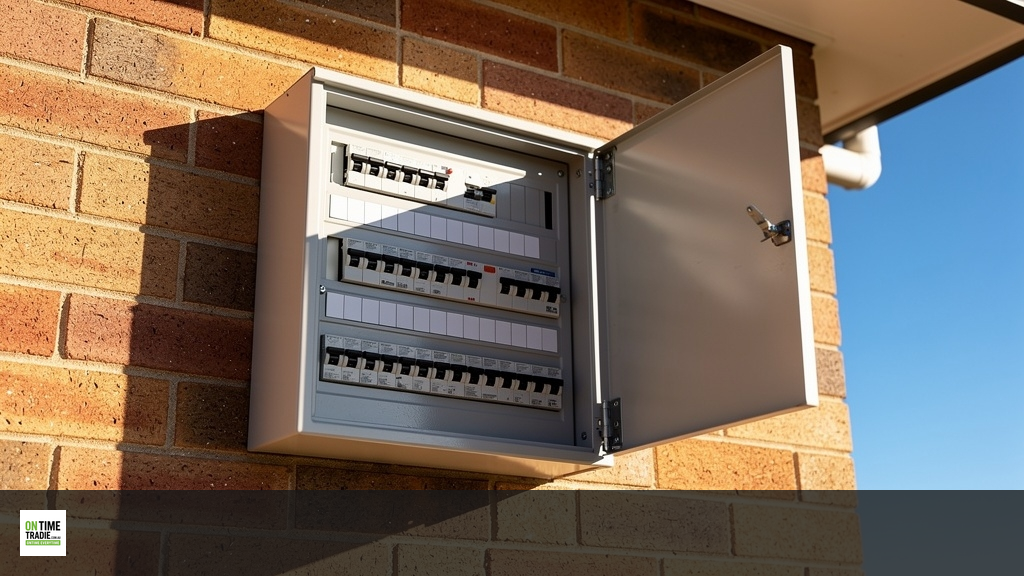
Is Your Sydney Home’s Switchboard Ready for the 21st Century?
A switchboard upgrade sydney homeowners should take seriously – older ceramic fuse boards remain one of the most common electrical hazards in Sydney homes built before 1990. If your home still has a ceramic fuse box, a switchboard with no safety switches, or a board that trips frequently, you are overdue for an assessment by a licensed electrician.
This guide explains the signs you need a new switchboard, what SafeWork NSW and the NSW electricity regulations require, and what a switchboard upgrade actually costs in Sydney today.
Table of Contents
When Do You Actually Need a Switchboard Upgrade?
You need a switchboard upgrade when your home has ceramic fuses, no RCD (safety switch) protection, breakers that trip frequently under normal loads, or when you are adding high-draw appliances like air conditioning, EV charging, or induction cooktops. These are not cosmetic issues – they are safety and capacity problems that a licenced electrician needs to address.
The most common triggers for a switchboard upgrade in Sydney homes include:
- Ceramic fuse wires – found in homes built before roughly 1985. These must be rewired manually after each trip and provide no protection against ground faults.
- No RCD (safety switch) – required by NSW regulations for all new circuits and mandatory for power and lighting in new construction. Homes without them are exposed to electrocution risk.
- Frequent tripping – a breaker that trips regularly under normal load is either overloaded or failing. Do not reset it and ignore the problem.
- Burning smell from the switchboard – immediately indicates arcing or a failing breaker. Turn off the main switch and call a licensed electrician immediately.
- Planning a renovation – adding circuits for a kitchen renovation, bathroom refit, or extension almost always requires the existing board to be assessed and often upgraded.
- Adding solar panels – a grid-connected solar system requires the switchboard to support both the solar inverter connection and the two-way metering setup.
If any of these apply to your Sydney home, a switchboard inspection is the first step. Our licensed electricians in Sydney can assess your board and provide a written quote.
Are Old Ceramic Fuses Dangerous?
Yes. Ceramic fuse boxes are considered a significant electrical safety risk because they can be bypassed with oversized fuse wire, they do not trip fast enough to prevent fires in some overload scenarios, and they provide no protection against earth leakage. They were the standard in Australian homes before the 1980s, but they are now well behind current electrical safety standards.
The specific risks of keeping ceramic fuses:
- Fuse wire can be replaced with the wrong rating – many homeowners have installed heavier wire to stop nuisance trips, which removes overload protection entirely.
- No earth fault protection – ceramic fuses do not protect against earth leakage (the fault type most likely to cause electrocution).
- Insurance implications – some insurers in NSW ask about the type of switchboard during underwriting. A ceramic fuse board may affect your cover.
- No circuit identification – older boards often have unlabelled fuses, making it difficult to isolate circuits safely during work or in an emergency.
Sydney homes built in the 1960s, 1970s, and early 1980s are most likely to still have ceramic fuse boards. If you are not sure what type of board your home has, it is worth having a licenced electrician inspect it before you sell the property, rent it out, or add new electrical loads.
Related reading: Sydney Homeowner’s Guide to Electrical Safety Inspections – what gets checked and what it costs.
How Much Does a Switchboard Upgrade Cost in Sydney?
A standard switchboard upgrade in Sydney typically costs between $800 and $2,500 depending on the size of your home, how many circuits need to be added, and whether the mains cabling also needs upgrading. Here is a breakdown of typical costs in the Sydney market:
| Job Type | Typical Cost (AUD) | Notes |
|---|---|---|
| Basic ceramic fuse to circuit breaker upgrade (small home, 4-6 circuits) | $800 – $1,200 | Includes 2 RCDs (safety switches) as required |
| Switchboard upgrade, medium home (8-12 circuits) | $1,200 – $1,800 | Most common scenario for 3-4 bedroom Sydney homes |
| Full upgrade + new consumer mains (older properties) | $1,800 – $2,500+ | Required when mains cable is undersized (common in pre-1970 homes) |
| Upgrade for solar panel connection (3-phase) | $1,500 – $3,000+ | Depends on existing capacity and solar system size |
| Add safety switch to existing modern board | $200 – $400 | When board already has circuit breakers but no RCD |
| Typical callout fee (Sydney, business hours) | $60 – $100 | After-hours rates typically $150 – $300 |
Service fees vary between providers. Always confirm the callout fee before booking.
These are typical Sydney market benchmarks. The actual cost depends on access to the existing switchboard location, whether the meter box also needs work (Ausgrid’s responsibility), and current material costs. A proper quote requires a physical inspection.
What Happens During a Switchboard Upgrade?
A switchboard upgrade is a planned job, typically completed in a few hours for a standard residential property. Here is what to expect:
- Inspection and quote – your electrician assesses the existing board, checks the mains cable size, and identifies how many circuits are needed for your current and planned loads.
- Ausgrid/Endeavour notification – for some upgrades, your electrician must notify the local distribution network service provider (DNSP) before work starts. They handle this on your behalf.
- Power isolation – the main supply is isolated. For safety, plan for 3-6 hours without power in most cases.
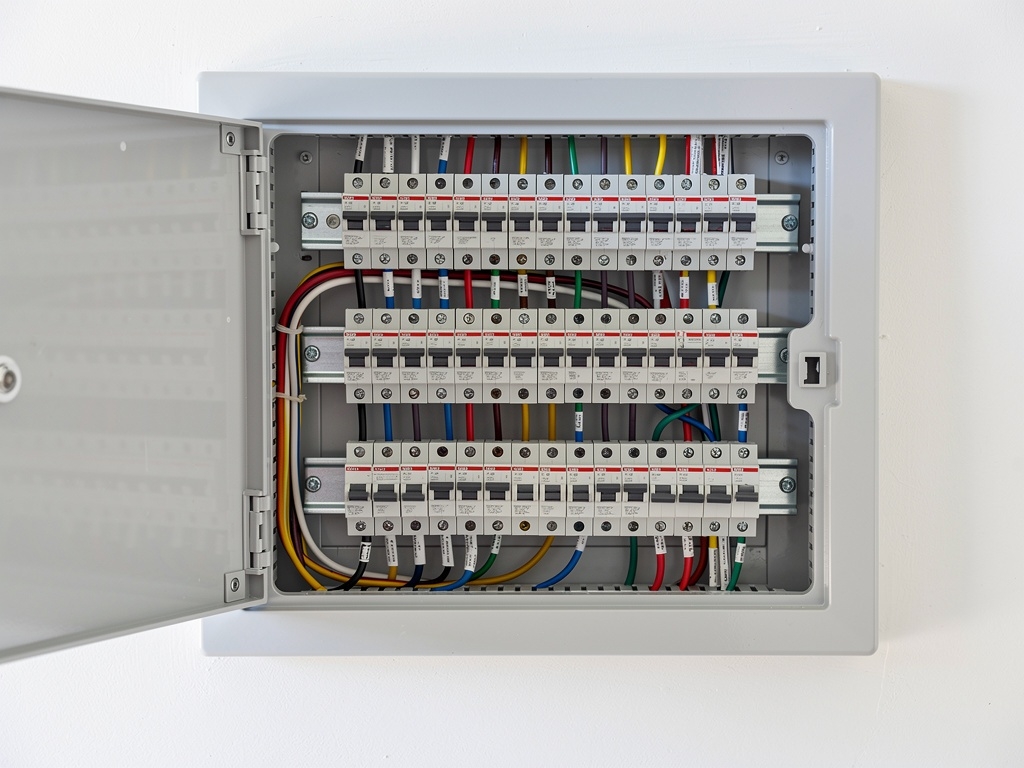
- New board installation – existing circuits are transferred to the new board, which includes circuit breakers, RCDs (safety switches), and correct labelling for each circuit.
- Testing and certification – your electrician must test every circuit and issue a Certificate of Compliance for Electrical Work (CCEW) to certify the installation meets AS/NZS 3000 and NSW electrical regulations.
- Ausgrid reconnection – if the mains were affected, Ausgrid reconnects supply.
For emergency electrical work, see our guide on emergency electrician costs in Sydney to understand after-hours pricing.
Do Solar Panels Require a Switchboard Upgrade?
Yes, in most cases. A grid-connected solar system requires your switchboard to accommodate the solar inverter’s AC connection, a dedicated solar breaker, and in some cases upgraded mains cabling to handle the export capacity. SafeWork NSW and the electrical installation standard AS/NZS 3000 both require that the switchboard can safely support the combined load of the existing circuits and the solar inverter.
If you are adding a battery storage system to your solar, the switchboard requirements increase further. A battery system may require a dedicated sub-board or additional protection devices. Your solar installer will coordinate with a licensed electrician to confirm what the switchboard needs before the solar system is commissioned.
Many Sydney homeowners discover their switchboard needs upgrading at the solar quotation stage. If you know your switchboard is old, it is worth having it inspected before getting solar quotes, so you have an accurate total project cost from the start.
What Does SafeWork NSW Require for Home Switchboards?
SafeWork NSW administers the Work Health and Safety Act 2011, which sets the framework for electrical safety in NSW. For residential switchboards, the key regulatory requirements are set by AS/NZS 3000 (the Wiring Rules) and the NSW electricity safety legislation administered through the Energy and Water Ombudsman NSW and the relevant DNSPs (Ausgrid, Endeavour Energy).
In practical terms, the current requirements for NSW residential switchboards include:
- RCD protection – mandatory on all socket outlet and lighting circuits in new construction since 2000, and on all new circuits added to existing installations. Older circuits are not retroactively required to be upgraded unless an upgrade job is triggered, but it is best practice to add them.
- Circuit breakers instead of fuse wire – all new boards must use circuit breakers. Fuse wire boards are not prohibited in existing homes but must be maintained safely and must not be extended.
- Correct rating – breakers must be correctly rated for the circuit load and the conductor size. A breaker that is oversized for the cable is a fire risk.
- Certificate of Compliance – any licensed electrician doing switchboard work in NSW must issue a CCEW to the homeowner and lodge a copy with the local DNSP.
If you are selling your Sydney home, a buyer’s building and electrical inspection may flag a ceramic fuse board as a defect. Some buyers’ solicitors specifically ask for evidence that a switchboard upgrade has been completed. Getting ahead of this is worth considering if you are planning to sell in the next few years. For fast and reliable trade support, visit ontime tradie contact us today.
Need a Switchboard Upgrade Quote in Sydney?
Our licensed Sydney electricians assess your existing board, advise on the right upgrade, and complete all work with a Certificate of Compliance. Fast turnaround, upfront pricing, no surprises.
Frequently Asked Questions About Switchboard Upgrades in Sydney
How long does a switchboard upgrade take?
A standard residential switchboard upgrade in Sydney takes between 3 and 6 hours. You will be without power during this time. More complex jobs involving mains cable replacement or a large number of circuits may take a full day. Your electrician will give you a time estimate at the quote stage.
Can I keep using my old ceramic fuse board?
You are not legally required to replace a ceramic fuse board immediately unless you are doing new electrical work that triggers a compliance requirement. However, ceramic fuse boards carry genuine safety risks, and most electricians and insurers in Sydney strongly recommend upgrading. If your board is over 30 years old, the upgrade is overdue.
Do I need council approval to upgrade my switchboard in NSW?
No. A switchboard upgrade is classified as electrical work, not development that requires council approval. Your licensed electrician issues a Certificate of Compliance for Electrical Work (CCEW) after the job, which is the regulatory requirement in NSW. You do not need a development application.
Is a switchboard upgrade covered by home insurance in NSW?
A switchboard upgrade is generally not covered by home insurance as it is a planned upgrade, not accidental damage. However, if a failing switchboard causes fire damage, your insurer will ask whether the board was in serviceable condition at the time. A known-faulty board that was not repaired may affect a claim. Check your policy wording and speak to your insurer if you have concerns.
How many safety switches (RCDs) does a Sydney home need?
For a standard Sydney home, the minimum is two RCDs – one protecting power circuits and one protecting lighting circuits. Homes with an outdoor area, pool, or external power should have additional RCD protection on those circuits. Many licensed electricians recommend a single RCD per circuit (RCBO type) for the most reliable protection and the easiest fault isolation.
What is the difference between a safety switch (RCD) and a circuit breaker?
A circuit breaker protects against overloads and short circuits – it trips when current exceeds the rated capacity. A safety switch (RCD) protects against earth leakage – it trips in milliseconds when it detects current going to earth, which is the fault type most likely to cause electrocution. You need both. A modern switchboard includes both in each circuit’s protection.
