
Pipe Relining Sydney: Cost, Process and When It Beats Digging Up Your Pipes
When it comes to pipe relining Sydney homeowners are increasingly choosing this no-dig repair method over traditional excavation — and for good reason. This guide gives you definitive AUD cost ranges, a clear explanation of how pipe relining actually works, and the specific situations where relining beats tearing up your driveway or garden.
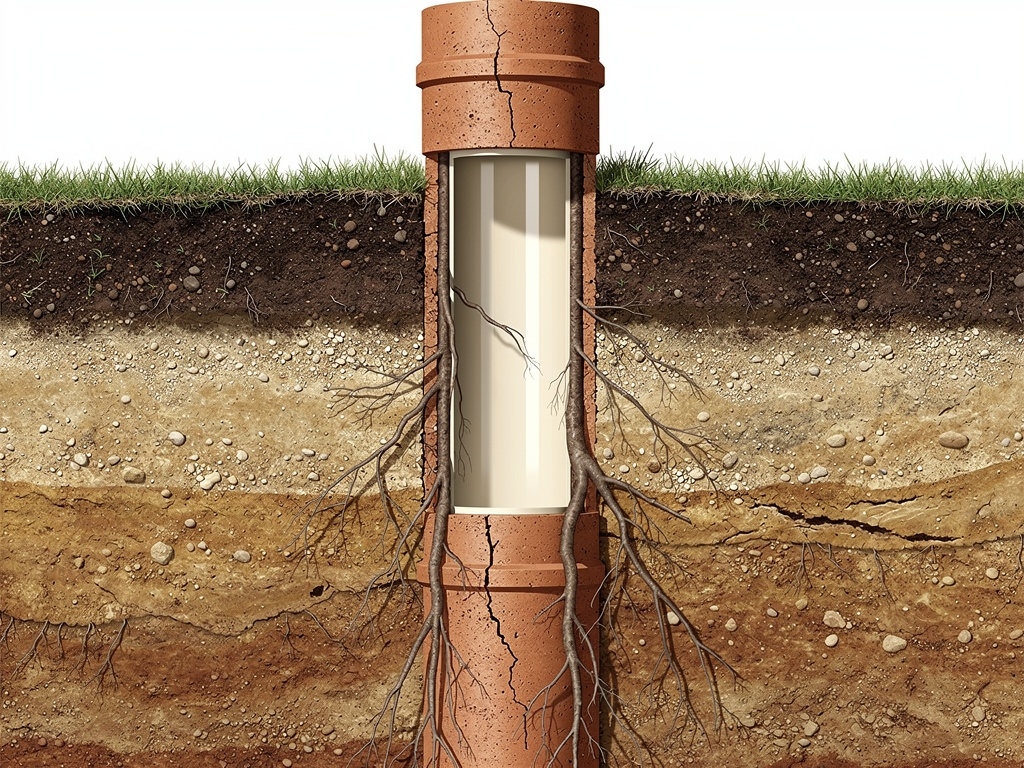
Sydney’s ageing underground infrastructure — particularly the terracotta and clay pipes installed in inner west and north shore homes during the 1950s through 1980s — is reaching the end of its service life. Tree root intrusion, pipe collapse, joint displacement, and cracking are now among the most common plumbing issues handled by Sydney plumbers. Pipe relining offers a cost-effective, durable solution that avoids the disruption and expense of traditional excavation.
How Much Does Pipe Relining Cost in Sydney?
Pipe relining costs in Sydney are calculated primarily by the metre of pipe relined, with a minimum charge that covers mobilisation, CCTV inspection, and equipment setup. Below are current 2025–2026 price ranges for typical residential scenarios.
| Scenario | Pipe Diameter | Estimated Cost (AUD, incl. GST) |
|---|---|---|
| Short section — root intrusion at joint | 100mm | $700 – $1,500 |
| Standard drain run (3–8 metres) | 100mm | $1,800 – $4,500 |
| Long main drain (8–20 metres) | 100–150mm | $4,500 – $9,000 |
| Whole-of-property reline (complex) | 100–225mm | $8,000 – $20,000+ |
| CCTV drain inspection (pre-relining) | Any | $300 – $600 |
| Traditional excavation equivalent (comparison) | 100mm | $5,000 – $15,000+ |
What affects your relining cost?
- Linear metres of pipe: The primary cost driver — typically $200–$450 per metre for residential CIPP lining.
- Access difficulty: Pipes under concrete slabs, paved driveways, or landscaped gardens require more setup time and may use robotic cutting equipment to clear joints after lining.
- Pipe diameter: Larger diameter pipes (150mm+) require thicker liner material and more resin, increasing cost per metre.
- Number of junctions: Each junction point in the pipe requires a robotic cutter to reopen after the liner cures — add $250–$500 per junction.
- Pipe condition: Severely collapsed sections may need excavation before relining is possible.
Sydney Water compliance note: Any drain relining work that connects to the Sydney Water network requires a licensed plumber to certify the work meets AS/NZS 3500 (National Plumbing and Drainage Standard). On Time Tradie plumbers are fully licensed and provide all compliance documentation.
What Is Pipe Relining and How Does It Work?
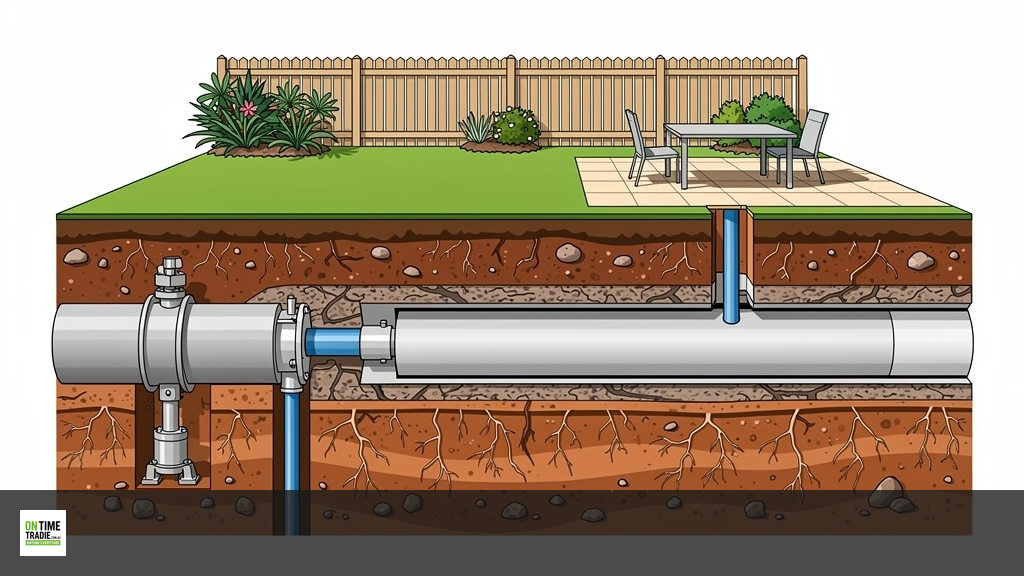
Pipe relining is a trenchless rehabilitation method that installs a new pipe within the existing damaged pipe. The most common technique used in Sydney is CIPP — Cured-In-Place Pipe lining. It creates a structurally independent, jointless pipe within your existing pipe without the need for excavation.
The process used by On Time Tradie follows these steps:
Step 1: CCTV drain inspection
Before any relining can begin, a CCTV camera is pushed through the pipe to map the exact condition, identify all damage points, measure internal diameter, and confirm the pipe’s route and depth. This footage is reviewed to confirm pipe relining is the right solution — if a section has collapsed beyond the threshold for relining, your plumber will advise on targeted excavation.
Step 2: High-pressure jet cleaning
The damaged pipe is thoroughly cleaned using a high-pressure water jet (jetting) to remove all scale, grease, root debris, and loose material. This creates a clean substrate for the liner to bond to. In some cases, robotic cutting is required to remove heavy root intrusion or scale before jetting.
Step 3: Liner preparation and insertion
A fibreglass or polyester felt liner tube is saturated with a two-part epoxy resin. The liner is inverted into the damaged pipe using water or air pressure — this is the “inversion” method. The liner travels through bends and junctions in the existing pipe, covering the entire damaged section.
Step 4: Curing
The resin-saturated liner is inflated against the pipe wall using an internal bladder and held in position while the resin cures. Curing time depends on the resin system — ambient cure takes 2–6 hours; UV cure (using a UV light pulled through the liner) takes 30–90 minutes and is increasingly common in Sydney for its speed and consistent results.
Step 5: Junction reinstatement and final inspection
After curing, a robotic cutter is used to reopen any branch connections or junctions that were covered by the liner. A final CCTV inspection confirms the liner is properly seated, fully cured, and free of defects. You receive a DVD or USB copy of the post-lining CCTV footage as part of your job documentation.
The resulting “pipe within a pipe” has a smooth internal bore that is resistant to root re-entry, corrosion, and chemical attack. The liner is approved for use in contact with drinking water supply pipes (NSF/ANSI 61 certified resins) and is compliant with AS/NZS 3500.
When Is Pipe Relining Better Than Traditional Excavation?
Pipe relining isn’t the right answer in every situation, but there are clear scenarios where it dramatically outperforms traditional excavation — in both cost and disruption.
Relining is clearly better when:
- The damaged pipe runs under a concrete driveway, landscaped garden, paving, or a structural element of the home — excavation would require breaking and reinstating these surfaces at significant cost ($200–$600/m² for concrete reinstatement alone)
- The pipe is in good overall condition but has isolated cracks, joint failures, or root intrusion — relining can address these without replacing the entire run
- You cannot or do not want to disrupt the property — e.g., rental properties where tenants are in residence, commercial buildings during trading hours
- The damaged section is deep underground — excavation costs increase with depth, while relining cost remains consistent regardless of pipe depth
- Tree preservation orders (TPOs) cover trees above the pipe route — Sydney councils including the City of Sydney, North Sydney, Ku-ring-gai, and Lane Cove have active TPOs that may prevent excavation near protected trees
Traditional excavation may still be needed when:
- The pipe has collapsed or deformed to the point where a liner cannot be inserted (typically when internal diameter is reduced by more than 30%)
- The pipe has a bellied section (downward sag) that causes recurring blockages — relining cannot correct pipe gradient
- Multiple drain access points are required but don’t exist — excavation may be needed to install inspection chambers (ICs) before relining becomes viable
- The pipe material is incompatible with lining resins — rare, but occurs with some speciality pipe materials
Properties in inner west suburbs like Newtown, Leichhardt, Annandale, and Glebe frequently have terracotta drain systems from the 1950s–1970s that are ideal candidates for pipe relining. North shore suburbs including Killara, Gordon, Pymble, and Turramurra similarly have ageing clay pipe infrastructure that benefits from relining. For homeowners in these areas, it’s worth getting a CCTV drain inspection before any excavation work proceeds.
You can read more in our guide on pre-installation checklists for Sydney home upgrades, or our article on gutter cleaning costs in Sydney if you’re addressing multiple maintenance items.
How Long Does Pipe Relining Last?
Quality CIPP pipe relining has a design life of 50 years when installed correctly using AS/NZS 3500-compliant methods and certified epoxy resins. This compares favourably with new PVC pipe installations, which are also rated for 50+ years.
In practice, early CIPP installations from the late 1980s in Australia and Europe are still performing without failure — giving the industry confidence in the long-term performance of modern resin systems. The liner does not corrode, is not subject to root penetration (roots cannot penetrate the cured epoxy), and has a smooth internal surface that actually improves flow rates compared to the deteriorated pipes it replaces.
Most reputable Sydney pipe relining companies offer warranties of 25–50 years on the lining material and installation. Always check what is covered: some warranties cover materials only, while comprehensive warranties cover installation defects and failure of the lined section.
On Time Tradie warranties our pipe relining installations in accordance with industry standards. Our plumbers are licensed under the NSW Fair Trading plumbing and draining licence framework, and all work meets AS/NZS 3500 compliance requirements.
What Types of Pipes Can Be Relined in Sydney?
Pipe relining is compatible with almost all pipe materials found in Sydney homes and commercial properties. The key requirement is that the pipe must have sufficient structural integrity to hold a liner during installation — severely collapsed pipes may require partial excavation first.
| Pipe Material | Common Sydney Era | Relining Suitability |
|---|---|---|
| Terracotta (clay) drain pipe | Pre-1980 | Excellent — most common relining candidate |
| Cast iron | 1900s–1960s | Very good — common in heritage inner-city properties |
| AC (asbestos cement) pipe | 1940s–1980s | Good — relining preferred to avoid disturbing AC |
| Concrete pipe | 1950s–1990s | Good — commonly used for larger diameter runs |
| PVC (older, degraded) | 1970s–present | Good — relining extends service life of UV-degraded PVC |
For homes with AC (asbestos cement) pipe, relining is particularly recommended because it encapsulates the existing pipe without disturbing it — eliminating the hazmat handling and disposal costs associated with excavating and removing AC pipe, which can add $5,000–$20,000 to a traditional pipe replacement job.
Drain Problems? Get a CCTV Inspection First
On Time Tradie provides CCTV drain inspections and pipe relining quotes across Sydney. Licensed plumbers, no-obligation assessment, same-week bookings available.
Request a CallbackFrequently Asked Questions
How much does pipe relining cost in Sydney?
Pipe relining in Sydney costs approximately $200–$450 per linear metre for 100mm residential drain pipe, with a minimum charge of $700–$1,500 covering mobilisation, CCTV inspection, and setup. A standard 5-metre drain reline typically costs $1,800–$3,000 fully installed.
How long does pipe relining take?
Most residential pipe relining jobs in Sydney are completed within one day. CCTV inspection and jetting typically take 1–2 hours; liner insertion and curing takes 2–6 hours depending on the curing method (UV cure is faster). You can generally use your drains again on the same day.
Is pipe relining covered by home insurance in NSW?
It depends on your policy and the cause of damage. Sudden pipe failures caused by covered events (e.g., tree root invasion that the insurer accepts as sudden damage) may be claimable. Gradual deterioration is generally excluded. Check your policy wording and speak to your insurer before work commences.
Can pipe relining be done under a concrete slab?
Yes — this is one of the most common applications of pipe relining in Sydney. CIPP relining does not require access to the full length of the pipe; it only needs an entry and exit point. Pipes under concrete slabs, footings, and driveways can typically be relined without any concrete breaking.
Does pipe relining require Sydney Water approval?
Work on pipes that connect to the Sydney Water sewerage or stormwater network must be certified by a licensed plumber. On Time Tradie provides all required certification and compliance documentation with every relining job.
What is the difference between pipe relining and pipe replacement?
Pipe relining installs a new liner inside the existing damaged pipe — no excavation required in most cases. Pipe replacement involves excavating to access the pipe and installing entirely new pipework. Relining is faster, less disruptive, and often cheaper; replacement is necessary when pipes have collapsed beyond the relining threshold.
