
Stormwater Drainage Problems in Sydney: What’s Causing Them and How to Fix Them
Stormwater drainage problems in Sydney are among the most common and costly issues for homeowners and property managers across the metropolitan area. Whether it is a blocked pit, a collapsed pipe, or a boundary dispute over runoff, understanding the causes, costs, and solutions helps you act quickly before water damage sets in. This guide covers everything you need to know about Sydney stormwater drainage — from who is responsible to what repairs actually cost.
What Are the Most Common Stormwater Drainage Problems in Sydney?
The most common stormwater drainage problems in Sydney are blocked drains and pits, collapsed or cracked pipes, and surface ponding caused by inadequate fall or soil compaction. Sydney’s heavy summer rainfall — combined with ageing infrastructure in suburbs built before the 1980s — creates recurring drainage failures across the city.
Blocked Stormwater Pits and Drains
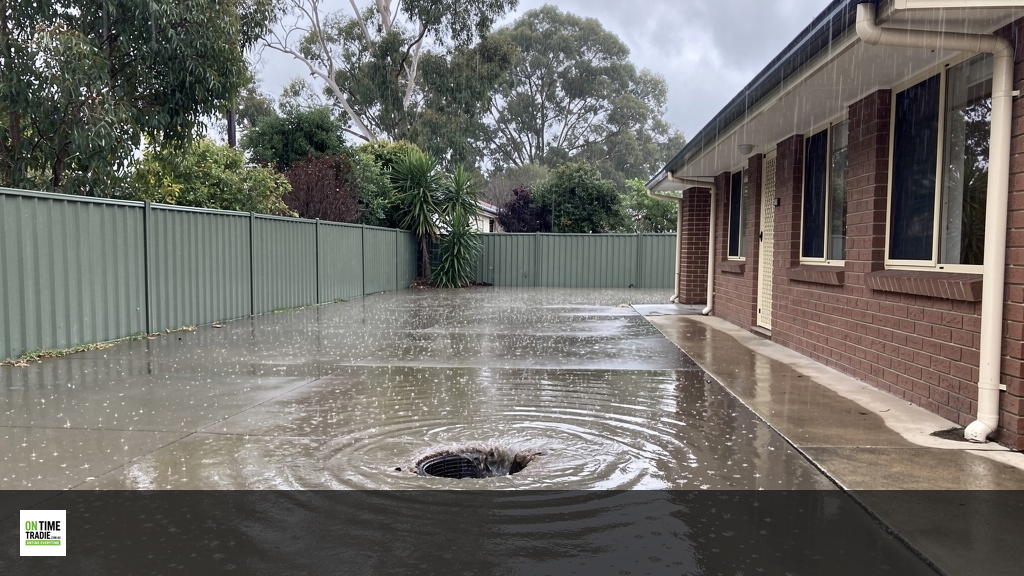
Leaf litter, soil, debris, and root intrusion are the primary causes of blocked stormwater pits in Sydney. Pit blockages are common after major storms, particularly in properties surrounded by eucalyptus and gum trees. A blocked pit backs water up into the drainage system, causing surface flooding in driveways, garages, and garden areas.
Collapsed or Cracked Stormwater Pipes
Older PVC and terracotta stormwater pipes degrade over time. Ground movement, tree root intrusion, and soil subsidence cause pipes to crack or collapse, reducing flow capacity and allowing soil ingress. In Sydney’s clay-heavy soils — particularly in western and south-western suburbs — seasonal soil shrink-swell cycles put significant stress on below-ground drainage pipes.
Inadequate Gradient and Pooling
Stormwater pipes must maintain a minimum fall (gradient) to drain effectively. Poorly installed or settled pipes lose gradient over time, creating low points where water and silt pool. This is particularly common in older suburban lots where extensions and landscaping have altered the original site drainage layout.
Overland Flow and Neighbour Runoff
In densely developed Sydney suburbs, stormwater from neighbouring properties can discharge onto lower-lying lots. This is a common source of disputes and can saturate gardens, damage retaining walls, and cause damp in sub-floor areas. Sydney Water manages the larger stormwater network, but private property drainage is the homeowner’s responsibility.
Downpipe Connection Failures
Downpipes that discharge directly onto lawn or paved areas rather than into an approved drainage system are a recurring problem in Sydney’s older housing stock. Disconnected or undersized downpipes concentrate water at the building foundation and can cause rising damp, slab edge erosion, and subfloor flooding.
Who Is Responsible for Stormwater Drainage in Sydney — Council or Homeowner?
In Sydney, the responsibility for stormwater drainage is split between the homeowner and the local council depending on where the drain is located. As a general rule, drainage within your property boundary is your responsibility; drainage in the public road reserve, kerb, channel, and council easements is the council’s responsibility.
Here is how the split typically works:
| Location | Who Is Responsible | Action Required |
|---|---|---|
| Drains, pits, pipes within your property boundary | Homeowner | Engage a licensed plumber at your cost |
| Drains crossing a council easement on your property | Shared — depends on easement terms | Check your Section 149 planning certificate and contact council |
| Street kerb and channel, council pipes in road reserve | Local council | Lodge a service request with your council |
| Sydney Water stormwater network (major waterways) | Sydney Water | Report to Sydney Water via their customer service line |
NSW Fair Trading advises homeowners to check their property title and any registered easements before carrying out drainage work near a boundary. Contact NSW Fair Trading if you have a dispute with a neighbour about stormwater discharge that cannot be resolved privately. Many Sydney councils also have a drainage engineer who can advise on boundary and easement issues at no cost.
Sydney Water manages the major stormwater channels, trunk drains, and creeks across the greater Sydney basin. If stormwater from the street or council system is backing up into your property, the fault may lie with council infrastructure — report it to your local council and Sydney Water simultaneously.
How Much Does Stormwater Drainage Repair Cost in Sydney?
Stormwater drainage repair in Sydney costs between $250 and $8,000 depending on the type of fault, the pipe material, and the extent of excavation required. Clearing a blocked pit is at the low end; replacing a collapsed underground stormwater main across a large property is at the high end.
| Repair Type | Typical Cost (AUD) | Notes |
|---|---|---|
| Stormwater pit clean and flush | $250–$500 | Debris removal, jetting; preventive maintenance |
| High-pressure water jetting (blocked pipe) | $300–$700 | Clears root intrusion and sediment build-up |
| CCTV drain inspection | $250–$500 | Often credited toward repair cost if work proceeds |
| Pipe relining (CIPP — no excavation) | $700–$3,500 | Cost per pipe run; preserves landscaping |
| Excavation and pipe replacement (per metre) | $250–$600/m | Higher in paved or concreted areas |
| New stormwater pit installation | $800–$2,500 | Includes excavation, pit, connection, backfill |
| Full stormwater system upgrade (older property) | $3,000–$8,000+ | Replaces undersized or failed network across full site |
Most licensed plumbers in Sydney charge an $80–$150 callout fee during business hours. After-hours emergency callout rates typically range from $150–$300 in addition to repair costs. Service fees vary between providers. Always confirm the callout fee before booking.
Council approval may be required for drainage work that connects to the kerb, roadside drain, or any council-maintained easement. Check with your local council before commencing works that extend to the property boundary. View our related guides on pipe relining costs in Sydney and blocked drain repair costs in Sydney for more detail on specific repair types.
Got Stormwater Drainage Problems?
On Time Tradie’s licensed Sydney plumbers handle stormwater drain cleaning, CCTV inspections, pipe relining, and full system upgrades. Fast response across greater Sydney and the Central Coast.
Request a CallbackWhat Happens If Stormwater Drainage Is Blocked or Failing?
A failing stormwater system does not cause problems slowly — in a heavy Sydney summer storm, a blocked stormwater drain can flood a driveway within minutes and fill a garage or subfloor within an hour. The consequences escalate quickly and many are expensive to remediate.
Immediate Consequences
- Surface flooding in driveways, paths, and low-lying garden areas
- Water entry into the garage when the driveway drain fails to cope with peak flow
- Erosion of soil and landscaping as water seeks an overland path
- Debris and sediment deposit in lawns, gardens, and paved areas after a storm event
Ongoing Structural Consequences
- Subfloor moisture and rising damp — water pooling against the building foundation migrates under the slab or into the subfloor void
- Retaining wall failure — saturated soil behind retaining walls dramatically increases lateral pressure; failures are common and costly to rebuild
- Cracking in concrete slabs and paths caused by soil washout beneath paved areas
- Tree root expansion — ongoing moisture near pipes accelerates root growth into drainage infrastructure
- Subsidence — chronic water infiltration in Sydney’s clay soils causes long-term settlement
Legal and Insurance Consequences
If your stormwater drainage is discharging onto a neighbouring property, you may be liable for any resulting damage under NSW common law nuisance and negligence principles. NSW councils can also issue notices requiring homeowners to repair drainage systems that are causing public nuisance or environmental harm under the Local Government Act 1993. Delaying repair can expose you to both civil and regulatory liability.
How Do Plumbers Fix Stormwater Drainage Problems?
Licensed plumbers in Sydney use a range of modern techniques to fix stormwater drainage problems with minimal disruption to gardens and paving. The right method depends on the type of fault and the condition of the existing pipes.
High-Pressure Water Jetting
A high-pressure water jet (hydro-jet) is inserted into the stormwater pipe and blasts away tree roots, silt, and debris. This is the standard first response for most blocked stormwater drains and is effective for pipes in otherwise sound condition. The technique is fast — typically completed within an hour — and leaves no excavation. Contact us for our stormwater drain cleaning service in Sydney.
CCTV Drain Inspection
After clearing a blockage, a CCTV drain camera is passed through the pipe to assess the internal condition. The video reveals cracks, joint failures, root intrusion points, pipe deformation, and gradient issues. This information determines whether jetting is a long-term solution or whether the pipe needs to be relined or replaced. Many plumbers now include a CCTV report in the job cost.
Pipe Relining (CIPP)
For cracked or root-damaged stormwater pipes, cured-in-place pipe (CIPP) relining is the least invasive repair option. A flexible liner saturated with epoxy resin is inserted and inflated inside the damaged pipe, then cured to form a new pipe wall within the old one. There is no excavation, no damage to paving or landscaping, and the finished lining is seamless. Learn more about our comprehensive stormwater drainage solutions in Sydney.
Excavation and Pipe Replacement
When a pipe has collapsed entirely or is in too poor a condition for relining, excavation and replacement is required. The plumber exposes the affected section, removes the damaged pipe, and installs new PVC stormwater pipe compliant with AS/NZS 3500 and AS 1260. Excavated areas are backfilled and compacted. Paving, concrete, or garden restoration is typically completed by a separate contractor.
New Pit and Drainage Installation
Where a property lacks adequate drainage infrastructure — common in homes with large paved areas added after original construction — a new stormwater pit network can be installed. This involves designing a drainage layout, excavating pit locations, installing pits and connecting pipework, and diverting all surface water to the approved connection point (council kerb or easement). Plumbing inspections can identify what is missing before you invest in a full system upgrade.
How to Prevent Stormwater Drainage Issues on Your Sydney Property
Prevention is significantly cheaper than repair for stormwater drainage in Sydney. Regular maintenance and a few proactive steps can extend the life of your drainage system and prevent emergency callouts after heavy summer storms.
- Clean stormwater pits annually — remove leaf litter and debris before storm season (October–March in Sydney)
- Clear gutters and downpipe connections — blocked gutters overflow and discharge concentrated water at the building foundation instead of through the drainage system
- Trim trees near drainage lines — root intrusion is the leading cause of stormwater pipe failure in Sydney’s leafy suburbs
- Check downpipe connections — all downpipes should discharge into an approved drainage line, not onto lawn or garden beds adjacent to the foundation
- Book a CCTV drain inspection every 5–10 years — early detection of cracking and root intrusion prevents emergency failures
- Review drainage before major landscaping or paving work — adding impervious area increases peak stormwater flow; your drainage system may need upgrading to cope
- Install a rainwater tank — capturing roof runoff reduces peak stormwater flow and qualifies for NSW Government rebates in some council areas
Sydney Water recommends connecting all roof and surface runoff to an approved drainage system. Properties without compliant drainage connections can face council enforcement action, particularly in councils that have implemented Water Sensitive Urban Design (WSUD) policies.
Book a Stormwater Inspection Today
Don’t wait for the next big storm to expose a drainage fault. On Time Tradie provides CCTV drain inspections, stormwater cleaning, and full system upgrades across greater Sydney and the Central Coast.
Request a CallbackFrequently Asked Questions
What are the signs of a stormwater drainage problem in Sydney?
Key signs include water pooling in driveways, gardens, or low-lying areas during or after rain, slow drainage from stormwater pits, gurgling sounds from drain grates, wet patches or damp near the building foundation, and erosion of garden beds along the drainage path. A CCTV inspection will confirm whether the pipe infrastructure is cracked or blocked.
Who is responsible for stormwater drainage on my Sydney property?
You are responsible for all stormwater drainage within your property boundary. Your local council is responsible for drainage in the road reserve, kerb, and council-maintained easements. Sydney Water manages the major stormwater channels and trunk drains. If you are unsure where your responsibility ends, check your property title for easements and contact your local council.
How much does stormwater drain repair cost in Sydney?
Stormwater drain repairs in Sydney range from around $250 for a straightforward pit clean and flush up to $8,000 or more for a full system upgrade involving excavation and pipe replacement. A blocked drain cleared by high-pressure jetting typically costs $300–$700. CCTV inspection adds $250–$500. Pipe relining without excavation costs $700–$3,500 per run.
Can tree roots damage stormwater pipes in Sydney?
Yes. Tree root intrusion is one of the leading causes of stormwater pipe failure in Sydney, particularly in suburbs with large eucalyptus, fig, and camphor laurel trees. Roots enter through pipe joints and cracks, grow inside the pipe, and eventually cause blockages or structural collapse. High-pressure jetting removes active root intrusion; pipe relining prevents regrowth by sealing joints permanently.
Do I need council approval to repair stormwater drainage in Sydney?
Most like-for-like repair work within your property boundary does not require council approval. However, if your work connects to a council drain, modifies drainage in a council easement, or significantly alters how water flows from your property, you may need a council drainage approval or development consent. Check with your local council before commencing work near boundaries or easements.
What is pipe relining and is it suitable for stormwater pipes?
Pipe relining uses a cured-in-place liner (CIPP) to form a new pipe wall inside the existing damaged pipe — with no excavation required. It is very effective for stormwater pipes with cracks, joint failures, or root intrusion where the pipe has not fully collapsed. The relined pipe is seamless, prevents future root entry, and typically carries a 25-year guarantee. It costs more than jetting alone but far less than full excavation and replacement.
How often should stormwater drains be cleaned in Sydney?
For residential properties in Sydney with mature trees nearby, an annual stormwater pit clean before storm season (October) is recommended. Properties with no known issues can manage with a clean every two to three years. A CCTV inspection every five to ten years is good practice to detect developing faults before they become emergencies. After any major storm event, check pits for debris build-up and clear them promptly.
