
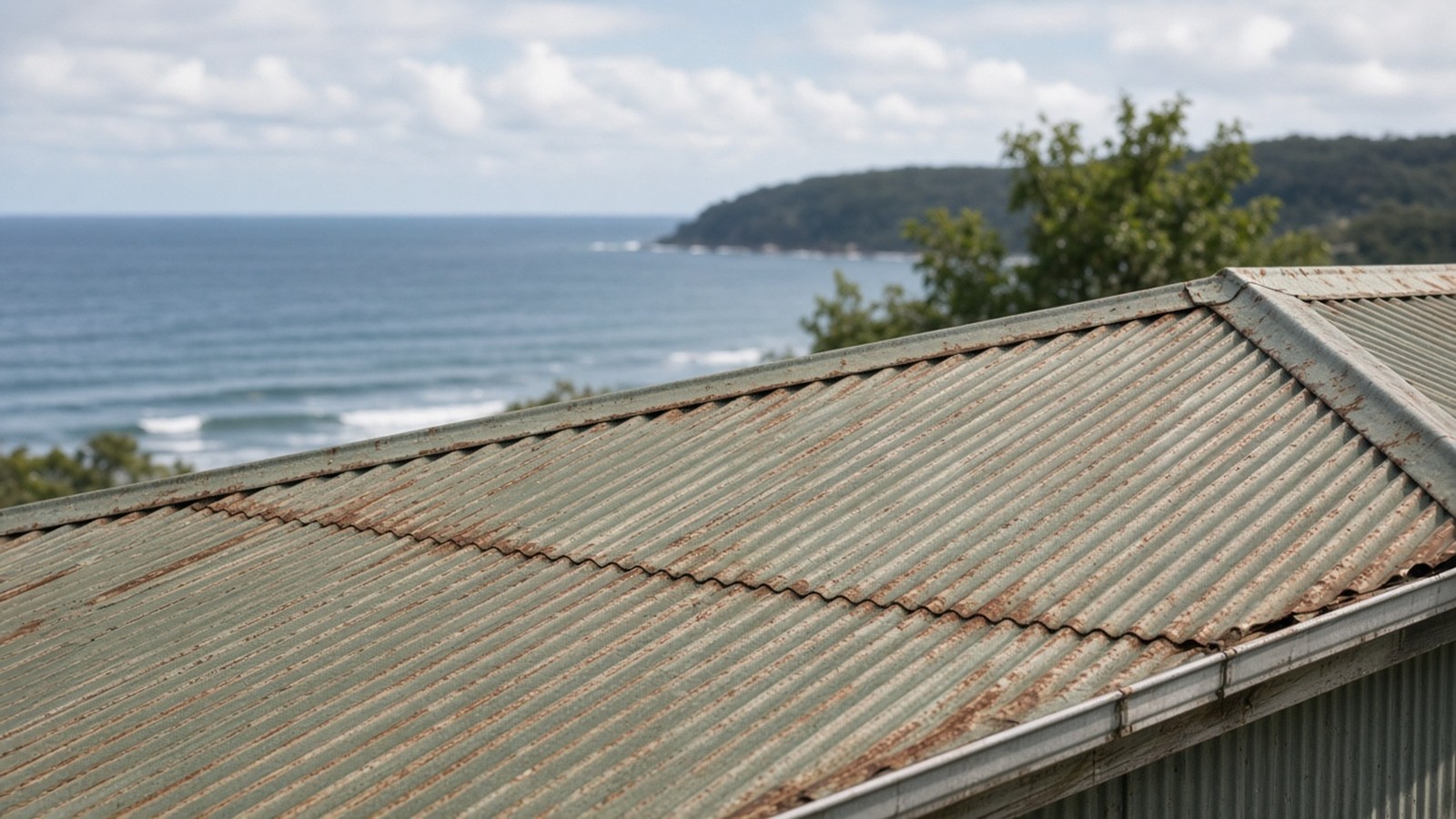
Stand in almost any backyard between Norah Head and The Entrance on a nor’easterly afternoon and you can taste the salt in the air. That same haze settles on every roof along the coast, day after day. Months later it shows up as orange streaks under the screw heads, brown blooms along the sheet laps and, eventually, a drip in the ceiling during the first big summer storm. Most rusty roof repair Central Coast homeowners book in late spring is about catching that damage before the wet weather finds it.
Metal roofs suit the Coast well. They are light, shed water quickly and handle the heat. But salt, sheltered spots that never get rinsed by rain, and a few common installation mistakes can shorten their life a lot. This guide explains why roofs rust here, how to tell surface rust from rust that has gone through, which repairs make sense, and how to keep a roof in good shape before the storm season. Any scenario used to explain a point is labelled as an illustrative example, not a record of a named job.
Why Central Coast roofs rust faster
Salt is the main reason. Wind carries fine salt particles inland from breaking surf, and those particles stick to roofs, gutters and walls. When dew or light rain dampens the salt without washing it away, it sits on the surface and attacks the coating.
BlueScope, the maker of COLORBOND and ZINCALUME steel, groups coastal locations into three salt marine classifications:
- Surf: areas exposed to breaking surf and ocean spray. BlueScope lists open Pacific beaches in regional NSW as examples.
- Exposed: open expanses of salt or brackish water exposed to onshore winds, but not usually prone to breaking surf.
- Calm: protected salt or brackish water such as harbours, bays, river estuaries and saltwater lakes.
On the Central Coast that covers a lot of homes. Houses near the open beaches at Avoca, Terrigal, Forresters Beach and Norah Head face surf conditions. Homes around Tuggerah Lake, Lake Macquarie’s southern shores and Brisbane Water sit near calm salt water. BlueScope notes that prevailing winds, shelter, height above the water and unwashed areas all change how corrosive a site really is, so two houses in the same street can age differently.
The problem with unwashed areas
BlueScope’s maintenance guide for exterior coated steel describes “unwashed areas” as parts of a building sheltered from general rain washing. Dust and salt build up there, absorb moisture from condensation and can start corrosion. Examples include fascias, wall cladding under eaves, garage doors and the undersides of eave gutters, carports and patios.
The same guide recommends washing these areas at least every six months, or every three months in coastal areas where marine salt spray is common. Many homeowners have never heard this, which is why the worst rust is often found under a patio roof or on the back of a gutter rather than on the open roof itself.
Where rust usually starts on a metal roof
Rust rarely appears evenly across a whole roof. It starts in predictable spots, and knowing them helps you understand what a roofer finds during a roof inspection.
Screws and fixings
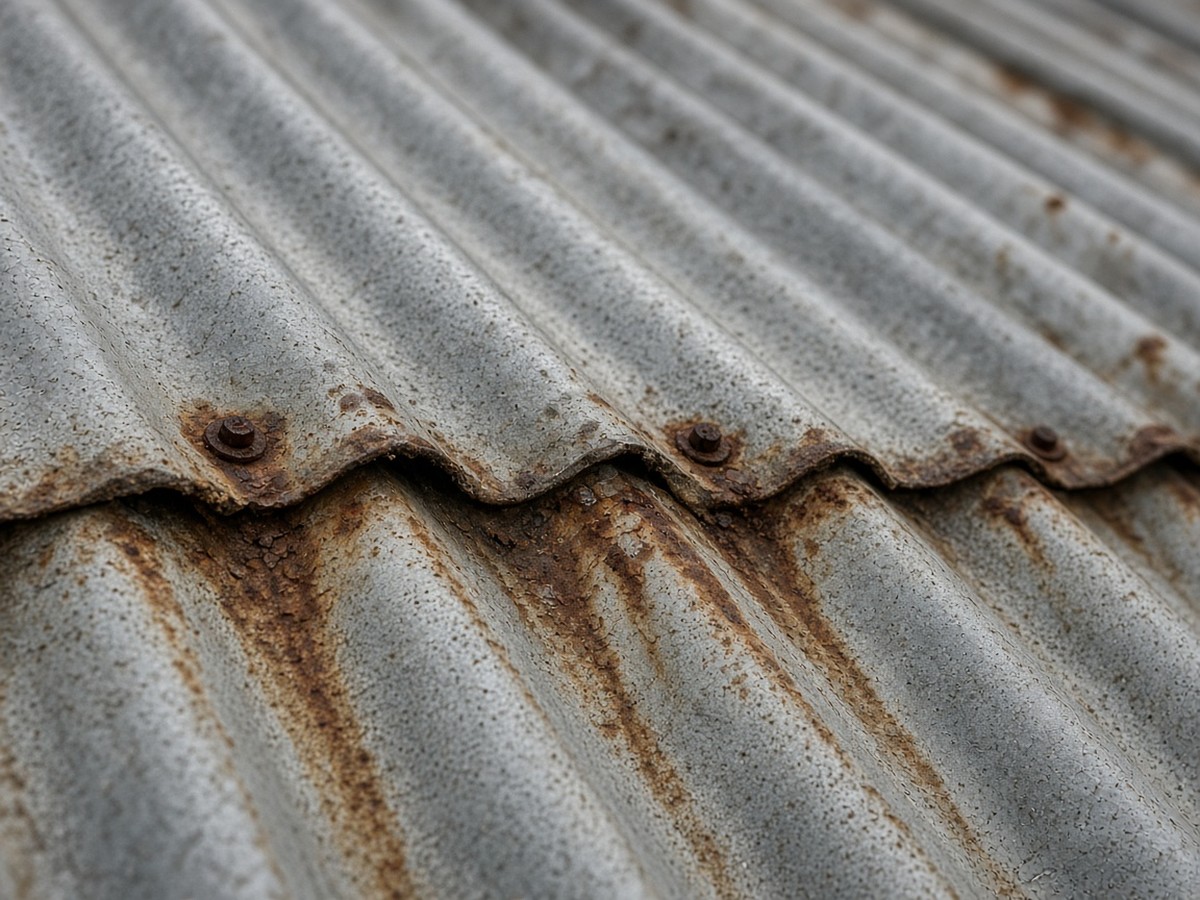
Roofing screws pierce the coating, and old or poor-quality fasteners can rust before the sheet does. Orange rings or streaks running down from screw heads are one of the first signs a roof is ageing. Replacing failed fasteners early can stop the rust spreading into the sheet around them.
Swarf left by previous work
When roof sheets are cut or drilled, tiny metal particles called swarf land on the surface. BlueScope’s general guide to good practice warns that swarf left on a roof is unsightly and can cause localised corrosion and shorten service life, and that debris should be removed at the end of each working day. If an antenna, solar system or skylight was installed and nobody swept the roof afterwards, you may see small rust spots scattered around that area.
Lead flashings and copper run-off
Some older Central Coast homes still have lead flashings around chimneys and walls. BlueScope’s guide to flashing materials states that lead is not compatible with COLORBOND or ZINCALUME steel, which can corrode when in contact with lead or when receiving run-off water from it. The same bulletin warns about copper-rich water run-off, for example from hot water system overflows, and recommends hot water discharge pipes be extended beyond the roof, preferably to the ground.
Laps, valleys and low spots
Where sheets overlap, moisture and salt can sit in the gap. Valleys and areas around penetrations collect leaves and grit that hold water against the steel. Any low spot where water ponds after rain will wear faster than the rest of the roof.
Older galvanised roofs
Many older fibro and weatherboard homes on the Coast still have galvanised iron roofs. These can last a long time, but once the zinc coating wears through, rust spreads more quickly. A roof that has turned dull grey with brown patches is usually telling you it is near the end of its coating life.
Surface rust or rust-through: how to tell
Not all rust is an emergency. The repair depends on how far it has gone.
Surface rust looks like light orange or brown discolouration, often around fixings or in patches. The steel underneath is still solid. It can often be treated and coated if it is caught early.
Rust-through is more serious. Signs include flaking or blistering steel, holes or pinpricks of light when you look up from the roof space, sagging or soft areas, and water stains on ceilings or timber after rain. Once the steel has lost thickness, a coating will not bring back its strength, and the sheet usually needs replacing.
You do not need to climb up to check. From the ground, look for streaks running down the roof, brown patches near the ridge or gutters and rust on the gutter undersides. Inside, check the roof space with a torch after rain for damp timber, stains or daylight through the sheets.
Illustrative example: a Toukley homeowner notices brown marks on the ceiling of a back bedroom after a storm. From the ground the roof looks fine, but a roofer finds a row of rusted screws and two sheets with pinholes along a lap facing the lake. Replacing those two sheets and the fasteners solves the leak, where a full re-roof was not needed yet.
Repair options that actually work
Once a roofer has seen the roof, the options usually fall into four groups.
Spot treatment and touch-up
For small areas of surface rust, BlueScope’s overpainting and restoration guide describes removing all rust thoroughly with a stiff nylon bristle brush, taking care to remove only the corrosion and not the metallic coating, then applying a zinc-rich etch primer before overpainting. The same guide notes that overpainting COLORBOND, ZINCALUME or zinc-coated steel will void any BlueScope warranties, so it is worth checking warranty status on a newer roof first.
Replacing fasteners and flashings
Swapping rusted screws for new ones with sealing washers is a common, low-cost fix. Replacing lead flashings with compatible materials, or separating and painting them as BlueScope describes, stops a repeat of the same problem.
Replacing individual sheets
Where rust has gone through in one area, such as a lap or the run below an old hot water overflow, replacing just those sheets is often the best value. A good roofer will match the profile and use compatible materials so the new sheets do not create fresh corrosion problems.
Restoration or re-roofing
If rust is spread across much of the roof, or the roof is old galvanised iron, a full restoration coating or new roof may be the better long-term choice. Our Colorbond roofing services cover both replacement and repairs, and a roofer can show you photos of the worst areas so you can compare options.
What affects the cost of rust repairs
Every roof is different, so a fair quote depends on what the roofer finds. These are the main things that move the price:
- How far the rust has spread. A few rusted screws and a touch-up cost far less than replacing a run of sheets.
- Access and roof pitch. A steep two-storey roof near the water needs more safety equipment and time than a low single-storey roof.
- The roof profile and material. Matching an older corrugated or Trimdek profile, or a colour that has faded, can take extra sourcing.
- Flashings, valleys and penetrations. Replacing lead flashings or rusted valley irons adds materials and labour.
- Gutters and fascias. Rust on the roof often comes with rusted gutters, and replacing them at the same time can save a second visit.
- Coating versus replacement. A full restoration coating covers the whole roof, while sheet replacement focuses only on damaged areas.
Ask for a written quote that separates these items, with photos of the problem areas. That makes it easier to compare quotes and to decide what to fix now and what can wait a year or two.
Illustrative example: two quotes for the same Bateau Bay roof can look very different if one includes new gutters and fascia covers and the other only covers fasteners and two sheets. Neither is wrong, but you need to see the line items to compare them fairly.
Choosing a coating in a salt marine area
If your roof is being coated, ask what system will be used and why. BlueScope’s restoration guide says water-based acrylic paint is generally the most suitable for overpainting coated steel, but in more corrosive salt marine locations a system with enhanced corrosion resistance, such as a zinc-rich primer, may be needed. It also recommends not mixing paints from different suppliers, for example a primer from one brand and a topcoat from another.
A coating is only as good as the preparation underneath. Rust left behind, salt not washed off or swarf left on the roof will all show up again within a few years. Ask your roofer how they will clean and prepare the surface before any paint goes on.
Keeping rust away after the repair
Most of the work to prevent rust is simple and regular:
- Hose down unwashed areas such as eaves, gutter undersides, patio and carport roofs, every three months if you live near the water.
- Keep gutters and valleys clear so leaves and grit do not hold salty water against the steel. Our gutter cleaning and repair team can do this from a safe position.
- Trim branches that rub on or drop debris onto the roof.
- Make sure hot water and air vent overflows do not discharge onto the roof sheets.
- Ask any trade working on your roof to sweep away swarf before they leave.
- Book a check after major storms or every couple of years, especially on homes facing the surf or the lakes.
COLORBOND’s own advice is that rain does most of the work on exposed surfaces, but sheltered areas need hosing at least every six months and more often in coastal areas, with a mild soap solution if dirt remains.
Stay off the roof
Rust repairs mean working at height on a surface that may be weakened. SafeWork NSW’s guidance on working at heights explains that falls from roofs and ladders cause many serious injuries every year, and sets out the controls trades must use. A rusted sheet can give way under a person’s weight, and wet or dusty steel is slippery.
Leave inspections and repairs to a roofer with the right equipment. Before work starts, check their licence on Verify NSW, and ask for a written quote that lists exactly which sheets, fixings and flashings will be replaced.
Why late spring is the right time
The Central Coast storm season brings heavy downpours, strong winds and the occasional hailstorm through summer. A roof with rusted screws or thin laps may hold up in light rain, then leak in the first real storm, often with the house full of guests over Christmas.
Fixing rust in November or early December gives time to replace sheets or fasteners before the wet weather and before roofers book out for the holidays. If you already have a leak, our roof leak detection and repair service will find the source, and our guide to roof leak repair costs on the Central Coast explains what affects the price.
Get your roof checked before the storms
Salt air is part of living on the Coast, and so is a little rust. The difference between a cheap fix and a new roof is usually how early it is caught. Look for streaks, stains and flaking from the ground, keep sheltered areas washed and have a roofer check fixings, laps and flashings before summer.
On Time Tradie repairs, restores and replaces metal roofs across the Central Coast, from the beachside suburbs to the lakes, including roofing in The Entrance. Our metal roofing services cover everything from fastener replacement to full re-sheeting. Request a quote and we will arrange a time to look at your roof.
Frequently Asked Questions
Why do metal roofs rust faster on the Central Coast?
Wind carries salt from the surf and salt water lakes onto roofs. In sheltered areas the salt is not washed off by rain, so it holds moisture against the coating and can start corrosion, especially near the beaches and lakes.
Can a rusty roof be repaired instead of replaced?
Often, yes. Surface rust can be cleaned back and treated, rusted screws replaced and badly affected sheets swapped out. If rust has spread across much of the roof or the steel has lost thickness, replacement is usually better value.
How do I know if rust has gone right through my roof?
Look for flaking or blistering steel, water stains on ceilings after rain, damp timber in the roof space or pinpricks of daylight through the sheets. A roofer can confirm how far the rust has gone.
Will painting over rust void my Colorbond warranty?
BlueScope states that overpainting COLORBOND, ZINCALUME or zinc-coated steel will void its warranties. Check the warranty on a newer roof before any coating work.
How often should I wash my metal roof near the beach?
BlueScope recommends washing areas not rinsed by rain, such as eaves, gutter undersides and patio roofs, at least every six months, and every three months in coastal areas with salt spray.
What causes rust spots around screws on a new roof?
Small rust spots on a newer roof are often caused by swarf, the metal particles left after cutting or drilling, that were not swept away. Rust around screws can also come from incompatible or poor-quality fasteners.
Is it safe to check my roof for rust myself?
It is safer to look from the ground and inside the roof space. Rusted sheets can give way and metal roofs are slippery, so leave climbing and repairs to a roofer with proper fall protection.