
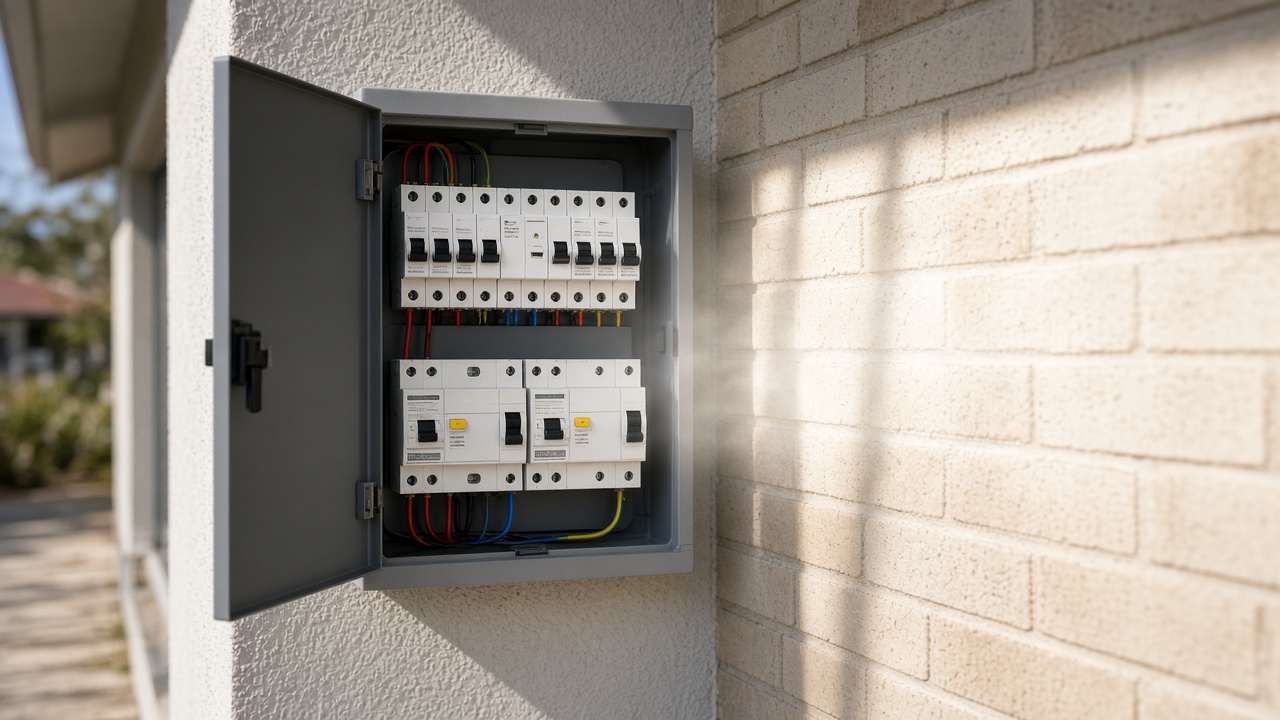
On a still November afternoon in East Gosford, the west wall of a brick house soaks up the sun for hours. The metal switchboard on that wall is warm to the touch. Inside, someone starts a wash, the fridge cycles on, and then the kitchen lights go out with a sharp click. The pattern of circuit breaker trips summer heat Central Coast families describe is usually the same: a board that behaved all winter, a hot afternoon, and a circuit that will not stay on.
Those boards sit in some of the warmest corners of local homes. Around Avoca Beach, Wyoming and The Entrance they are often on an external wall, sometimes in a garage that has been closed since morning. With Christmas guests a few weeks away, many households will run more loads than usual: extra refrigeration, more laundry, outdoor entertaining. A trip can be a simple overload, or it can be the first clear sign that a connection or a breaker is unhappy in the heat.
This guide explains why summer on the Central Coast is hard on circuit breakers, how a breaker differs from a safety switch, what you can safely do when one trips, and when a licensed electrician should take over. Where a scene is used to show a typical situation, it is labelled as an illustrative example, not a record of a named job. Electrical wiring work in NSW is licensed work, and this article does not suggest any DIY inside the board.
Why summer heat on the Central Coast trips breakers
A common household circuit breaker has a thermal trip as well as a magnetic one. The magnetic side reacts to a sudden short. The thermal side reacts to heat, which is how the breaker notices a sustained overload. Makers calibrate that thermal trip at a stated ambient temperature, often in the thirties in degrees Celsius. A switchboard sitting in full sun on a still Central Coast afternoon can run well above that, especially if the enclosure is metal, tight, and on a west or north wall.
In that warmer air, a circuit that is carrying a normal summer load can reach the trip point sooner. The breaker is doing what it was designed to do. It is not proof, on its own, that the wiring is failing. The same symptom can also come from a loose connection that is generating extra heat, from a tired breaker, or from a circuit that is simply being asked to do too much at once. Those causes need a licensed electrician to sort out, because they are not always visible from the toggle on the front.
Garages and external boards are a particular Central Coast issue. A closed garage at Erina or Ettalong can sit well above the outdoor shade temperature. The board then has little moving air, several breakers side by side, and whatever heat the cables themselves produce. Beach suburbs add salt air, which is hard on enclosures and terminals over time. None of that means every trip is an emergency, but it does mean a trip on a hot day is worth taking seriously rather than resetting and walking away.
An illustrative example, not a record of a named job: a family at The Entrance runs the dishwasher, a dryer and a kettle in the late afternoon. The kitchen circuit trips. They reset it, and it holds until the same combination of loads the next day.
An electrician finds a board that is very warm in the sun, a circuit that is close to its limit, and a tight connection that needed to be checked. Heat and load together show up weaknesses that winter hides.
Circuit breakers and safety switches are not the same device
It is easy to treat every toggle in the board as “the switch that tripped.” They are not all doing the same job. NSW Government guidance on electrical safety in the home is clear on the difference. A circuit breaker is designed to protect the circuitry and wiring of your home. A safety switch, also called a residual current device, is designed to protect people from severe electric shock. A safety switch has a test button, often marked “T” or “Test.”
If a safety switch trips, the first question is whether something on that circuit is leaking current to earth: a damaged cord, a wet appliance, or a fault in the installation. If a circuit breaker trips, the first question is overload, short circuit, or heat at the breaker. The action you take is similar in one respect: do not keep resetting a device that will not stay on. The underlying cause may not be.
The same NSW guidance notes that properties built during or after 2000 will usually have safety switches, and that older homes should be checked by a licensed electrician. It also recommends testing safety switches twice a year with the test button, after telling everyone in the house that the power on that circuit is about to go off.
That test is a homeowner action the guidance describes. Opening the board to replace a breaker, add a circuit, or tighten terminals is not. DIY electrical work is described as dangerous and illegal unless you are a qualified electrician. Changing a light globe is the usual exception the guidance gives.
NSW Fair Trading is the state consumer and licensing agency to keep in mind if you need to check a licence. After electrical work, a licensed electrician must provide a Certificate of Compliance for Electrical Work. If you are booking a visit about summer trips, ask for that certificate when the work is done.
What tends to load a Central Coast board in November and December
Late spring into summer changes how a house uses power, even if no one has added a new circuit. Extra food in the fridge and freezer before Christmas makes those appliances run longer. Guest bedding means more washing and drying. Outdoor entertaining can put several appliances on one power point, sometimes through stacked plugs or a coiled extension lead. NSW electrical safety advice for consumers is direct on those last two points: do not stack plugs, because that can overload the power point and cause a fire, and fully unwind extension cords before use, because they may overheat.
Pool pumps, outdoor lighting and workshop tools in a garage are other summer loads that often share a circuit with everyday household outlets. If a trip happens only when two or three of those run together, the cause may be a circuit at its limit rather than a failed breaker. An electrician can measure the load, look at how the circuits were divided, and tell you whether the safe answer is to change how you use that circuit or to add a dedicated circuit. Adding a circuit is licensed work.
This article is about the electrical board and the circuits, not about installing cooling equipment. If a large appliance on a dedicated circuit is tripping its own breaker on hot days, say so when you book. The electrician needs to know what was running, what tripped (breaker or safety switch), and whether the board itself felt unusually hot.
A related topic on this site is how households reduce energy use in summer. Using less at the peak of the afternoon can take pressure off a circuit that is close to its limit, though it is not a substitute for a board that needs attention.
Warning signs that need a licensed electrician, not another reset
A single trip after a obvious overload, which then holds once the extra load is off, can be a useful warning rather than a crisis. Repeated trips, or trips with other signs, are different. Stop resetting and book a licensed electrician if you notice any of the following:
- The same breaker or safety switch trips again after a single careful reset
- The switchboard or a breaker body feels very hot, or you smell burning plastic or warm insulation
- There is discolouration, scorching, buzzing or buzzing that stops when a circuit is off
- Lights flicker, or a circuit dies without a toggle having clearly moved
- A tingle from an appliance or a tap (treat that as a warning, keep clear, and call a licensed electrician)
- The board is an older ceramic-fuse style, or you cannot tell a breaker from a safety switch
- Trips started after water, a storm, or work on the house
NSW Government advice is to treat a tingle or slight shock as a warning, and never to touch that appliance until it is repaired. It also says that if you have or suspect a problem, you should contact a licensed electrician, and that for major problems you should call the emergency number on your electricity bill to make the installation safe.
Do not open the switchboard to inspect terminals, and do not replace a breaker yourself. Electrical wiring work in NSW requires a licence, regardless of the cost of the job. Our guide to when to call a tradie rather than do it yourself is a useful companion on that point for other trades as well.
What to do in the first minutes after a trip
Stay calm and take the simple steps first. Look at the board and identify whether a circuit breaker or a safety switch has moved to the off or tripped position. If you are not sure, do not start switching everything at random.
Turn off or unplug the appliances that were running on that circuit, especially heaters, kettles, dryers, irons and anything that was on a power board. Then, if the area around the board is dry and there is no burning smell and no sign of scorching, you may reset the device once. If it trips again straight away, leave it off and call a licensed electrician. If it holds, bring loads back one at a time so you can see which combination causes trouble.
If you smell burning, see discolouration, or the board is too hot to rest a hand near, leave the relevant circuit off, keep clear, and call for help. If there is a major electrical emergency, use the emergency number on your electricity bill, and call 000 if there is fire or a person has received a shock.
Photograph the board if you can do so safely, including which toggle has tripped. That helps the electrician before they arrive. Note the time, the outdoor conditions (a hot, still afternoon is useful context), and what was running. If the property is a rental, tell the landlord or agent promptly. A dangerous electrical fault is listed among urgent repairs in NSW rental properties.
What a licensed electrician will check
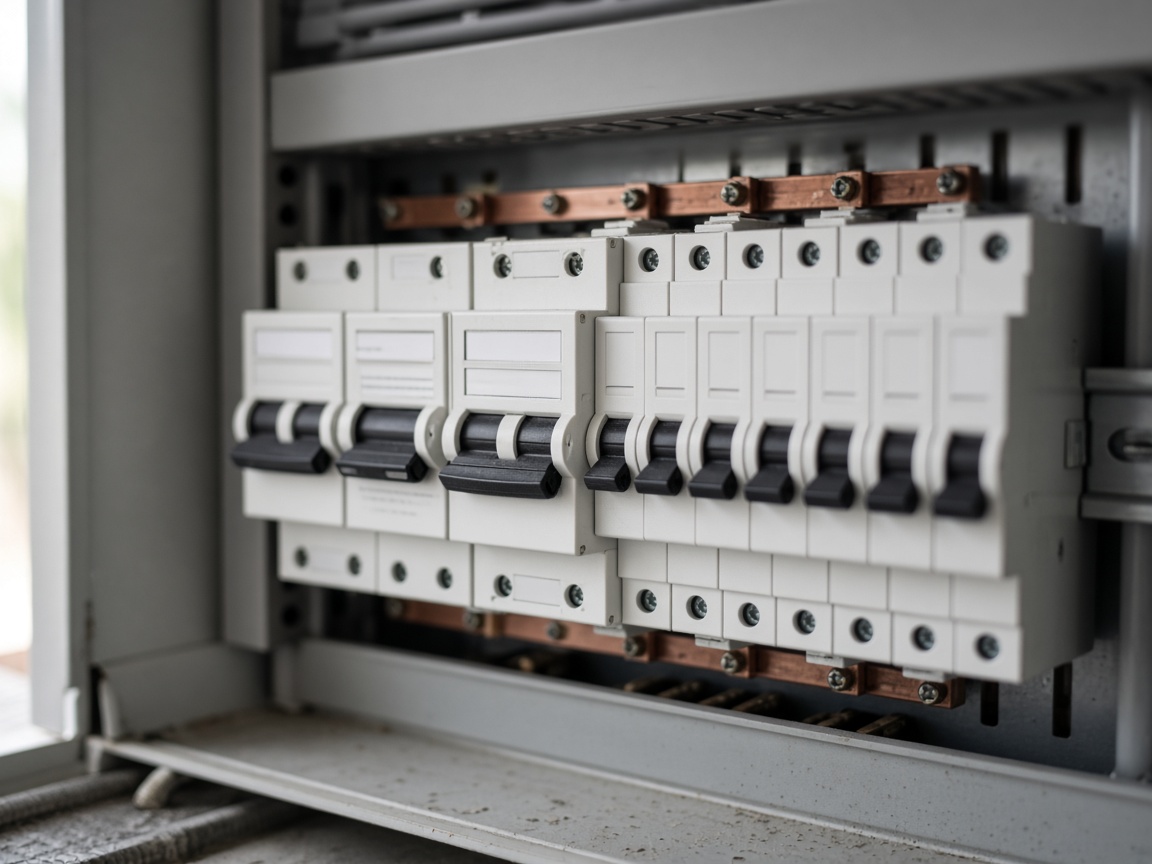
A proper visit is more than a reset. The electrician will usually confirm which device tripped, measure or inspect the load on that circuit, and look at the condition of the board: tightness of connections, signs of heat on insulation or terminals, the rating of the breaker against the cable, and whether a safety switch is present and working on the right circuits.
If the board is in full sun and running very warm, they may discuss shade, a different enclosure, or how the circuits are grouped. Those are design and installation questions, not a homeowner adjustment. If a breaker is tired, or a connection has been arcing, they will repair or replace as licensed work and issue a Certificate of Compliance for Electrical Work.
Sometimes the honest finding is that a circuit is doing too much for its original design. A dedicated circuit for a large appliance, or a switchboard upgrade where the board itself is at the end of its useful life, can be the safe path. That is a separate decision, and it depends on what the electrician sees, not on a general rule from an article. If your board is older and trips are becoming frequent in the heat, it is reasonable to ask about condition and capacity during the same visit.
On Time Tradie electricians work across the Central Coast, including East Gosford, Avoca Beach and Wyoming. Get a quote or call 0488 822 795, and keep the compliance certificate.
A simple summer checklist for Central Coast switchboards
Use this as a once-a-season check, ideally now, before the hottest weeks and before guests arrive:
- Know where the switchboard is, and how to tell a circuit breaker from a safety switch
- Test safety switches twice a year with the test button, as NSW guidance describes, after warning the household
- Unwind extension leads fully, and do not stack plugs on one power point
- Notice whether trips happen only when several appliances run together
- Feel, carefully, whether the enclosure is unusually hot on a still afternoon, without opening it
- Book a licensed electrician if trips repeat, if you smell burning, or if you cannot reset once and have the circuit hold
A circuit that trips in the heat is often the board asking for a proper look. A single careful reset after you reduce the load can be reasonable. A second trip is the point to stop and call On Time Tradie on the Central Coast.
If you are closing the house over Christmas, we have also written about common problems after a summer holiday.
Frequently Asked Questions
Why does a circuit breaker trip on hot Central Coast days?
Many breakers use a thermal trip that reacts to heat as well as current. Makers calibrate that trip at a stated ambient temperature. A switchboard in full sun, or in a closed garage, can run warmer than that, so a normal summer load may reach the trip point. A loose connection or an overloaded circuit can produce the same result and needs a licensed electrician.
Is it safe to keep resetting a breaker that trips in the heat?
No. One careful reset, after you turn off appliances on that circuit and if there is no burning smell or scorching, can be reasonable. If it trips again, leave it off and call a licensed electrician. Repeated resets can hide a fault that is still producing heat.
How is a safety switch different from a circuit breaker?
A circuit breaker protects the wiring. A safety switch protects people from electric shock and has a test button. NSW Government guidance on electrical safety in the home explains this and recommends testing safety switches twice a year. If you are unsure which device you have, a licensed electrician can show you.
Can I replace a tripped breaker myself in NSW?
No. Electrical wiring work in NSW must be done by a licensed electrician, regardless of the cost. DIY electrical work is described by the NSW Government as dangerous and illegal. Changing a light globe is the usual exception. Replacing a breaker is not.
What should I tell the electrician when I book?
Say what tripped (breaker or safety switch, if you know), what was running, whether a reset held, whether the board felt hot, and any smell or discolouration. Photos of the board, taken safely, help. Mention if trips only happen on hot afternoons.
Are summer trips a reason to upgrade the switchboard?
Not automatically. Sometimes the circuit is overloaded, or a single connection needs attention. Sometimes the board itself is tired or poorly placed in the sun. A licensed electrician should inspect and advise. A switchboard upgrade is a separate decision based on what they find.
What if I am renting and the breaker keeps tripping?
Tell the landlord or agent promptly. A dangerous electrical fault is listed as an urgent repair under NSW rental rules. Do not attempt electrical work yourself. Keep a record of when trips happen and what you reported.