
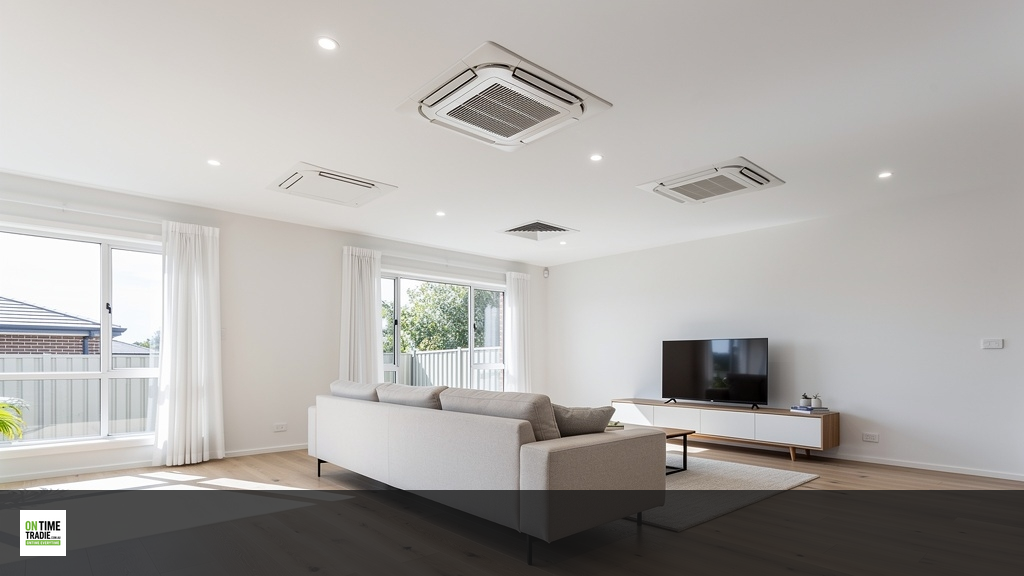
Ducted air conditioning cost on the Central Coast typically ranges from $7,000 to $18,000 fully installed for a standard 3-4 bedroom home, depending on the system capacity, zone count, and installation complexity. This guide covers what drives the price, how to choose the right system for the Central Coast’s humid coastal climate, and what to ask your licensed electrician before committing.
Table of Contents
- What Affects Ducted Air Conditioning Cost?
- Ducted Air Con Costs: Central Coast 2026
- Zoning: How Many Zones Do You Need?
- Sizing for the Central Coast Climate
- What the Installation Involves
- Running Costs vs Split Systems
- Frequently Asked Questions
What Affects Ducted Air Conditioning Cost?
Ducted air conditioning is the largest electrical installation most Central Coast homeowners will ever commission. The cost varies significantly based on system capacity (measured in kW), the number of zones, ceiling cavity access, existing electrical infrastructure, and whether you are installing into a new build or retrofitting into an existing home.
System Capacity (kW)
Ducted systems are sized to the floor area they need to condition. Under-sizing is a common and costly mistake — a system that cannot reach temperature in the hottest Central Coast weeks will run continuously, shortening its life and driving up electricity bills. A licensed air conditioning installer will calculate the required capacity using the home’s floor area, ceiling height, insulation level, window area, and orientation. For most Central Coast homes, this falls in the 10–16 kW range.
Zone Count
A basic ducted system may have 2 zones (e.g. living areas and bedrooms), while a fully zoned system controls each room individually via motorised dampers. More zones mean greater control and energy efficiency — you only condition the rooms in use — but add $500–$1,500 per additional zone to the project cost. On the Central Coast, where homes often have multiple living areas and separate bedroom wings, 4-6 zone systems are common on larger properties.
Roof Cavity Access and Ductwork Run Length
The indoor unit and all ductwork runs through the ceiling cavity. Homes with good roof cavity access and a simple rectangular layout cost less to install than homes with complex rooflines, partial cavity access, or rooms that require long duct runs. A tradespeople-accessible cavity can reduce install time by several hours. Conversely, a difficult install on a two-storey home with a steep pitch or multiple levels may add $1,000–$3,000 to the labour component.
Ducted Air Con Costs: Central Coast 2026
| Home Size / Zones | System Capacity | Typical Installed Cost (AUD) |
|---|---|---|
| Small home, 2-3 bed, 2 zones | 10–12 kW | $7,000 – $10,000 |
| Standard 3-4 bed, 4 zones | 12–14 kW | $10,000 – $14,000 |
| Large 4-5 bed, 6 zones | 14–18 kW | $14,000 – $18,000 |
| Each additional zone (above base) | – | +$500 – $1,500 |
| Difficult roof access surcharge | – | +$800 – $2,500 |
| Electrical upgrade (if switchboard insufficient) | – | +$800 – $2,000 |
Service fees vary between providers. Always confirm the full scope and callout fee before booking.
Zoning: How Many Zones Do You Need?
The right zone count depends on how you use your home. As a starting point: a zone should cover each area you want to independently control. Most families find 4-5 zones practical — a combined living/dining zone, a kitchen zone, 2-3 bedroom zones, and occasionally a study or outdoor-adjacent space.
More zones improve efficiency and comfort but add cost. There is a point of diminishing returns — a 10-zone system on a 250 sqm home is rarely justified unless the family uses radically different areas at different times. Your installer should help you map out a zoning plan during the quote stage.
Sizing for the Central Coast Climate
The Central Coast sits in a humid subtropical coastal climate zone. Summers (December–February) are warm and humid with temperatures regularly reaching 30–36°C in inland Gosford and Wyong areas. The coastal breeze moderates beachside suburbs like Terrigal and Avoca Beach. Winters are mild — rarely below 5°C at night — which means the heating load for ducted systems is relatively low compared to inland NSW.
The key sizing consideration on the Central Coast is humidity, not just temperature. A system rated only for temperature control may struggle to dehumidify effectively in the peak humidity weeks of January and February, particularly in homes with open-plan living and large glass areas facing north or west. Ask your installer to confirm the system’s moisture removal capacity (measured in litres per hour) alongside the kW rating.
What the Installation Involves
A standard ducted installation takes 1–3 days depending on system size and access. The process involves: positioning and securing the indoor (evaporator) unit in the ceiling cavity, running flexible insulated ductwork to each outlet, cutting and fitting ceiling vents in each zone, mounting the outdoor (condenser) unit on a pad or wall bracket, running refrigerant lines and drain lines, connecting to the electrical switchboard, and commissioning the system.
If your switchboard does not have the capacity for a large ducted system (most 10+ kW systems require a dedicated 20A or 32A circuit), an electrical upgrade will be needed. This is assessed during the quote and adds cost but is non-negotiable — undersized electrical supply causes nuisance tripping and can damage the unit. See our related guide on switchboard upgrade costs on the Central Coast for what to expect.
Running Costs vs Split Systems
A properly sized ducted system running in a well-insulated home is not significantly more expensive to run than multiple split systems conditioning the same floor area. The efficiency comes from zoning — a zoned ducted system conditioning only the occupied rooms uses less energy than leaving multiple splits running throughout the house.
Where ducted systems lose on running cost is in older, single-zone installations where the full house is conditioned even when only one area is in use. If you are installing a new ducted system in 2026, a properly zoned inverter system from a quality manufacturer (Daikin, Mitsubishi Electric, Fujitsu, Actron) should achieve efficiency ratings comparable to modern split systems on a per-sqm basis. See our guide on when to call a tradie vs DIY for more on electrical work in the home. For smoke alarm compliance during your renovation, see our smoke alarm installation cost guide.
Get a Ducted Air Con Quote on the Central Coast
On Time Tradie’s licensed electricians cover Gosford, Wyong, Erina, and the Central Coast. Upfront pricing, quality brands, no surprises.
Request a CallbackFrequently Asked Questions
How much does ducted air conditioning cost on the Central Coast?
Ducted air conditioning on the Central Coast typically costs $7,000–$10,000 for a small home with 2 zones, $10,000–$14,000 for a standard 3-4 bedroom home with 4 zones, and $14,000–$18,000 for a larger home with 6 zones. Prices vary with brand, access, and whether the switchboard needs upgrading.
Is ducted air conditioning worth it on the Central Coast?
For homes over 150 sqm or with more than 3 bedrooms, ducted is generally worth it for the comfort consistency and whole-home coverage. On the Central Coast, the humidity factor makes whole-home dehumidification particularly valuable in summer. For smaller homes or units, a quality split system is usually more cost-effective.
Do I need to upgrade my switchboard for ducted air conditioning?
Many older Central Coast homes need a switchboard upgrade before a large ducted system can be installed. Systems 10 kW and above require a dedicated high-amperage circuit. Your installer should assess this during the quote — if an upgrade is needed, expect to add $800–$2,000 to the project.
How long does ducted air conditioning installation take?
Most residential ducted installations take 1–3 days. A straightforward single-storey home with good ceiling cavity access can be completed in a day. Larger or more complex homes, or those requiring electrical upgrade work, take 2-3 days.
What brands of ducted air conditioning do you install on the Central Coast?
On Time Tradie installs all major brands including Daikin, Mitsubishi Electric, Fujitsu, Actron, and Samsung. We recommend inverter-based ducted systems for their efficiency and reliability. Brand selection depends on your home’s requirements and budget — your installer will recommend the best fit during the quote.
Can I get government rebates for ducted air conditioning in NSW?
Standard ducted air conditioning does not currently attract direct NSW Government rebates. However, if you are replacing a gas heating system with a reverse-cycle ducted heat pump, you may be eligible for rebates under the NSW Energy Savings Scheme. Confirm eligibility with your installer at quote time.