
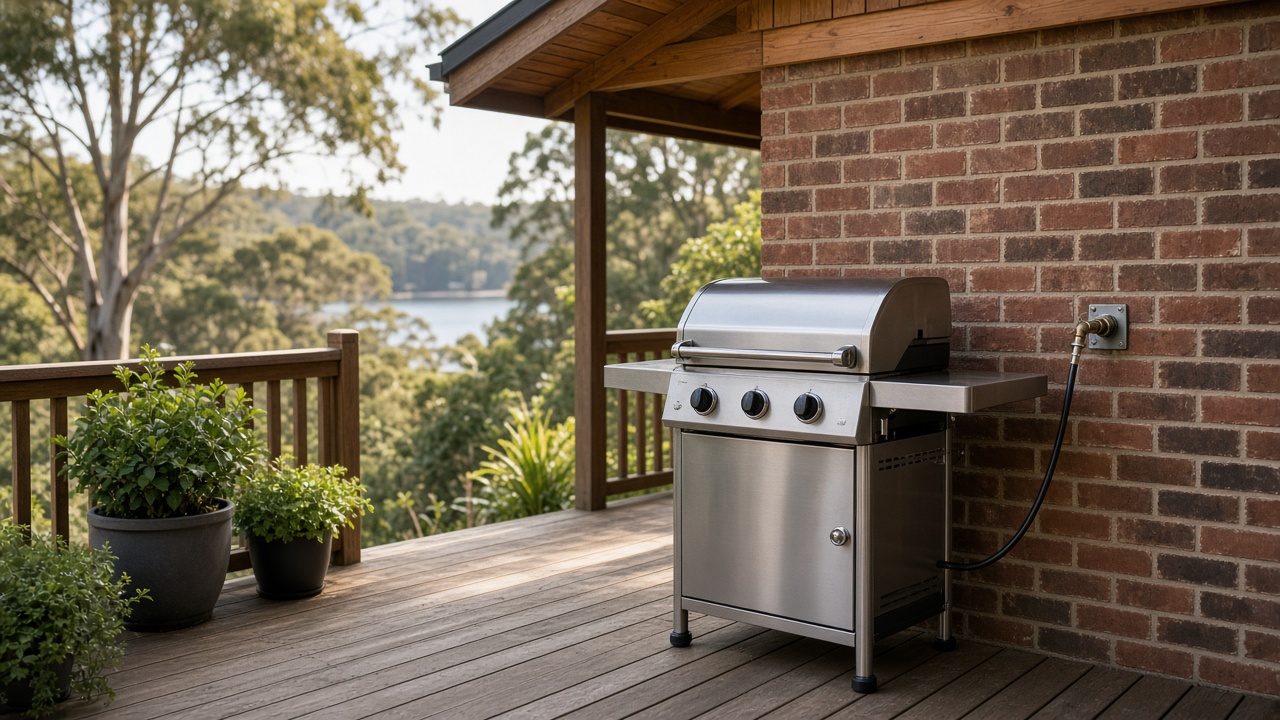
It is the Saturday before Christmas in Wamberal, the prawns are on ice and the snags are ready, and halfway through the first batch the BBQ splutters out. The gas bottle is empty, the servo is ten minutes away and everyone is hungry. It is a familiar summer scene, and it is the reason so many households start asking about gas bayonet installation Central Coast plumbers can fit before the holidays.
A gas bayonet is a wall-mounted outlet that lets you plug a BBQ, or another approved outdoor appliance, straight into your home’s gas supply. On homes already connected to natural gas, it means no more bottle swaps. On homes using LPG, a bayonet can be fed from larger cylinders that sit in a safe spot by the side of the house.
The Central Coast is made for outdoor cooking, from decks in Erina Heights to backyard patios in Bateau Bay and courtyards in Umina Beach. This guide explains how bayonets work, natural gas versus LPG, where to put one, the safety rules in NSW, and what affects the cost. Any scenario used to explain a point is labelled as an illustrative example.
What a gas bayonet actually is
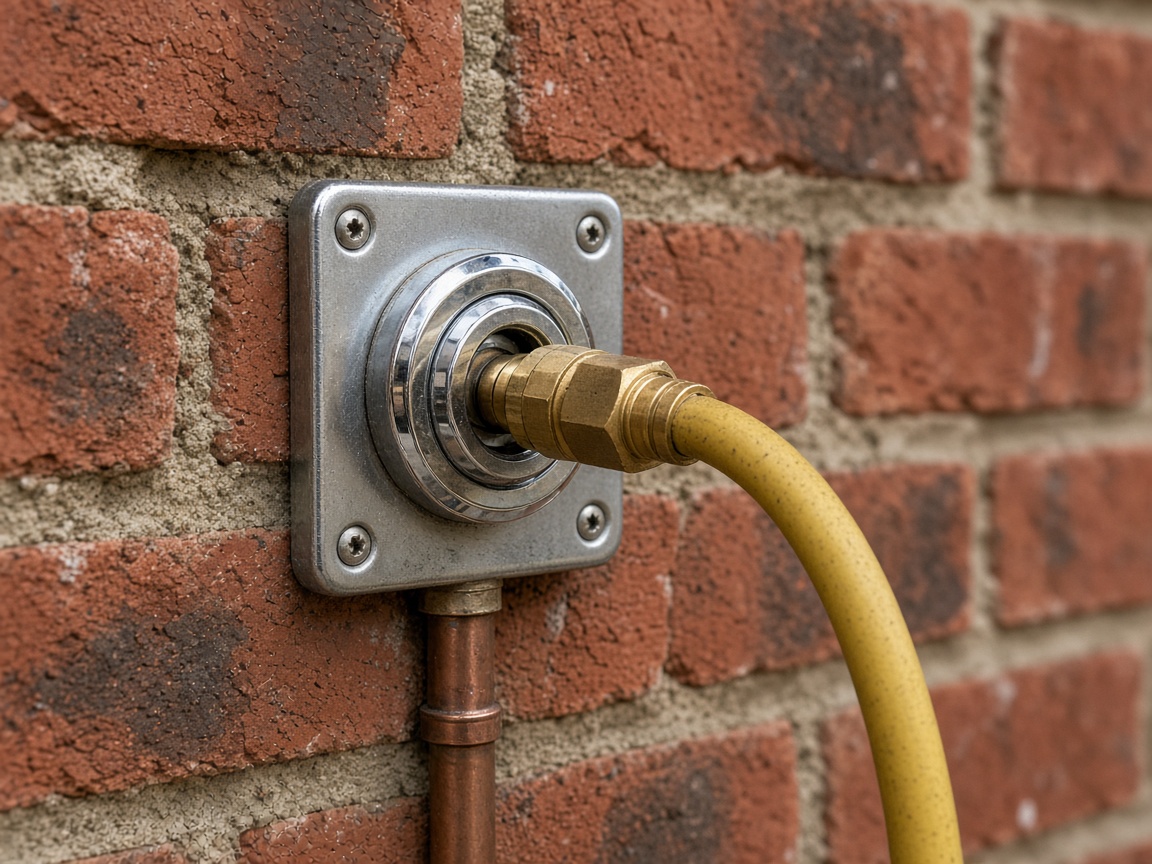
A bayonet fitting is a quick-connect gas outlet. The BBQ hose has a matching plug that pushes in and twists to lock. When the hose is removed, a valve inside the outlet closes and stops the gas.
Behind the wall, the bayonet is connected by fixed gas pipe back to your gas meter or to an LPG cylinder installation. That pipework, the outlet itself and any connection to the supply are gasfitting work.
Bayonets come in several styles. Some are wall-mounted with a flip-up cover, some sit in a small recessed box, and some are mounted on a post for an outdoor kitchen. Outdoor models are built with covers to keep out rain, dust and insects.
The main benefit is convenience. A bayonet also lets you move a portable BBQ between positions, as long as each position has its own outlet and the appliance is approved for that gas type.
Natural gas or LPG: which one suits your home?
The first question is what gas your home already uses, or could use.
Natural gas
Natural gas is piped through a network and measured through a meter. Jemena operates the main gas network in NSW and says on its welcome to gas page that natural gas is used for cooking, heating, hot water, pools and BBQs by around 1.4 million customers across the state.
Many Central Coast suburbs have natural gas in the street, but not all. Newer estates and older semi-rural areas can differ from one street to the next. If your home is not connected, Jemena explains the process on its new gas connections page, where the network connects the meter and a licensed gasfitter does the work behind it.
LPG
LPG comes in cylinders. Many Central Coast homes outside the main gas network run cooktops and hot water from two large cylinders against an outside wall. If you already have that setup, a bayonet can often be added to the existing LPG installation.
If you only use a small swap-and-go bottle for the BBQ, you can keep doing so. A bayonet only makes sense with LPG when it is fed from a properly installed larger cylinder setup.
The appliance must match the gas
A natural gas BBQ and an LPG BBQ are not interchangeable. They use different injectors and regulators. Never plug an LPG BBQ into a natural gas bayonet or the other way around. Converting a BBQ between gas types, where the manufacturer offers a conversion kit, is a job for a licensed gasfitter, not a DIY swap.
Check the data plate on your BBQ before booking. It will say which gas it is built for.
Where to put a gas bayonet
Location affects both safety and how much you will enjoy using it. Good positions share a few features.
- Close to where the BBQ will sit. The appliance hose should reach without stretching, kinking or crossing a walkway.
- Outdoors and well ventilated. BBQs belong outside or in an area with plenty of open sides, not in a closed garage or enclosed room.
- Away from windows, doors and vents that could let gas into the house if there was a leak. Your gasfitter will set clearances using the gas installation standard.
- Protected from damage. Not where the mower, wheelie bins or a car will knock it.
- Easy to reach so you can connect and disconnect the hose without moving furniture.
On a typical Central Coast deck, the bayonet often goes on the wall of the house at about knee height beside the BBQ bay. For an outdoor kitchen, the gasfitter may run pipe under the deck or in a trench to a post-mounted outlet.
Illustrative example: a Killarney Vale family planning a new pergola wants the BBQ at the far end, about eight metres from the meter. The gasfitter recommends running the pipe under the deck before the boards go down, so the bayonet sits exactly where the BBQ will live and no hose crosses the path.
The rules in NSW: who can install a bayonet
In NSW, gasfitting is licensed work. The NSW Government page on using a gasfitter says only licensed gasfitters can carry out repairs or renovations involving gas, including relocating or replacing gas appliances.
The definition of gasfitting work set out on the NSW plumbing, draining and gasfitting licence page covers installing, altering, extending or repairing a gas installation. It treats connecting an appliance at a gas outlet socket differently. In plain terms, a licensed gasfitter installs the bayonet, and once it is in place you can plug in and unplug an approved appliance yourself.
Certificates you should receive
When the work is finished, the gasfitter must give you a certificate. According to the NSW Government, that is a certificate of compliance for network gas or a certificate of inspection for bottled gas. The NSW gasfitter compliance page explains that certificates are lodged through the Building Commission NSW eCert portal within five business days, and that the installation must be tested for defects.
Keep that certificate with your house papers. It may matter for insurance and when you sell.
You can check a gasfitter’s licence on the Verify NSW licence register before work starts.
Safety checks every BBQ owner should know
A bayonet makes life easier, but the usual BBQ safety habits still apply.
Check the hose and connections
Look over the appliance hose at the start of each season and before big gatherings. Replace it if you see cracks, stiffness, bulges or damage from heat or pets. Make sure it does not touch hot surfaces of the BBQ.
Energy Safe Victoria’s BBQ gas cylinder guide describes the soapy water test: squirt the connection with dishwashing liquid and water, and bubbles will form if gas is escaping. The same habit is useful at any gas connection.
LPG cylinder care
If your bayonet or BBQ runs on LPG, the NSW Government’s gas cylinder safety advice says to keep cylinders away from heat and direct sunlight, check valves are tightly turned off when not in use, and not use damaged, corroded or out of date cylinders. Cylinders must have a valid test stamp to be refilled.
Newer BBQs and swap-and-go bottles also use a different connection type. Energy Safe Victoria notes that after 1 April 2022 all new appliances must be supplied with the newer LCC27 style connection, so older hoses may not suit newer bottles.
If you smell gas
- Turn off the BBQ burners and the gas at the bayonet or cylinder if it is safe to do so.
- Do not use open flames, light switches or phones near the leak.
- Move people away and let the area air out.
- Call your gas network’s emergency number, shown on your gas bill, or 000 if there is a fire or someone is unwell.
- Book a licensed gasfitter to find and fix the fault. Our gas plumbing and leak detection team can help.
Planning a bayonet with a bigger outdoor project
Summer is when many Central Coast homeowners finish decks, pergolas and outdoor kitchens. If a bayonet is part of the plan, raise it early.
- Before the deck goes down is the easiest time to run pipe underneath.
- Before paving saves cutting pavers later for a trench.
- Before cabinetry in an outdoor kitchen, so the outlet lines up with the BBQ’s hose entry.
Think about other gas uses at the same time. Some families add a second outlet for a portable heater area or a wok burner. A gasfitter can check that your meter and pipe sizes can supply everything running at once.
Our plumbing inspections and maintenance service can look at the existing gas, water and drainage around an outdoor area before the builder starts. Our plumbing maintenance checklist is a handy companion for the rest of the house.
What affects the cost of a gas bayonet
Every home is different, so treat any price you see online as a rough guide only. The things that change the price most are:
- Distance from the meter or cylinders to the bayonet position.
- Access. Running pipe under a raised deck is quicker than under a low slab or through finished walls.
- Trenching across lawn, garden beds or paving.
- Gas type. Adding a bayonet to an existing LPG setup can involve regulators or cylinder changes.
- Number of outlets and the type of bayonet, such as wall-mounted or post-mounted.
- Appliance conversion if your BBQ needs converting to suit the gas supply.
Ask for a written quote that lists the bayonet location, pipe route, materials, testing and the certificate you will receive. A good gasfitter will also confirm that your BBQ suits the gas supply before starting.
Looking after a bayonet through the seasons
A bayonet needs very little care, but coastal homes are hard on anything metal left outside. Salt air in suburbs like Terrigal, Copacabana and The Entrance can dull covers and stiffen moving parts over time, so a quick look a couple of times a year is worthwhile.
- Keep the cover closed when the BBQ is not connected. It stops rain, sand and insects getting into the outlet. Spiders and mud wasps like small dark openings.
- Wipe away salt and grime from the cover and the area around it with a damp cloth. Do not spray water or cleaning products into the socket.
- Store the BBQ hose properly. Coil it loosely, keep it off hot surfaces and out of reach of chewing pets.
- Watch for changes. If the plug becomes hard to push in or twist, or the outlet does not seem to seal when the hose is removed, stop using it and book a gasfitter.
Over the winter months many families barely use the BBQ. Before the first big cook-up of the season, check the hose, clean the burners and run the soapy water test on the connection. It takes a few minutes and is a good habit to pair with checking smoke alarms when the clocks change.
Bushfire season is worth a thought too. If your home backs onto bush in areas such as Kariong or Somersby, keep the area around the BBQ and any LPG cylinders clear of dry leaves and stored timber, and follow total fire ban rules for outdoor cooking. The NSW Rural Fire Service publishes the current fire danger ratings and bans, and they can change at short notice in summer.
Illustrative example: a couple in Long Jetty notice their bayonet cover has gone stiff and chalky after a few years facing the lake breeze. A gasfitter checks the outlet during a routine visit, confirms it still seals correctly and replaces the cover, which costs far less than replacing the whole fitting.
DIY: what you can and cannot do
You can buy a BBQ, check its data plate, inspect the hose, and connect or disconnect it at a bayonet once one is installed. You can also do the soapy water test on connections.
You should not cut into gas pipe, fit a bayonet, add fittings, change regulators or convert an appliance yourself. Those are gasfitting tasks. Our guide on when to call a tradie versus DIY covers the wider picture for home jobs.
If you ever doubt whether a BBQ or connection is safe, stop using it and get it checked. Our emergency plumbing service is there when something goes wrong at a bad time.
Getting your BBQ point ready for summer
A gas bayonet suits Central Coast homes that cook outside often, already have natural gas or a proper LPG setup, and want an end to empty bottles mid-meal. Check your BBQ’s gas type, pick a sensible outdoor spot, and use a licensed gasfitter who leaves you with the right certificate. Book in November so the job is done and tested before the Christmas rush.
On Time Tradie plumbers and gasfitters work across the Central Coast, including Terrigal and Erina. To plan a bayonet for your deck or outdoor kitchen, get a quote and we will check your gas supply and the best spot for the outlet.
Frequently Asked Questions
Can I install a gas bayonet myself in NSW?
No. Installing a bayonet involves altering or extending a gas installation, which is licensed gasfitting work in NSW. Once a licensed gasfitter has installed it, you can connect and disconnect an approved appliance at the outlet yourself.
Can I plug my LPG BBQ into a natural gas bayonet?
No. LPG and natural gas appliances use different injectors and regulators. Check the data plate on the BBQ. If the manufacturer offers a conversion kit, a licensed gasfitter should do the conversion.
Do I get a certificate after a gas bayonet is installed?
Yes. The licensed gasfitter must provide a certificate of compliance for network gas or a certificate of inspection for bottled gas after testing the installation. Keep it with your property records.
Where is the best place for an outdoor gas bayonet?
Close to where the BBQ will sit, outdoors in a well ventilated spot, protected from knocks and away from windows, doors and vents. Your gasfitter will set exact clearances to suit the gas installation standard.
Is natural gas available in every Central Coast suburb?
No. Many suburbs have natural gas in the street, but some newer estates and semi-rural areas do not. Check with the network or ask your gasfitter. Homes without natural gas can often use a bayonet fed from a larger LPG cylinder installation.
How do I check my BBQ hose for leaks?
Inspect the hose for cracks or damage, then apply a mix of dishwashing liquid and water to the connections with the gas on and burners off. Bubbles mean gas is escaping. Turn the gas off and get it checked before using the BBQ.
When should I book a gas bayonet before Christmas?
November is a good time, because gasfitters get busy in December. If the bayonet is part of a new deck or outdoor kitchen, book before the deck boards, paving or cabinetry go in.