
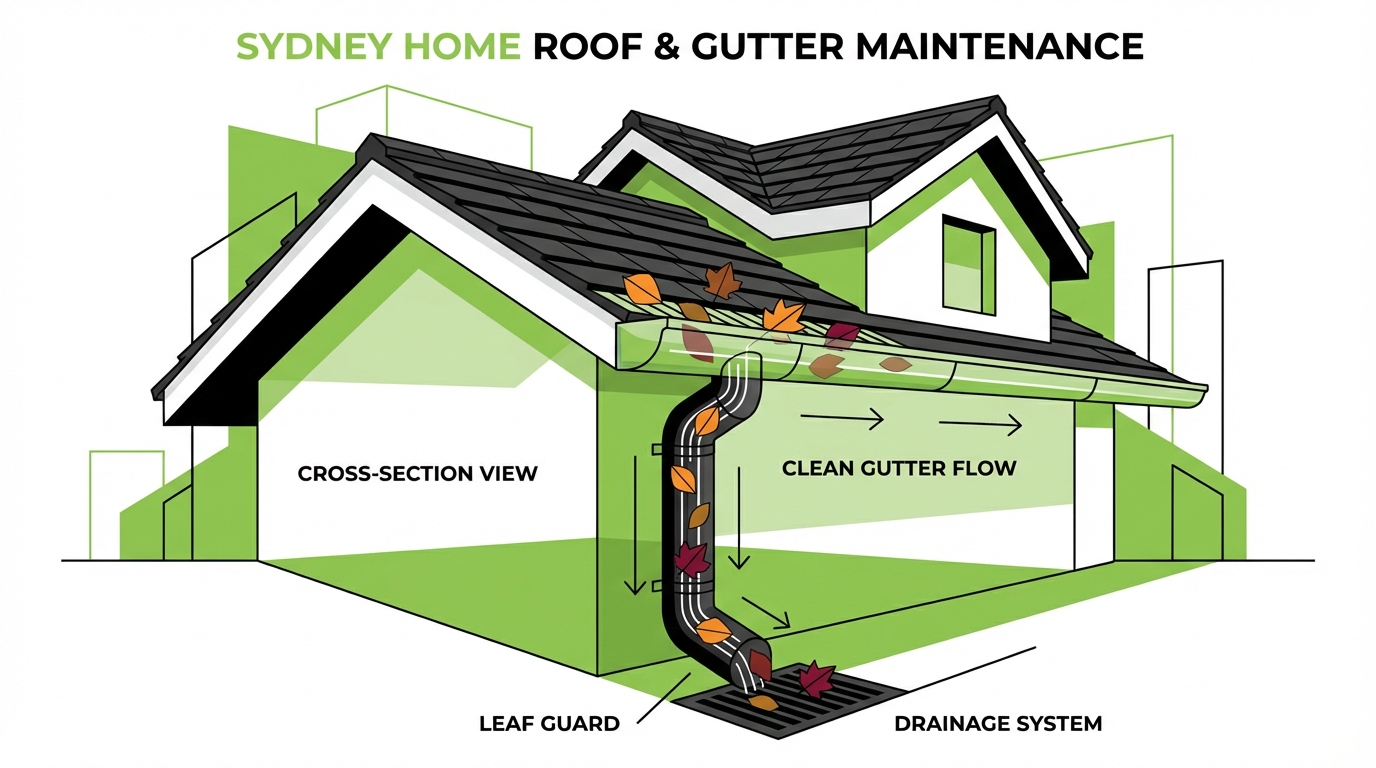
As autumn 2026 settles over Sydney, Central Coast, and Newcastle, homeowners face a critical maintenance window before winter’s torrential rains arrive. Roof and gutter maintenance Sydney professionals report that 78% of winter water damage could have been prevented with proper autumn preparation. With Sydney’s unpredictable weather patterns—from sudden downpours to La Niña storm systems—ensuring your roof and gutters are winter-ready isn’t just good practice; it’s essential protection for your most significant investment.
This comprehensive guide delivers everything Sydney homeowners need to know about roof and gutter maintenance in autumn 2026, including detailed inspection checklists, cost breakdowns, DIY vs professional guidance, and expert timing strategies. Whether you’re in a heritage terrace in Paddington, a modern home in Parramatta, or a coastal property in Manly, this checklist will help you avoid costly winter repairs and protect your home’s structural integrity.
Why Autumn is the Critical Time for Roof and Gutter Maintenance in Sydney
Autumn in Sydney (March through May) represents the optimal maintenance window between summer’s heat and winter’s deluge. Here’s why timing matters:
Seasonal Weather Transition
Sydney’s autumn typically brings moderate temperatures (15-25°C) and lower rainfall compared to summer and winter, creating ideal conditions for roof work. Professional roofers report 40% fewer weather-related delays during autumn compared to spring and summer.
Pre-Winter Storm Preparation
Sydney’s winter months (June-August) deliver an average of 130mm of rainfall monthly—nearly double the autumn average. Clogged gutters and compromised roofing during these months can lead to:
- Water infiltration into walls and ceilings
- Foundation damage from poor drainage
- Fascia and soffit rot
- Internal mold growth
- Structural timber decay
- Ceiling collapse in extreme cases
Autumn Leaf Fall Peak
Sydney’s deciduous trees shed their leaves primarily in autumn, creating the year’s highest volume of gutter debris. Properties near eucalyptus, plane trees, and native species can accumulate 20-50kg of leaf matter in gutters during this period.
Cost Advantages
Roof maintenance before winter Sydney costs typically run 15-25% lower in autumn compared to emergency winter repairs. Tradies also have greater availability before the winter rush.
The True Cost of Neglecting Roof and Gutter Maintenance
Understanding the financial impact of deferred maintenance helps prioritize autumn preparation:
Gutter Cleaning Sydney Cost (2026 Pricing)
- Single-storey home: $180-$300
- Double-storey home: $250-$450
- Triple-storey home: $400-$600
- Additional downpipe cleaning: $50-$80 per downpipe
- Gutter guard installation: $35-$70 per metre
Roof Maintenance Sydney Cost (2026 Pricing)
- Basic roof inspection: $200-$350
- Minor repairs (replacing 5-10 tiles): $350-$600
- Ridge capping repointing: $1,200-$2,500
- Valley iron replacement: $800-$1,500
- Flashing repairs: $400-$900
- Full roof restoration: $5,000-$15,000+
Cost of Neglect: Emergency Winter Repairs
- Water damage ceiling repair: $1,500-$5,000
- Foundation repair from poor drainage: $3,000-$15,000
- Mold remediation: $2,000-$8,000
- Emergency roof leak repair (after hours): $500-$1,200 call-out fee plus repairs
- Internal painting and restoration: $3,000-$10,000+
The ROI of Preventative Maintenance
Investing $400-$800 in autumn roof and gutter maintenance can prevent $5,000-$20,000 in winter emergency repairs. That’s a return on investment of 625-2500%.
Complete Autumn Roof and Gutter Maintenance Checklist for Sydney Homes
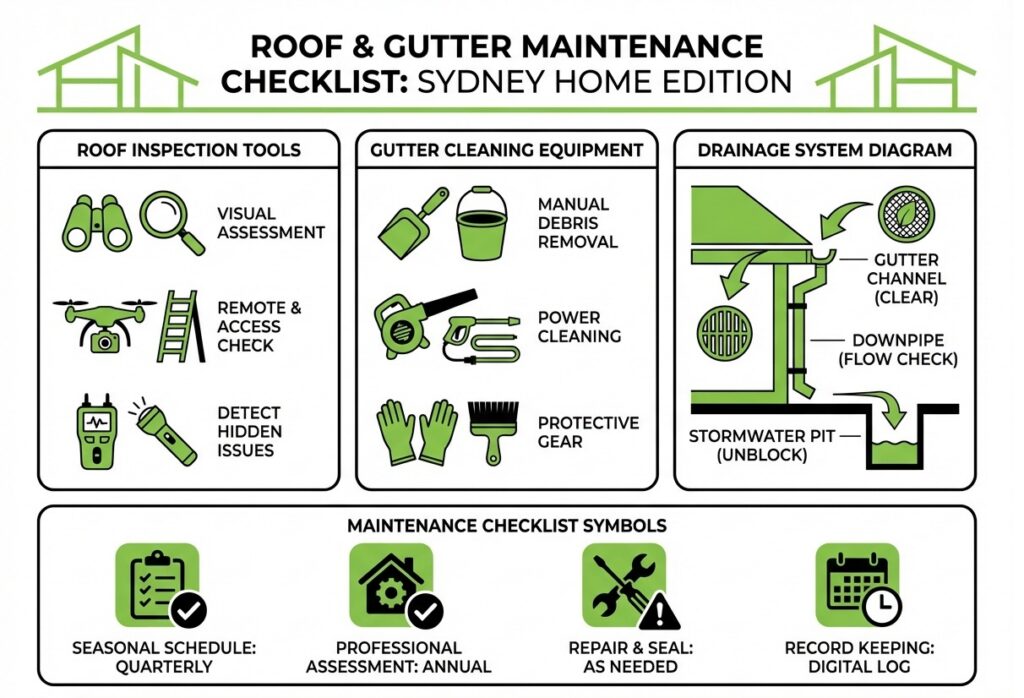
This comprehensive checklist covers every critical maintenance task for Sydney properties. Print this section and use it as your go-to guide for autumn 2026.
Gutter System Inspection and Cleaning
- Remove all debris: Clear leaves, twigs, tennis balls, bird nests, and sediment from gutters
- Flush downpipes: Use a hose to ensure water flows freely through all downpipes
- Check for standing water: Gutters should drain completely; standing water indicates incorrect fall/pitch
- Inspect gutter brackets: Ensure brackets are secure and spaced correctly (max 1.2m apart)
- Look for rust or corrosion: Colorbond gutters typically last 20+ years; galvanized steel shows rust after 10-15 years
- Check gutter alignment: Gutters should slope 1:100 (1cm per metre) toward downpipes
- Examine gutter joints: Look for gaps, separation, or leaking seams
- Assess downpipe placement: Ensure downpipes direct water at least 2m from foundations
- Clean gutter mesh/guards: If installed, remove debris buildup on top of guards
- Document problem areas: Take photos of damage for tradie quotes or insurance claims
Roof Structure and Surface Inspection
- Inspect from ground level first: Use binoculars to check for obvious damage without roof access
- Check roof tiles or sheets: Look for cracked, broken, slipped, or missing tiles/sheets
- Examine ridge capping: Check for loose, cracked, or deteriorating ridge cement/mortar
- Inspect roof valleys: Valley irons should be intact with no rust holes or separation
- Assess flashing condition: Check flashing around chimneys, skylights, vents, and roof joints
- Look for sagging areas: Sagging indicates structural issues requiring immediate professional assessment
- Check for moss or lichen growth: Growth indicates moisture retention and poor drainage
- Inspect roof penetrations: Vents, pipes, and antennas should have intact seals and flashing
- Examine soffit and fascia: Look for rot, water stains, or pest damage
- Assess roof ventilation: Ensure vents are clear and functional to prevent moisture buildup
Safety Considerations: When NOT to DIY
CRITICAL SAFETY WARNING: Roof access is the leading cause of DIY homeowner injuries in Australia, with falls accounting for 40% of serious home maintenance injuries.
Never attempt roof access if:
- Your roof pitch exceeds 25 degrees (most Sydney terrace and heritage homes)
- You don’t have proper safety equipment (harness, anchor points, non-slip footwear)
- Weather conditions are wet, windy, or forecasted to change
- You’re working alone without a spotter
- Your roof is tile (tiles can crack under foot pressure)
- You’re over 60 or have balance/mobility issues
Always call a licensed roofer for:
- Any repair work beyond ground-level gutter cleaning
- Properties over single-storey height
- Heritage-listed or strata properties (insurance requirements)
- Suspected structural damage
- Steep-pitched roofs common in Sydney’s older suburbs
Licensed Sydney roofers carry public liability insurance (minimum $10 million) and WorkCover insurance, protecting you from liability if accidents occur.
DIY vs Professional: Making the Right Choice for Your Sydney Home
Understanding when to tackle maintenance yourself versus hiring a professional saves money while ensuring safety and quality results.
DIY-Appropriate Tasks (Single-Storey, Safe Access)
- Ground-level gutter cleaning: Using a sturdy ladder and gutter scoop, suitable for single-storey homes with safe access
- Downpipe flushing: Using a garden hose to clear minor blockages from ground level
- Visual inspection: Using binoculars to spot obvious damage without roof access
- Trimming overhanging branches: Keeping trees pruned back 2-3m from roof edge prevents debris accumulation
- Installing gutter guards: On single-storey homes with safe ladder access (note: may void professional warranties)
- Cleaning solar panels: If safely accessible and using manufacturer-approved methods
- Documenting issues: Taking photos and notes for professional assessment
Professional-Only Tasks (Always Hire Licensed Tradies)
- Any roof surface access: Professional roofers have safety equipment, insurance, and training
- Tile or metal sheet replacement: Requires specific skills to prevent further damage and maintain warranties
- Ridge capping repairs: Specialized mortar work requiring trade certification
- Flashing installation or repair: Critical waterproofing requiring precision and materials knowledge
- Valley iron replacement: High-risk area for leaks; improper installation causes major water damage
- Structural repairs: Any sagging, rot, or structural issues require licensed assessment
- Gutter replacement or realignment: Requires proper fall calculations and secure bracket installation
- Multi-storey properties: Height safety regulations require professional access equipment
- Heritage or strata properties: Often require specific insurance, approvals, and certified tradies
- Asbestos roofing: Any work on asbestos requires licensed removalists under NSW regulations
Sydney-Specific Roof and Gutter Considerations
Sydney’s unique climate, architecture, and regulations require specific maintenance approaches:
Heritage and Period Homes (Inner-City Suburbs)
Properties in Paddington, Newtown, Glebe, Balmain, and Surry Hills often feature:
- Original terracotta tiles (requiring specialist handling)
- Steep-pitched roofs (35-45 degrees)
- Box gutters (prone to overflow if not maintained)
- Heritage listing restrictions (requiring council-approved tradies)
- Party walls (requiring neighbor consultation for shared gutters)
Coastal Properties (Eastern Suburbs, Northern Beaches)
Salt air accelerates corrosion, requiring:
- More frequent inspections (twice yearly minimum)
- Colorbond or marine-grade materials
- Rust prevention treatments
- Enhanced gutter guard systems to manage wind-blown debris
Western Sydney (Parramatta, Penrith, Liverpool)
Extreme temperature variations demand:
- Thermal expansion considerations for metal roofing
- Heat-resistant materials
- Enhanced ventilation to prevent heat buildup
- Gutter systems sized for sudden storm events
Tree-Dense Areas (North Shore, Northern Suburbs)
Properties near bushland or leafy streets require:
- Quarterly gutter cleaning (not just bi-annual)
- Gutter guards rated for heavy leaf fall
- Regular branch trimming maintenance
- Fire prevention considerations (ember guard for bushfire-prone areas)
Strata and Multi-Unit Properties
Additional requirements include:
- Strata committee approval for major works
- Shared cost arrangements
- Insurance compliance (often requiring certified tradies)
- Body corporate notification requirements
Optimal Timing: When to Schedule Your Autumn Maintenance
Strategic timing maximizes effectiveness and tradie availability:
March (Early Autumn)
- Ideal for initial inspections before leaf fall peaks
- Best tradie availability (pre-winter rush)
- Weather typically dry and mild
- Book now for April/May work
April (Mid-Autumn)
- Peak leaf fall period—perfect timing for comprehensive cleaning
- Moderate temperatures for DIY work
- Still good tradie availability
- Complete work before May rains increase
May (Late Autumn)
- Last opportunity before winter wet season
- Tradie availability tightens
- Weather becomes less predictable
- Final chance for preventative work before winter storms
After Major Weather Events
- Always inspect after severe storms, hail, or high winds
- Check for new damage even if recent maintenance completed
- Document damage within 48 hours for insurance purposes
Recommended Schedule
For optimal protection, follow this annual maintenance cycle:
- March: Initial inspection and minor repairs
- April: Major cleaning and gutter maintenance
- May: Final pre-winter check and any remaining repairs
- September: Post-winter damage assessment
- November: Pre-summer storm preparation check
Warning Signs You Need Immediate Roof or Gutter Attention
Recognizing these red flags can prevent minor issues from becoming major expenses:
Critical Warning Signs (Call a Professional Immediately)
- Water stains on ceilings or walls
- Sagging or uneven roofline visible from street level
- Gutters pulling away from fascia or obvious damage
- Water pooling near foundation after rain
- Interior dampness, mold, or musty odors in ceiling spaces
- Visible light through roof boards from attic/ceiling space
- Excessive granules in gutters (indicates roof material breakdown)
- Cracked or broken tiles/sheets visible from ground
- Water overflowing gutters during moderate rain
Moderate Warning Signs (Schedule Inspection Within 2-4 Weeks)
- Gutters holding standing water 24 hours after rain
- Visible moss or lichen growth on roof surface
- Fascia or soffit showing paint peeling or discoloration
- Downpipes making gurgling sounds (partial blockage)
- Gutters showing rust spots or small holes
- Ridge capping visibly loose or mortar cracking
- Trees overhanging within 2 meters of roof
- Previous repairs showing new deterioration
Frequently Asked Questions: Roof and Gutter Maintenance Sydney
Q: How much does professional gutter cleaning cost in Sydney in 2026?
A: Professional gutter cleaning in Sydney ranges from $180-$300 for single-storey homes, $250-$450 for double-storey homes, and $400-$600 for triple-storey properties. Prices vary based on linear metres of guttering, property access, debris volume, and whether downpipe flushing is included. Most Sydney professionals charge either per metre ($4-$7/m) or hourly ($200-$250/hour). Always get three quotes and confirm insurance coverage before booking.
Q: How often should gutters be cleaned in Sydney?
A: Sydney homeowners should clean gutters at least twice annually: once in autumn (April-May) after peak leaf fall, and once in early summer (November) before storm season. Properties near heavy tree coverage require quarterly cleaning. Coastal properties benefit from additional inspections due to salt air corrosion. Multi-storey buildings and strata properties often require professional cleaning every 3-4 months to maintain insurance compliance.
Q: Can I clean my own gutters, or should I hire a professional?
A: DIY gutter cleaning is suitable for single-storey homes with safe ladder access, no steep pitch, and if you have appropriate safety equipment. However, hire a professional for: any property over single-storey, steep-pitched roofs (>25 degrees), terrace homes with party walls, heritage properties, if you lack proper safety equipment, or if you’re uncomfortable with heights. Professional tradies carry insurance protecting you from liability—a critical consideration as falls cause 40% of serious DIY home maintenance injuries in Australia.
Q: What are the signs that my roof needs maintenance before winter?
A: Key warning signs include: water stains on ceilings or walls, gutters overflowing during rain, standing water in gutters 24+ hours after rain, visible broken or missing tiles from ground level, sagging roofline, gutters pulling away from fascia, moss or lichen growth on roof surface, excessive granules in gutters, and interior dampness or musty odors. Any of these signs warrant immediate professional inspection before winter rains arrive.
Q: Are gutter guards worth installing in Sydney?
A: Gutter guards are highly worthwhile for Sydney properties near heavy tree coverage, particularly eucalyptus, plane trees, and native species. Quality mesh guards ($35-$70 per metre installed) reduce cleaning frequency from quarterly to bi-annually and prevent bushfire ember entry in fire-prone areas. However, guards don’t eliminate maintenance—you’ll still need annual professional cleaning to remove fine debris buildup on the mesh. Avoid cheap plastic guards that crack in Sydney’s UV exposure; invest in metal mesh or Colorbond guard systems for longevity.
Q: How do I choose a reliable roofer or gutter cleaner in Sydney?
A: Select Sydney tradies using these criteria: (1) Verify current NSW Fair Trading license, (2) Confirm minimum $10 million public liability insurance, (3) Check WorkCover coverage for worker injuries, (4) Read recent Google and hipages reviews, (5) Get three detailed written quotes comparing scope and materials, (6) Ask for references from recent similar projects, (7) Verify they use Australian Standards-compliant materials, (8) Ensure written warranty (minimum 12 months for labor), (9) Confirm they’ll obtain any required council approvals, (10) Check membership in Master Builders Australia or Housing Industry Association. Never pay full amount upfront—standard deposit is 10-20%.
Q: What’s included in a professional roof inspection in Sydney?
A: Comprehensive Sydney roof inspections ($200-$350) include: full roof surface examination (tiles, metal sheets, or other materials), ridge capping assessment, valley iron inspection, flashing condition around penetrations, gutter and downpipe evaluation, fascia and soffit inspection, internal ceiling space check for leaks or damage, assessment of roof ventilation adequacy, photo documentation of all findings, detailed written report with repair recommendations and cost estimates, and compliance check with Australian Standards. Licensed roofers should provide this report within 48 hours of inspection.
Q: When is the best time of year for roof repairs in Sydney?
A: Autumn (March-May) and spring (September-November) offer optimal conditions for roof repairs in Sydney: moderate temperatures, lower rainfall, and better tradie availability. Avoid scheduling non-urgent repairs during peak summer (December-February) when extreme heat makes roof work hazardous, or mid-winter (June-August) when rain delays are common. For emergency repairs, reputable Sydney tradies offer 24/7 service year-round, though premium rates apply for after-hours call-outs ($500-$1,200 surcharge plus repair costs).
Conclusion: Protect Your Sydney Home This Autumn 2026
Autumn 2026 presents Sydney homeowners with a critical maintenance window—one that can mean the difference between a dry, protected home and costly winter water damage. With Sydney’s winter months delivering heavy rainfall and unpredictable storm patterns, roof and gutter maintenance isn’t optional; it’s essential infrastructure protection.
The investment is modest: $400-$800 for comprehensive autumn maintenance versus $5,000-$20,000 for emergency winter repairs and water damage remediation. The ROI speaks for itself.
Your Action Plan for Autumn 2026:
- Immediate (This Week): Conduct ground-level visual inspection using the checklist in this guide
- March-April: Book professional roof and gutter inspection with a licensed Sydney tradie
- April-May: Complete all recommended repairs and cleaning before winter rains
- May: Conduct final pre-winter verification check
- June+: Monitor during first winter storms and address any new issues immediately
Don’t wait until the first winter storm reveals vulnerabilities in your roof and gutter system. Sydney’s autumn weather provides a brief, optimal window for this critical maintenance—and that window is closing.
Need Expert Help? Contact Ontime Tradie Today
Ontime Tradie serves Sydney, Central Coast, and Newcastle with comprehensive roof and gutter maintenance services backed by licensed professionals, full insurance coverage, and a lifetime warranty on workmanship. Our team understands Sydney’s unique climate challenges and architectural considerations, from heritage terraces to modern coastal properties.
Available 24/7 for emergency repairs and autumn maintenance bookings.
Don’t let autumn pass without protecting your home’s most critical defense against Sydney’s winter weather. Book your roof and gutter inspection today and enjoy peace of mind when the storms arrive.
