
Plumbing Emergency in Sydney? Here’s What to Do Right Now
Finding a reliable emergency plumber in Sydney when water is spraying through your ceiling or flooding your laundry is one of the most stressful situations a homeowner faces. This guide cuts through the noise — what counts as a genuine plumbing emergency, what you can do immediately to limit damage, what it will cost, and how to find a licensed plumber quickly in the Sydney metro area.
What Counts as a Plumbing Emergency
An emergency plumber in Sydney is typically called for situations where delaying repair will cause significant property damage, create a health or safety hazard, or leave your household without access to essential services. Not every plumbing problem warrants an after-hours callout — understanding the difference saves you money and ensures genuine emergencies get attended to faster.
True Plumbing Emergencies (Call Immediately)
- Burst pipe with active flooding — water entering living areas, ceilings, walls, or subfloor
- No water supply to the property — a main or internal stopcock failure that has cut off all water
- Gas leak suspected — smell of gas indoors or near appliances (call your gas supplier first: AGL/Jemena emergency line)
- Sewage overflow into living areas — a blocked drain causing sewage to back up through floor waste drains or toilets
- Hot water system leaking from the tank body — active flooding from a failed storage tank
- Only toilet on the property blocked — particularly in a single-bathroom home with children or elderly residents
Urgent but Not Necessarily After-Hours
- No hot water (unless there are vulnerable people in the household)
- Slow-draining blocked drain with no overflow
- Dripping tap or running cistern
- PTR valve dripping on hot water system
Immediate Steps to Take Before the Plumber Arrives
In a plumbing emergency, the actions you take in the first five minutes significantly affect how much damage your property sustains. Every Sydney home has isolation points that can stop water flow — knowing where they are before an emergency happens is one of the best home maintenance habits you can develop.
Locate Your Water Mains Shutoff
The main water shutoff for most Sydney homes is at the water meter, typically located at the front of the property near the street or in a ground-level meter box. Turn the valve clockwise to isolate the entire water supply. For apartments, there’s usually a building shutoff in the meter room — know where it is before you need it.
Turn Off the Hot Water System
If the emergency involves your hot water system, turn off the power to the unit at the switchboard (for electric systems) or turn off the gas supply at the gas meter (for gas systems). Then turn off the cold water supply to the unit at the isolation valve on the cold water pipe entering the tank.
Document the Damage
Take photos and short videos of the damage before cleaning up — this is important for any insurance claim. Note the time the problem started and what you observed. Your home insurer may cover emergency plumbing callouts in certain circumstances, particularly for sudden and accidental damage.
If flooding has affected your ceiling or walls, be cautious around electrical outlets and switches. If there’s any doubt about the safety of your electrical system, don’t touch switches — turn off the main circuit breaker at the switchboard.
Most Common Plumbing Emergencies in Sydney Homes
Burst Pipes
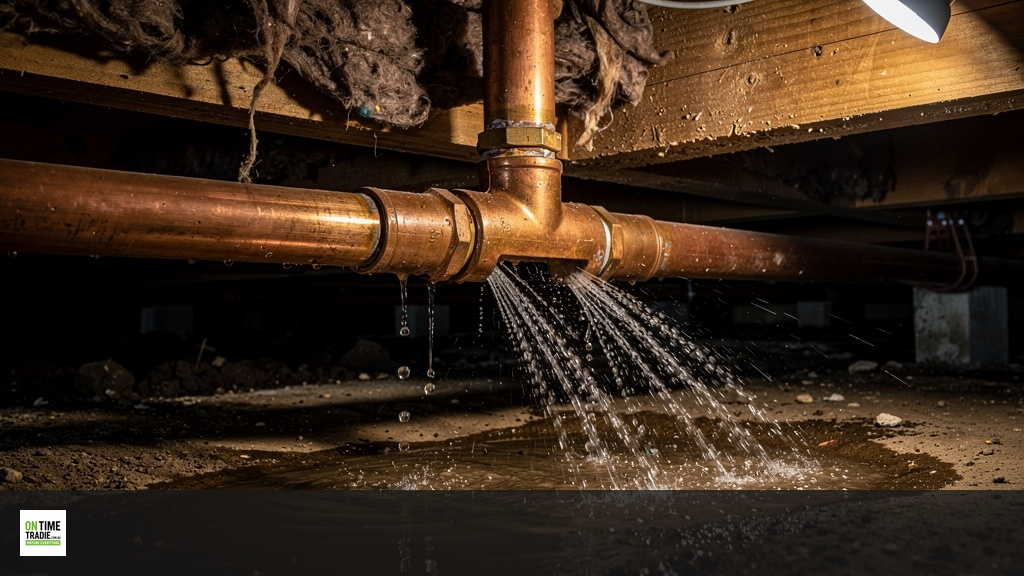
Burst pipes in Sydney homes most commonly occur in older properties with corroded galvanised steel piping, in copper pipes with poor-quality compression fittings, or following unusually cold nights in elevated parts of greater Sydney (Blue Mountains, Penrith, and outer western suburbs). A burst pipe in a wall or under a slab requires a licensed plumber to locate the break, cut access, and replace the section — it cannot be patched with tape or sealant.
Blocked Drains with Overflow
A blocked drain is the most frequent reason for after-hours plumbing callouts in Sydney. Tree root intrusion is the leading cause in established suburbs — roots from nearby trees find their way into clay or concrete stormwater and sewer pipes through small cracks, expanding over years until flow is completely blocked. A CCTV drain inspection after clearing the blockage is worthwhile for repeat occurrences, as it reveals whether the pipe itself needs relining or replacement.
Hot Water System Failure
The most common hot water system in Sydney is a white cylindrical electric or gas storage tank on an external wall. When the tank body fails — rather than a component — it usually starts with a slow weep from the base before becoming an active leak. A failed tank cannot be repaired and must be replaced. If your tank is over 10 years old and developing a leak, replacement is the correct call rather than a temporary repair. For context on costs, our gas hot water installation guide covers replacement options.
No Water Pressure or No Water Supply
A sudden loss of water pressure across all taps (not just one) usually means a burst in the main water line, a failed pressure-limiting valve (PLV), or a Sydney Water supply disruption. Check Sydney Water’s outage map at sydneywater.com.au before calling a plumber — if it’s a Sydney Water network issue, no plumber can resolve it. If the outage map shows no reported issues in your area, it’s a fault within your property and requires a plumber.
Sewage Backflow
Sewage backing up through floor grates or ground-floor toilets is a genuine emergency that poses health risks. Wear rubber gloves, limit movement through the affected area, and keep children and pets away. This usually indicates a complete blockage in the main sewer line — often from tree roots or a collapsed pipe — and requires a plumber with high-pressure water jetting equipment.
Emergency Plumber Costs in Sydney (2026)
After-hours and emergency plumbing in Sydney costs substantially more than standard business-hours work. This reflects the genuine cost of having a licensed tradesperson available at night, on weekends, and on public holidays.
| Service | Standard Hours | After Hours |
|---|---|---|
| Callout / Service Fee | $80–$150 | $180–$350 |
| Hourly Labour Rate | $120–$180/hr | $200–$350/hr |
| Blocked drain clearing | $250–$500 | $400–$800 |
| Burst pipe repair | $400–$900 | $700–$1,500+ |
| Hot water system replacement | $1,200–$2,500 | $1,800–$3,500 |
| Toilet unblocking | $200–$400 | $350–$650 |
Typical service fees for the Sydney metro area. Always confirm the callout fee and hourly rate before booking.
Some insurers cover emergency plumbing callouts under home insurance policies for sudden and accidental damage. Check your policy documents or call your insurer before the plumber arrives — knowing what you’re covered for affects the repair approach in some cases (insurers sometimes require specific documentation or scope approvals).
How to Find a Licensed Emergency Plumber in Sydney
In NSW, all plumbing and drainage work must be performed by a licensed plumber. You can verify any plumber’s licence at the NSW Fair Trading licence check. Always ask for the licence number before work begins — a legitimate plumber will provide it without hesitation.
What to Ask When You Call
- What is your after-hours callout fee?
- What is your hourly rate for after-hours work?
- How quickly can you attend?
- Do you carry parts for common emergency repairs (pipe fittings, isolation valves)?
- Are you licensed in NSW?
Get these answers verbally before agreeing to a callout — some companies charge very high after-hours rates that aren’t disclosed upfront. A reputable plumber will answer these questions clearly and give you a firm callout fee before arriving.
Insurance Work
If your emergency is covered by home insurance, let the plumber know immediately. They’ll need to document the cause of damage accurately for the claim. Keep all receipts and ask for a detailed invoice showing labour hours, parts, and the nature of the fault found.
If you’re a tenant, your landlord is responsible for emergency repairs — particularly where the fault creates a risk to health or safety or makes the property unsafe or insecure. Understanding these obligations can save time during a stressful emergency. Our article on electrical safety inspections in Sydney also covers landlord obligations for safety compliance.
Things That Can Usually Wait Until Business Hours
Calling an after-hours emergency plumber for non-urgent issues costs significantly more than waiting for a standard business-hours appointment. The following are generally not emergencies and can safely wait:
- Dripping taps — annoying but not damaging overnight; call the next morning
- Running toilet cistern — wastes water but won’t flood; note the date for your water bill claim if applicable
- Slow hot water — if you have some hot water, the system isn’t failed; book a morning appointment
- Low water pressure at one tap only — likely a blocked aerator or partially closed isolation valve; check both before calling
- Slightly blocked drain that’s still flowing — use enzyme drain cleaner overnight and monitor; if it worsens, call in the morning. For emergency repair assistance, ontime tradie contact us helps you connect with our team.
Sydney’s Reliable Emergency Plumbing Service
On Time Tradie’s licensed plumbers are available across the Sydney metro area. We provide upfront pricing and carry parts for the most common emergency repairs.
Frequently Asked Questions
How quickly can an emergency plumber arrive in Sydney?
Response times vary widely by company and time of day. During business hours, most Sydney emergency plumbers can attend within 1–4 hours. After-hours callouts typically run 1–3 hours depending on location and how many jobs are already scheduled. Outlying areas of greater Sydney (far western suburbs, Hills District, outer south-west) may wait longer.
Is a burst pipe covered by home insurance in NSW?
Many home insurance policies in NSW cover sudden and accidental water damage — including burst pipes — but coverage varies significantly between policies. Gradual leaks that developed slowly are often excluded. Contact your insurer as soon as possible and document everything before repairs begin.
Can I turn off the water myself during a plumbing emergency?
Yes — isolating the water supply at the mains is something any homeowner can do and should be done immediately during a flooding emergency. Turning off the water does not constitute unlicensed plumbing work. However, all repair work to pipes, fittings, taps, and drainage must be done by a licensed plumber in NSW.
What are the rules for after-hours plumbing charges in NSW?
There is no fixed government rate for plumbing services in NSW — plumbers set their own rates. However, they are required to provide clear pricing information before starting work. If a plumber refuses to quote a callout fee or hourly rate before arriving, consider calling a different provider.
My only toilet is blocked — does this count as an emergency?
Yes. A blocked toilet that cannot be cleared with a plunger is generally considered an emergency, particularly in a single-bathroom home or where there are elderly, young children, or people with medical needs. Most reputable plumbing companies treat this as a priority callout.
When should I call Sydney Water instead of a private plumber?
Call Sydney Water (13 20 90) if the issue involves a pipe or water meter on the public side of the boundary (in the street, footpath, or at the meter before the shutoff). Once water passes through the meter and enters your property, it becomes your responsibility and you need a licensed plumber.
How do I prevent plumbing emergencies in Sydney?
Annual or biennial plumbing inspections catch problems before they become emergencies — particularly root intrusion in older suburbs. Know the location of your water main shutoff. Replace isolation valves that are stiff or corroded before they seize completely. If your home has original galvanised steel pipes and is over 40 years old, a re-pipe assessment is worthwhile.
