
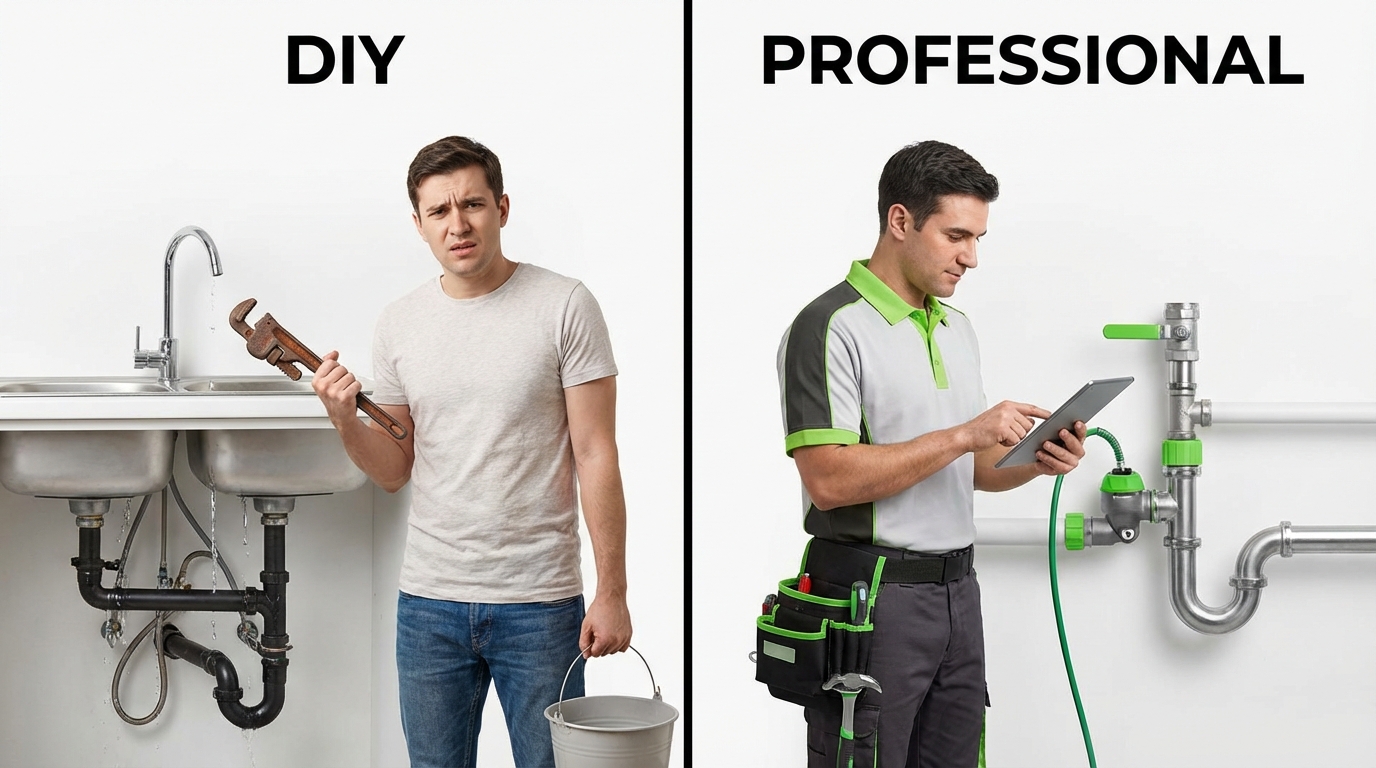
You’re standing in your kitchen watching water drip from under the sink. Or maybe you’re staring at a flickering light switch wondering if it’s dangerous. Perhaps your roof has a small leak after last night’s storm. The question racing through your mind: “Can I fix this myself, or do I need to call a professional tradie?”
This decision confronts Sydney homeowners daily—and making the wrong choice costs thousands in botched repairs, insurance complications, and even personal safety risks. According to NSW Fair Trading, unlicensed home repair attempts cause over $450 million annually in correctable damage across Sydney alone, while creating serious safety hazards that put families at risk.
The DIY vs when to call tradie professionals decision isn’t just about saving money—it’s about understanding legal requirements, protecting your insurance coverage, ensuring safety, and knowing when your skills and tools match the job’s demands. Some tasks welcome enthusiastic DIY efforts; others require licensed professionals by law, regardless of your skill level.
This comprehensive guide from OnTime Tradie’s licensed plumbers, electricians, and roofing specialists provides Sydney homeowners with clear, actionable criteria for every common home maintenance scenario. You’ll discover exactly which plumbing, electrical, and roofing tasks you can safely tackle yourself, which legally require licensed tradies, how to assess your skills honestly, and how to make cost-effective decisions that protect both your home and your budget.
Understanding Legal Requirements: What NSW Law Says About DIY Home Repairs
Before reaching for your toolbox, understanding NSW legal requirements prevents expensive mistakes and protects your insurance coverage. Australian law strictly regulates which home repairs require licensed professionals—and violations carry serious consequences.
NSW Fair Trading Licensing Requirements
In New South Wales, specific trades require mandatory licensing for all work exceeding $1,000 in labor and materials (including GST). However, many safety-critical tasks require licensed professionals regardless of cost:
Plumbing Work Requiring Licensed Plumbers:
– All work involving water supply pipes or drainage systems
– Hot water system installation, repairs, or modifications
– Gas fitting or gas appliance installations
– Sewerage and stormwater system work
– Backflow prevention device installation
– Any work connecting to Sydney Water mains
Electrical Work Requiring Licensed Electricians:
– ALL electrical work without exception (no cost threshold)
– Installing, repairing, or modifying electrical wiring
– Switchboard work, circuit breaker installation
– Power point installation or relocation
– Light fixture installation requiring wiring work
– Outdoor electrical installations
– Hardwired smoke alarm installations
Roofing Work Requiring Licensed Roof Plumbers:
– Roof repairs on structures over single-storey height
– Flashing installation or modifications
– Gutter and downpipe installations
– Roof tile replacement on steep or high roofs
– Any work at heights requiring fall protection
– Structural roofing modifications
Legal Consequences of Unlicensed Work
Performing work requiring licensed tradies without proper credentials creates serious problems:
✗ Insurance Voids: Insurers refuse claims for damage caused by unlicensed work
✗ Legal Liability: Full responsibility for any injury or property damage
✗ Fines Up to $55,000: NSW Fair Trading penalties for unlicensed trade work
✗ Sale Complications: Disclosure requirements and potential buyer disputes
✗ Rectification Costs: Licensed tradies charge premium rates to fix DIY disasters
✗ Electrical Shock Risk: DIY electrical work causes fatal electrocution accidents
The law exists for good reasons—licensed tradies complete years of training, maintain insurance, follow Australian Standards, and guarantee compliant work that protects your safety and property value.
Plumbing: When to DIY vs When to Call a Licensed Plumber
Plumbing decisions represent some of the most common DIY vs professional dilemmas Sydney homeowners face. While some tasks suit confident DIYers, others require licensed plumbers by law—regardless of your skill level.
Safe DIY Plumbing Tasks for Sydney Homeowners
1. Replacing Tap Washers and O-Rings
When taps drip despite being fully closed, worn washers are usually responsible. Replacing tap washers is legal DIY work requiring basic tools.
- When DIY is Safe: Single-handle tap washers, accessible tap mechanisms, standard residential taps
- Tools Needed: Adjustable wrench, screwdriver, replacement washers ($5-15)
- Cost Savings: DIY $15 vs Professional $120-180
2. Unclogging Drains with Plunger or Snake
Blocked sinks, showers, and toilets often respond to plunger or hand-operated drain snakes—safe DIY solutions for minor blockages.
- When DIY is Safe: Single fixture blockage, recent onset, no sewage backup
- When to Call Professional: Multiple fixtures affected, sewage odors, recurring blockages indicating main line issues
- Cost Comparison: DIY $20-40 (tools) vs Professional $180-350 with camera inspection
3. Replacing Shower Heads and Tap Fixtures
Upgrading shower heads or tap fixtures that screw directly onto existing connections requires no plumbing modifications—straightforward DIY.
- DIY Requirements: Existing connections remain unchanged, no pipe modifications, simple thread-on replacement
- Professional Required When: Need to relocate fixtures, modify pipe positions, or change plumbing configuration
4. Cleaning Sink Traps
The U-bend trap under sinks catches debris and can be removed, cleaned, and reinstalled by homeowners—no license required.
- DIY Process: Place bucket underneath, unscrew trap connections, clean debris, reassemble with plumber’s tape
- When to Call Professional: Corroded connections, leaking after reassembly, blockage beyond trap
Plumbing Tasks REQUIRING Licensed Plumbers in NSW
1. Hot Water System Work (ANY Type)
ALL hot water system installation, repairs, modifications, or servicing legally requires licensed plumbers in NSW—no exceptions.
Why Licensed Tradies Required:
– Gas systems involve dangerous gas connections
– Electric systems combine water and high voltage
– Pressure relief valves prevent explosions
– Incorrect installation causes catastrophic property damage
– Insurance coverage requires licensed installation
DIY Attempts Risk: $5,000-15,000 water damage, gas explosions, electrocution, voided insurance
Professional Cost: Service $180-280, Replacement $1,200-6,000 depending on system
2. Any Pipe Repairs or Modifications
Repairing leaking pipes, extending supply lines, or modifying drainage requires licensed plumbers—DIY pipe work is illegal in NSW.
Legal Requirements: NSW plumbing license mandatory for all pipe work involving water supply or drainage
Why Professionals Essential:
– Correct pipe materials and joining methods
– Proper pressure testing and code compliance
– Backflow prevention requirements
– Sydney Water connection standards
– Warranty and insurance protection
DIY Consequences: Leaks causing extensive water damage, mold growth, structural issues, insurance claim denial
3. Gas Fitting and Appliance Installation
Gas work represents extremely dangerous DIY territory—licensed gas fitters are legally mandated for ALL gas-related plumbing.
Gas Work Includes:
– Installing, repairing, or moving gas appliances
– Gas pipe installation or modifications
– Gas hot water system work
– BBQ gas line installations
– Gas leak repairs
Why Never DIY: Gas leaks cause explosions, fires, carbon monoxide poisoning, and fatalities
Legal Penalties: Up to $55,000 fines plus full liability for any damage or injury
4. Sewerage and Stormwater Work
Main sewer line blockages, sewerage modifications, and stormwater system work requires licensed plumbers with specialized equipment.
Professional Tools Required:
– CCTV drain cameras locating exact blockage points
– High-pressure water jetters clearing obstructions permanently
– Excavation equipment for collapsed pipe replacement
– Proper safety equipment for sewage handling
Health Hazards: Sewage contains harmful bacteria, viruses, parasites requiring professional handling
OnTime Tradie Service: Lifetime warranty on drain clearing provides confidence blockages stay cleared
Electrical: When to DIY vs When to Call a Licensed Electrician
Electrical work in NSW is heavily regulated—and for good reason. Electrocution kills instantly, and electrical fires destroy homes. Understanding what’s legal and safe protects your family and property.
Legal DIY Electrical Tasks in Australia
CRITICAL WARNING: ALL electrical work involving wiring, circuits, or switchboards is ILLEGAL for unlicensed individuals in Australia—regardless of skill level.
Legally Permitted DIY Electrical Tasks:
1. Replacing Light Bulbs and Lamp Shades
Changing bulbs and external lamp fittings that don’t require wiring work is safe DIY.
- DIY Safe: Screw-in or bayonet bulbs, clip-on lamp shades, plug-in lamps
- Professional Required: Any work requiring wire connections, ceiling fixture modifications
2. Plugging in Appliances and Extension Cords
Using existing power points safely is obviously DIY territory.
- Safety Checks: Outlets not warm to touch, plugs fit firmly, no burning smell
- Professional Required: Installing new outlets, relocating power points, any wiring work
3. Testing Smoke Alarm Buttons
Pressing test buttons on existing smoke alarms is recommended quarterly DIY maintenance.
- DIY Safe: Testing function, replacing batteries in battery-operated alarms
- Professional Required: Installing new alarms, hardwired alarm work, interconnected system installation
4. Resetting Tripped Circuit Breakers
Resetting breakers after overload is standard DIY—but repeated trips require professional investigation.
- When to Call Electrician: Breakers trip frequently, burning smell, warm switchboard, won’t stay reset
Electrical Work REQUIRING Licensed Electricians (LEGALLY MANDATORY)
1. ALL Wiring Work Without Exception
Any electrical work involving wiring is ILLEGAL for unlicensed persons in NSW—no cost threshold applies.
Includes:
– Installing or relocating power points
– Adding circuits for air conditioning or appliances
– Repairing damaged wiring
– Extending electrical circuits
– Any switchboard work whatsoever
Why Law is Absolute:
– Electrocution causes instant death
– Incorrect wiring causes house fires
– Insurance invalidation for unlicensed work
– $55,000 fines for illegal electrical work
2. Light Fixture Installation Requiring Wiring
While changing bulbs is fine, installing new light fixtures or relocating existing ones requires licensed electricians.
Professional Required When:
– Installing new ceiling lights
– Relocating wall switches
– Adding dimmer switches
– Installing recessed downlights
– Any work opening electrical boxes
- Safety Risks: Live wires cause fatal electrocution; incorrect connections cause electrical fires
- Professional Cost: Light installation $120-280 per fixture including compliance
3. Safety Switch (RCD) Installation
RCDs prevent electrocution but installing them requires licensed electricians—legally mandatory in all NSW homes.
Why Professional Installation Essential:
– Switchboard work involves live electricity
– Incorrect installation compromises protection
– Testing and certification required
– Compliance with AS/NZS 3000 electrical standards
- Investment: $150-400 per RCD installation—life-saving protection for your family
4. Outdoor Electrical Installations
Garden lighting, outdoor power points, pool equipment, and garage electrics all require licensed electricians.
Additional Requirements:
– Weather-resistant IP-rated fixtures
– Proper earthing for outdoor safety
– RCD protection for outdoor circuits
– Compliance with outdoor electrical standards
- OnTime Tradie Advantage: 24/7 emergency electrical service across Sydney, Central Coast & Newcastle ensures help when you need it most
Roofing: When to DIY vs When to Call Licensed Roof Plumbers
Roofing work combines height hazards with structural expertise—creating unique DIY vs professional considerations. Safety and insurance factors often outweigh skill assessments.
Limited DIY Roofing Tasks for Single-Storey Homes
1. Ground-Level Gutter Cleaning (Single Storey Only)
Cleaning gutters from a stable ladder on single-storey homes can be DIY—but only if you’re confident with ladder safety.
DIY Safe When:
– Single-storey home with stable ladder access
– Flat or low-pitch roof edges
– Comfortable working at height
– Weather conditions safe (no wind/rain)
– Second person present for safety
- Professional Required: Two-storey homes, steep roofs, commercial properties, poor ladder access
- Cost Comparison: DIY $0 (own time) vs Professional $180-320 for thorough gutter cleaning
2. Removing Debris from Roof Valleys (Ground Level)
Using roof rake or pole-mounted tools to remove valley debris from ground level is reasonably safe DIY.
- Important Limitations: Only if reachable from ground without climbing roof, no ladder work on roof surface
3. Minor Gutter Repairs (Accessible Sections)
Sealing small gutter leaks or re-securing loose brackets on accessible ground-level sections can be DIY.
- When Professional Required: Extensive corrosion, structural issues, replacement needed, working at heights
Roofing Work REQUIRING Licensed Roof Plumbers
1. Any Work on Roofs Above Single-Storey Height
NSW law requires licensed roof plumbers for work on structures exceeding single-storey height—fall protection and insurance mandates apply.
Why Licensed Professionals Essential:
– Fall from height is leading cause of construction fatalities
– Roof plumbers have harness systems and safety training
– Insurance coverage requires licensed contractors
– WorkCover compliance for elevated work
– Professional liability protection
- DIY Risks: Fatal falls, serious injury, insurance claim denial, legal liability
2. Roof Tile Replacement and Repairs
Replacing broken or displaced roof tiles requires licensed roof plumbers—even on single-storey homes in many cases.
Professional Expertise Required:
– Correct tile matching and fitting techniques
– Underlying waterproofing membrane integrity
– Proper valley and flashing integration
– Weight distribution on roof structure
– Warranty on workmanship
- Why DIY Fails: Incorrect installation causes leaks, further tile damage, expensive water ingress
- Professional Cost: $200-500 for minor tile repairs, preventing $2,000-15,000 water damage costs
3. Flashing Installation and Repairs
Flashing around chimneys, vents, skylights, and roof penetrations requires professional installation—critical waterproofing work.
Why Professionals Essential:
– Precise cutting and fitting techniques
– Proper overlap and sealing methods
– Integration with roof membrane systems
– Long-term waterproofing effectiveness
- Consequence of DIY: Water leaks causing ceiling damage, mold, structural rot, expensive remediation
4. Gutter Installation and Replacement
Installing new gutters or replacing deteriorated sections requires licensed roof plumbers—structural attachment and drainage design matter.
Professional Considerations:
– Correct gutter size for roof catchment area
– Proper fall/gradient for effective drainage
– Secure structural attachment methods
– Downpipe sizing and placement
– Stormwater compliance
- OnTime Tradie Roofing Services: Professional roof inspections identify issues before they become expensive emergencies—comprehensive photo reports document roof condition
Cost Comparison: DIY vs Professional Tradie Services Sydney 2026
Understanding true costs helps Sydney homeowners make informed decisions—but remember that cheapest isn’t always wisest.
DIY Cost Factors:
– Tools and materials purchase
– Time investment (your hourly value)
– Learning curve and research time
– Risk of mistakes requiring professional correction
– No warranty or guarantee on work
– Insurance implications if problems occur
Professional Tradie Cost Factors:
– Licensed expertise and years of training
– Professional-grade tools and equipment
– Compliance with Australian Standards
– Warranty on workmanship (typically 6+ years NSW)
– Insurance coverage protecting you and your property
– Guaranteed results and code compliance
Sample Cost Comparisons (Sydney 2026 Rates):
Tap Washer Replacement:
– DIY: $15 materials + 30 minutes
– Professional: $120-180 (15-minute job with callout)
– Best Choice: DIY if confident; professional if multiple taps or complications
Drain Clearing:
– DIY: $20-40 tools, may not resolve main line blockages
– Professional: $180-350 with camera inspection, lifetime warranty
– Best Choice: Professional for persistent or recurring blockages
Hot Water System Service:
– DIY: ILLEGAL—must use licensed plumber
– Professional: $180-280 preventive service
– Best Choice: Professional only legal option; prevents $2,500-5,000 emergency replacement
Electrical Safety Switch Installation:
– DIY: ILLEGAL—must use licensed electrician
– Professional: $150-400 per RCD
– Best Choice: Professional only legal option; life-saving protection
Roof Inspection:
– DIY: Free but misses hidden issues, safety risks
– Professional: $250-450 with comprehensive photo report
– Best Choice: Professional inspection identifies problems before expensive water damage
Total Cost Calculation:
Factor in hidden costs when comparing DIY vs professional:
– Your time valued at reasonable hourly rate
– Tool purchases you’ll rarely reuse
– Risk of mistakes requiring professional correction (often 2-3× original professional cost)
– Insurance coverage protection
– Warranty and guarantee peace of mind
Insurance Implications: How DIY Work Affects Your Coverage
Home insurance policies include significant exclusions for damage caused by unlicensed repair work—understanding these protections (or lack thereof) influences DIY decisions.
Insurance Coverage for Licensed Work:
– Damage caused by licensed tradie errors covered under their liability insurance
– Your home insurance covers consequent damage from licensed work
– Licensed tradies carry $10M+ public liability coverage
– Professional indemnity insurance protects against workmanship claims
Insurance EXCLUSIONS for DIY Work:
– Damage resulting from unlicensed plumbing work typically excluded
– Electrical damage from unlicensed work not covered
– Water damage from DIY pipe work excluded
– Fire damage from unlicensed electrical work excluded
Real-World Example:
Homeowner attempts DIY hot water system installation to save $800 professional installation cost. Connection leaks while family is away, causing $12,000 water damage to floors, walls, and contents. Insurance company denies entire claim because unlicensed plumber performed installation. Homeowner pays full $12,000 restoration cost plus replacement hot water system.
Professional Installation Same Scenario:
Licensed plumber installs hot water system for $2,200. Connection develops fault causing $12,000 water damage. Plumber’s public liability insurance covers damage; homeowner pays only excess ($500-1,000). Professional reputation and insurance mean rapid resolution.
Insurance Requirements Many Policies Mandate:
– Licensed tradespeople for major work
– Compliance certificates for electrical and plumbing
– Building permits where required
– Regular maintenance documentation
OnTime Tradie provides all required documentation, certificates, and compliance paperwork ensuring your insurance coverage remains valid.
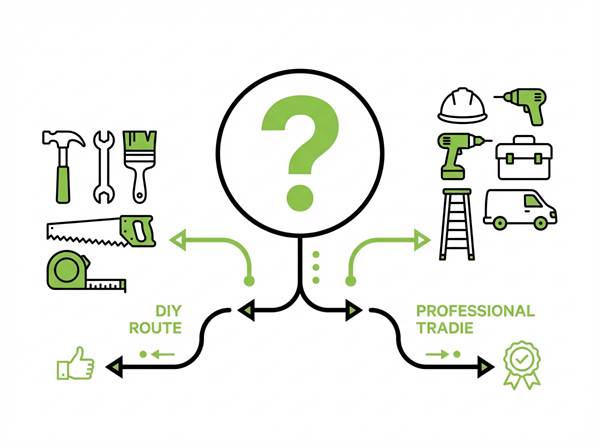
Decision guide: Choosing between DIY and professional tradie services
Frequently Asked Questions: DIY vs Professional Tradies Sydney
Can I do my own plumbing work in NSW?
Limited plumbing tasks like replacing tap washers, unclogging drains with plungers, and cleaning sink traps are legal DIY work in NSW. However, ANY work involving pipe modifications, hot water systems, gas fitting, or connections to water mains legally requires licensed plumbers. Performing unlicensed plumbing work risks $55,000 fines, voided insurance, and legal liability for damage. OnTime Tradie’s licensed plumbers ensure compliant, warrantied work protecting your home and insurance coverage.
Is it legal to do electrical work yourself in Australia?
No. ALL electrical work in Australia is illegal for unlicensed persons—no exceptions regardless of skill level or cost. This includes installing power points, adding circuits, modifying wiring, switchboard work, and light fixture installation requiring wire connections. Only changing bulbs and testing smoke alarms is legal DIY. Penalties include $55,000 fines, voided insurance, legal liability, and serious electrocution/fire risks. Always use licensed electricians for any electrical work.
When should I call a plumber instead of trying DIY?
Call licensed plumbers for: hot water system issues, any pipe leaks or repairs, gas appliance work, persistent drain blockages affecting multiple fixtures, sewerage problems, water pressure issues, or any work connecting to mains. DIY is appropriate only for: tap washer replacement, simple plunger drain clearing (single fixture), cleaning sink traps, and replacing shower heads. When in doubt, OnTime Tradie provides free phone assessments helping you determine the right approach.
What home repairs can I legally do myself in Sydney?
Safe DIY repairs in Sydney include: painting, tap washer replacement, minor garden work, cleaning gutters (single-storey with safe access), replacing door handles, basic carpentry not requiring permits, unclogging drains with plungers, and general cleaning/maintenance. Repairs requiring licensed tradies include: all electrical work, plumbing pipe work, hot water systems, gas fitting, roofing above single-storey, and structural modifications. Always check NSW Fair Trading requirements before DIY attempts.
How much do I save with DIY vs hiring a professional tradie?
DIY savings vary greatly by task complexity. Simple jobs like tap washers save $100-150 (DIY $15 vs professional $120-180). However, factor in tool costs, your time value, mistake risks, and lack of warranty. Professional services provide expertise, proper tools, code compliance, warranties, and insurance protection. For complex tasks, DIY mistakes often cost 2-3× more to fix than original professional prices. OnTime Tradie’s upfront pricing helps you make informed decisions.
Will my insurance cover DIY home repairs if something goes wrong?
Most home insurance policies EXCLUDE damage resulting from unlicensed repair work. If DIY plumbing causes water damage, DIY electrical causes fire, or unlicensed work contributes to property damage, insurers typically deny claims entirely. Licensed tradies carry public liability insurance ($10M+) covering their work errors. Using licensed professionals protects your insurance coverage and provides recourse if issues occur. Always verify insurance implications before DIY attempts.
What are licensed tradie requirements in NSW?
NSW licensed tradies must complete: formal apprenticeship or equivalent training (typically 4 years), technical qualifications (Certificate III minimum), practical experience requirements (2-4 years minimum), license examination, NSW Fair Trading registration, public liability insurance ($10M+ recommended), and ongoing professional development. Licenses require renewal and maintaining good standing. OnTime Tradie’s fully licensed plumbers, electricians, and roof plumbers hold all required NSW credentials and insurance.
Can I do electrical work if I’m qualified but not licensed?
No. Even qualified electricians or trainees cannot perform electrical work in NSW without current electrical contractor licenses or working under licensed supervision. The law requires valid NSW electrical licenses for ALL electrical work—skills and qualifications alone aren’t sufficient. Unlicensed electrical work, regardless of capability, results in fines, insurance issues, and legal liability. Only current NSW-licensed electricians can legally perform or supervise electrical installations and repairs.
When should I call a roofer instead of DIY roof repairs?
Call licensed roof plumbers for: any work on two-storey or higher structures, tile replacement, flashing repairs, gutter installation, steep roof work, structural repairs, and any work requiring fall protection. Limited DIY is appropriate only for: ground-level gutter cleaning (single-storey homes with safe access) and removing debris with pole tools from ground. Fall from height causes serious injury—professional roof plumbers have proper safety equipment, insurance, and expertise. OnTime Tradie’s roof inspections identify issues safely.
Why should I choose OnTime Tradie for my home repairs?
OnTime Tradie provides comprehensive plumbing, electrical, and roofing services across Sydney, Central Coast & Newcastle with: fully licensed tradespeople (all NSW credentials current), upfront transparent pricing with no hidden fees, 24/7 emergency availability when you need help most, lifetime warranty on workmanship, same-day service for urgent repairs, advanced diagnostic equipment (CCTV cameras, thermal imaging), and professional insurance coverage protecting you. Call 0488 822 795 for honest assessment whether DIY or professional service suits your specific situation—we prioritize your safety and best interests.
Conclusion: Making Smart DIY vs Professional Tradie Decisions
The DIY vs professional tradie decision isn’t about ego or proving self-sufficiency—it’s about safety, legality, insurance protection, and achieving quality results that last. This guide provides Sydney homeowners with clear criteria for every common scenario, but the ultimate decision factors remain consistent:
Choose DIY When:
– Task is explicitly legal for unlicensed work
– You possess necessary skills, tools, and confidence
– Safety risks are minimal
– Mistakes won’t cause expensive consequent damage
– You have time to research and work carefully
– No insurance implications exist
Choose Professional Tradies When:
– Work requires licensed professionals by law (ALL electrical, most plumbing, height work)
– Safety risks involve electrocution, gas, or falls
– Mistakes could cause expensive property damage
– Insurance coverage depends on licensed work
– Time constraints make DIY impractical
– Task requires specialized tools or expertise
– You want warranty protection and guaranteed results
The Hidden Value of Professional Tradies:
Beyond legal compliance, licensed tradespeople provide intangible benefits DIY cannot match: decades of combined experience identifying problems you’d miss, professional diagnostic equipment revealing underlying issues, code compliance ensuring safety and legality, insurance protection if anything goes wrong, warranties guaranteeing lasting results, and peace of mind that work is done correctly.
Cost Perspective:
While professional services cost more upfront than DIY attempts, factor in total costs: your time valued appropriately, tool purchases for rarely-used equipment, research and learning time, risk of mistakes requiring professional correction (often costing 2-3× original professional price), lack of warranty coverage, and insurance implications if problems develop. Professional tradies often deliver better value when total costs are honestly calculated.
Safety Must Be Paramount:
No amount of money saved justifies risking your life or your family’s safety. Electrocution kills instantly. Falls from roofs cause life-altering injuries. Gas leaks create catastrophic explosions. Water damage from plumbing mistakes costs tens of thousands to remediate. When safety risks exist, professional tradies aren’t optional—they’re essential.
OnTime Tradie: Your Partner for Smart Home Maintenance Decisions
OnTime Tradie doesn’t pressure you toward services you don’t need. Our licensed plumbers, electricians, and roof plumbers provide honest assessments, clearly explaining what you can safely DIY and what requires professional expertise. We prioritize your safety, legal compliance, and long-term satisfaction over short-term profits.
Take Action Today:
Whether you need professional service or honest advice about DIY feasibility, OnTime Tradie is here to help Sydney, Central Coast, and Newcastle homeowners make informed decisions:
✓ Free Phone Assessments – Discuss your situation, get honest recommendations
✓ Licensed Professionals – Fully qualified plumbers, electricians, roof plumbers
✓ Upfront Transparent Pricing – No hidden fees, clear quotes before work begins
✓ 24/7 Emergency Availability – Help when you need it most, day or night
✓ Lifetime Warranty – Confidence in workmanship quality and lasting results
✓ Comprehensive Services – Plumbing, electrical, roofing all under one trusted team
✓ Insurance & Compliance – All required certificates and documentation provided
📞 Call: 0488 822 795
📍 Servicing: Sydney, Central Coast & Newcastle
Don’t let DIY vs professional tradie decisions stress you out. Call OnTime Tradie for honest, expert guidance protecting your home, your family, and your budget. We’re here to help—whether that means professional service or empowering your capable DIY efforts with accurate information.
Make the smart choice. Choose safety. Choose compliance. Choose OnTime Tradie.
