

Plumbing, Electrical & Roofing Preparation for Sydney, Central Coast & Newcastle Homes
The Bureau of Meteorology has officially declared La Niña for Summer 2025-2026, and Sydney homeowners need to act now. With predictions of increased rainfall, severe thunderstorms, and flash flooding across Sydney, the Central Coast, and Newcastle, protecting your home from storm damage isn’t just smart—it’s essential.
La Niña weather patterns mean wetter conditions than normal, putting unprecedented stress on your home’s plumbing, electrical systems, and roof. The good news? With proper preparation, you can prevent the devastating water damage, electrical hazards, and structural failures that catch unprepared homeowners off guard every storm season.
This comprehensive Sydney storm preparation guide provides everything homeowners need to know about storm-proofing their properties. From clearing blocked drains that cause flooding to testing safety switches that prevent electrocution, and from securing loose roof tiles to waterproofing vulnerable areas—we’ll walk you through the critical steps licensed tradies recommend for La Niña preparedness.
Don’t wait until the first major storm hits. The time to protect your home is now, while conditions are still manageable and professional help is readily available.
Understanding La Niña and What It Means for Sydney Homes
La Niña is a climate phenomenon that brings cooler ocean temperatures to the Pacific, resulting in increased moisture and rainfall across eastern Australia. For Sydney, the Central Coast, and Newcastle, this translates to a summer season marked by higher-than-average rainfall, increased humidity, and more frequent severe storm events.
The Bureau of Meteorology’s December 2025 declaration means Sydney is already experiencing La Niña conditions, with the pattern expected to persist through at least February 2026. Historical data shows that La Niña summers bring 20-30% more rainfall to eastern Australia, with significantly increased risk of:
- Severe thunderstorms with damaging winds
- Flash flooding in urban areas
- Extended periods of heavy rain
- Humidity-related issues like mould growth
- Stormwater system overload
For homeowners, this increased moisture puts every system in your home under pressure. Your roof becomes more vulnerable to leaks, your drainage systems work overtime, and your electrical infrastructure faces heightened risk from water ingress. Understanding these risks is the first step toward effective protection.
Essential Plumbing Preparation for Storm Season
Your home’s plumbing system is your first line of defense against storm damage. When Sydney’s stormwater drains overflow and heavy rain pounds your property, well-maintained plumbing prevents the flooding that causes thousands of dollars in damage.
Clear All Drains and Stormwater Systems
Blocked drains are the leading cause of storm-related flooding in Sydney homes. Before La Niña storms arrive, ensure all drainage points are completely clear:
- Floor drains in garages, laundries, and bathrooms should flow freely
- Outdoor stormwater drains must be cleared of leaves, debris, and sediment
- Grated drains around pool areas and patios need inspection
- Underground stormwater pipes should be professionally cleared with high-pressure jetting
A CCTV drain inspection can reveal hidden blockages from tree roots, collapsed pipes, or years of buildup that surface inspections miss. This investment of $150-300 can prevent water damage costing tens of thousands.
Inspect and Maintain Your Hot Water System
Storm damage to hot water systems is more common than most homeowners realise. Heavy rain can flood external units, lightning can damage electrical components, and power surges can destroy heating elements. Before storm season:
- Check your hot water system’s location for flood risk
- Ensure the pressure relief valve functions correctly
- Inspect electrical connections for signs of corrosion
- Consider surge protection for electric hot water systems
- Have a licensed plumber service the unit if it’s more than 5 years old
Protect Exposed Pipes and Connections
Exposed plumbing is vulnerable during severe storms. High winds can damage external pipes, while flooding can compromise underground connections. Take these protective steps:
- Insulate exposed pipes in outdoor areas
- Secure loose pipe fittings and connections
- Check underground access points for potential water ingress
- Install backflow prevention valves if your property is in a flood-prone area
- Know the location of your main water shut-off valve for emergencies
Critical Electrical Safety for Storm Protection
Electrical safety during storms is literally a life-or-death matter. Water and electricity create lethal combinations, and La Niña’s increased rainfall makes electrical hazards more likely than ever.
Test and Upgrade Your Safety Switches (RCDs)
Safety switches—also called Residual Current Devices (RCDs)—are your family’s protection against electrocution. NSW law requires them in all homes, but many older Sydney properties have inadequate protection. Before storm season:
- Press the test button on every safety switch monthly
- Ensure the switch trips within 0.03 seconds
- Replace any switch that fails to trip or trips slowly
- Upgrade older switchboards to modern circuit breaker systems
- Ensure ALL circuits have RCD protection, not just power points
A licensed electrician can assess your switchboard and recommend necessary upgrades. This inspection typically costs $150-250 but could save lives during storm-related electrical incidents.
Install Surge Protection for Critical Systems
Lightning strikes and power surges during storms destroy electronics and appliances throughout Sydney every summer. Whole-house surge protection provides comprehensive defense:
- Surge protectors at the switchboard catch major spikes
- Point-of-use protectors add secondary protection for sensitive equipment
- Computer equipment, home entertainment systems, and smart home devices are particularly vulnerable
- Hot water systems and air conditioning units also benefit from surge protection
Professional surge protection installation costs $300-800 depending on your home’s requirements, but protects equipment worth thousands.
Secure Outdoor Electrical Installations
Outdoor electrical installations face direct exposure to storm conditions. Ensure these systems are storm-ready:
- Pool pumps and equipment should have waterproof enclosures
- Garden lighting connections must be sealed against water ingress
- External power points need weatherproof covers
- Air conditioning external units should be securely mounted
- Solar panel connections and inverters require inspection for weather sealing
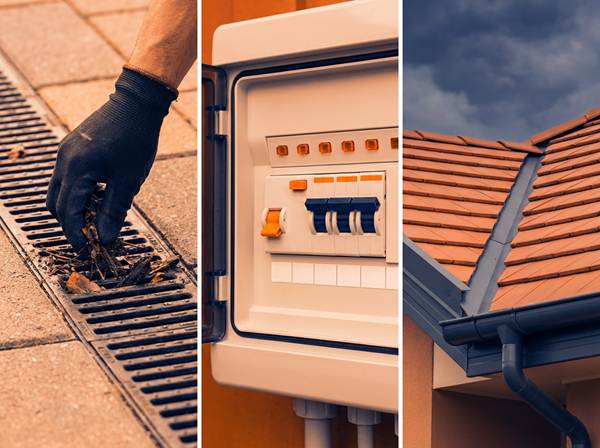
Plumbing, electrical, and roofing elements for storm preparation
Roof Protection: Your First Defense Against Storm Damage
Your roof takes the full force of every storm that hits Sydney. La Niña conditions mean your roof will face more rain events, higher wind loads, and greater wear than in normal years. Proactive roof maintenance now prevents expensive emergency repairs later.
Complete Roof Inspection Checklist
A thorough roof inspection should check:
- Missing, cracked, or loose tiles/shingles that allow water entry
- Damaged or corroded roof flashing around chimneys, vents, and skylights
- Ridge capping condition and security
- Sagging or uneven sections indicating structural issues
- Valley areas where debris accumulates and water pools
- Roof penetrations (TV aerials, solar panels) for secure mounting and proper sealing
Professional roof inspections cost $200-400 and include detailed reports with photographs. Never attempt to inspect your roof yourself during wet or windy conditions.
Gutter and Downpipe Preparation
Clean, functional gutters are essential for storm protection. Blocked gutters cause:
- Water overflow damaging walls and foundations
- Roof ponding that leads to leaks
- Fascia and soffit rot
- Breeding grounds for mosquitoes
Before storm season, have your gutters professionally cleaned and inspected. Services typically cost $150-350 depending on roof size and access. Consider installing gutter guards if trees overhang your property—while they require initial investment, they dramatically reduce maintenance needs.
Emergency Roof Repairs and Temporary Fixes
Identify and address roof vulnerabilities now, before you need emergency repairs during a storm:
- Replace cracked or missing tiles immediately
- Reseal flashing around roof penetrations
- Secure any loose roofing materials
- Have emergency tarps on hand for worst-case scenarios
- Know your roofing contractor’s emergency contact number
Storm-season emergency call-outs cost significantly more than scheduled repairs. Addressing issues now saves money and prevents stress during severe weather.
Complete Storm Preparation Checklist for Sydney Homes
Use this comprehensive checklist to ensure your home is La Niña-ready:
PLUMBING CHECKLIST:
☐ Clear all floor drains and stormwater grates
☐ Professional drain cleaning/CCTV inspection
☐ Test sump pump operation (if installed)
☐ Check hot water system for flood risk
☐ Know main water shut-off location
☐ Install backflow prevention if in flood zone
ELECTRICAL CHECKLIST:
☐ Test all safety switches/RCDs
☐ Upgrade switchboard if pre-1990s
☐ Install surge protection
☐ Inspect outdoor electrical connections
☐ Check pool/spa electrical safety
☐ Ensure emergency lighting works
ROOFING CHECKLIST:
☐ Professional roof inspection
☐ Repair damaged/missing tiles
☐ Clear and inspect gutters
☐ Check and clear downpipes
☐ Inspect and reseal flashing
☐ Secure roof penetrations
☐ Trim overhanging branches
GENERAL PREPARATION:
☐ Know emergency contact numbers
☐ Prepare emergency kit (torch, batteries, first aid)
☐ Document property condition (photos/video)
☐ Review insurance coverage
☐ Clear loose items from yard
☐ Check smoke alarms work
When to Call Emergency Tradies During Storms
Some situations require immediate professional attention, even during active storm events. Call emergency services for:
Immediate Electrical Emergencies:
• Sparking or smoking from outlets/switches
• Burning electrical smell anywhere in the home
• Water contacting electrical panels or wiring
• Downed power lines near your property (call Ausgrid first: 131 388)
Immediate Plumbing Emergencies:
• Sewage backing up into your home
• Burst pipes causing uncontrolled flooding
• Gas smell (evacuate and call emergency services)
• Major water ingress threatening structural integrity
Immediate Roofing Emergencies:
• Active roof leaks causing significant water damage
• Structural damage visible (sagging, holes)
• Tiles or roofing materials blown off during storm
Ontime Tradie provides 24/7 emergency services across Sydney, Central Coast, and Newcastle. Keep our number handy: 0488 822 795.
Insurance Considerations for Storm Damage
Proper preparation not only protects your home but also your insurance coverage. Before storm season:
- Review your home insurance policy for storm and flood coverage
- Understand the difference between storm damage and flood damage (coverage often differs)
- Document your property’s current condition with dated photographs
- Keep receipts for all preventative maintenance work
- Know your insurer’s claims process and emergency contact numbers
Many insurers require evidence of reasonable maintenance. Neglected gutters, known roof damage left unrepaired, or blocked drains can all affect claim outcomes. Professional maintenance receipts demonstrate due diligence.
Conclusion: Act Now Before Storm Season Peaks
La Niña storm season 2026 is already here, and Sydney homeowners who prepare now will avoid the stress, expense, and danger of emergency repairs during severe weather. Every day you delay is another day your home remains vulnerable to the increased rainfall and storms heading our way.
The investment in professional plumbing, electrical, and roofing inspections pays for itself many times over when compared to storm damage repair costs. More importantly, proper preparation protects your family’s safety during dangerous weather events.
Don’t become another storm damage statistic this summer. Take action today to protect your Sydney home.
Ready to storm-proof your home? Contact Ontime Tradie for professional plumbing, electrical, and roofing services across Sydney, Central Coast, and Newcastle. Our licensed experts provide upfront pricing, 24/7 emergency availability, and lifetime warranties on workmanship. Call now: 0488 822 795 or visit ontimetradie.com.au
FAQ SECTION
Q: How much does storm preparation cost for a Sydney home?
A: Basic storm preparation including gutter cleaning ($150-350), drain inspection ($150-300), and safety switch testing ($100-150) typically costs $400-800 total. Comprehensive preparation with professional roof inspection and electrical assessment adds another $350-650. While this seems significant, it’s a fraction of the cost of storm damage repairs, which average $10,000-30,000 for serious water damage.
Q: What’s the difference between storm damage and flood damage in insurance terms?
A: Storm damage refers to damage from rain, wind, and hail directly affecting your property—typically covered by standard home insurance. Flood damage occurs when external water (rivers, stormwater drains overflowing) enters your property—often requiring separate flood insurance. Many Sydney homeowners don’t realise their standard policy excludes flood damage until they make a claim. Check your policy and add flood cover if you’re in a vulnerable area.
Q: Can I do storm preparation myself, or do I need licensed tradies?
A: Some tasks like clearing gutters and outdoor drains, securing loose items, and testing safety switches can be DIY. However, NSW law requires licensed electricians for all electrical work, and roof work should only be done by professionals for safety reasons. Plumbing work involving fixtures, pipes, or stormwater systems also requires licensed plumbers. DIY work on regulated systems can void your insurance and create safety hazards.
Q: How often should I have my home inspected for storm readiness?
A: Annual inspections before storm season (October-November) are recommended for most Sydney homes. Properties with mature trees nearby, older roofs (15+ years), or previous storm damage history should consider bi-annual inspections. After any significant storm event, have a professional inspect your roof and drainage systems even if no damage is visible.
Q: What should I do if my home floods during a storm?
A: First, ensure family safety and evacuate if water levels rise dangerously. Never touch electrical switches or appliances if standing in water. Once safe, turn off electricity at the main switch (if accessible without entering water). Document damage with photos before cleanup. Contact your insurer immediately and call a licensed plumber to assess sewage contamination risks. Don’t attempt major cleanup until professionals advise it’s safe.
Q: How do I know if my switchboard needs upgrading for storm season?
A: If your switchboard has ceramic fuses instead of circuit breakers, it’s definitely due for upgrade. Other signs include: switchboard installed before 1990, lack of safety switches on all circuits, buzzing or warm switches, frequent tripping, or burn marks. A licensed electrician can assess your switchboard and provide upgrade recommendations—typically costing $1,500-3,500 for a modern safety-compliant switchboard.
