

The Australian smart home market is experiencing unprecedented growth in 2026, with Sydney, Central Coast, and Newcastle homeowners leading the charge in adopting intelligent building technologies. What was once considered futuristic is now practical, accessible, and essential for modern living. Smart home integration is revolutionizing how we interact with our plumbing and electrical systems, transforming reactive maintenance into proactive protection.
For Sydney homeowners, the question is no longer “Should I invest in smart home technology?” but rather “Which systems will deliver the greatest value for my property?” From WiFi-enabled leak detection sensors that prevent thousands of dollars in water damage to smart electrical panels that slash energy bills by up to 30%, intelligent home systems offer tangible, measurable benefits that pay for themselves within years—sometimes months.
What is Smart Home Integration for Plumbing and Electrical Systems?
Smart home integration refers to the connection of traditional plumbing and electrical infrastructure with Internet of Things (IoT) sensors, controllers, and monitoring systems that communicate through your home network. These systems work seamlessly with your smartphone, tablet, or voice assistant to provide real-time insights, automated responses, and remote control capabilities.
The Core Components
- Smart Sensors: Detect leaks, temperature changes, water flow, electrical loads, and potential hazards
- Connected Controllers: Manage water shutoff valves, circuit breakers, and system operations
- Mobile Applications: Provide real-time monitoring, alerts, and remote control from anywhere
- Cloud Analytics: Process data to identify patterns, predict failures, and optimize performance
- Integration Platforms: Connect multiple systems for unified home management
Unlike standalone smart devices, true smart home integration creates an interconnected ecosystem where your plumbing and electrical systems communicate with each other and with you. This connectivity transforms your home from a collection of separate utilities into an intelligent, self-monitoring environment that protects your investment 24/7.
Smart Plumbing Systems: Protecting Your Home from Water Damage
Water damage is the second most common insurance claim in Australia, costing homeowners an average of $10,000 to $50,000 per incident. Smart plumbing technology addresses this threat directly, offering early detection, automatic shutoff, and continuous monitoring that traditional systems simply cannot match.
Intelligent Leak Detection and Prevention
Modern leak detection systems use acoustic sensors, moisture detectors, and flow monitoring to identify leaks within seconds of occurrence. These devices can differentiate between normal water usage patterns and anomalies that indicate leaks, sending instant alerts to your phone and automatically shutting off water supply to prevent damage.
Key smart plumbing technologies include:
- WiFi-Enabled Leak Detectors: Placed under sinks, behind toilets, near hot water systems, and in laundry areas to detect moisture immediately
- Smart Water Flow Monitors: Install at your main water line to track usage patterns and detect unusual flow that indicates leaks
- Automated Shutoff Valves: Immediately stop water flow when leaks are detected, preventing catastrophic damage
- Pressure Monitoring Systems: Alert you to pressure changes that can indicate pipe failures before they occur
- Temperature Sensors: Prevent frozen pipes in winter by monitoring and alerting you to dangerous temperature drops
Real-World Savings
According to recent Australian insurance data, homeowners with smart leak detection systems experience 93% fewer water damage claims compared to those without. A $400 smart leak detection system can prevent a single $15,000 water damage incident, delivering an immediate return on investment that continues year after year.
Water Conservation and Cost Reduction
Beyond damage prevention, smart plumbing systems help Sydney homeowners reduce water consumption by 20-40% through intelligent monitoring and control. Smart irrigation controllers adjust watering schedules based on weather forecasts and soil moisture levels. Smart shower systems track usage and provide feedback to encourage conservation. These systems pay for themselves through lower water bills while supporting environmental sustainability.
Smart Electrical Systems: Efficiency, Safety, and Control
The electrical demands of modern Australian homes have increased dramatically, with air conditioning, home offices, electric vehicle charging, and entertainment systems placing unprecedented load on residential circuits. Smart electrical technology helps homeowners manage this complexity while improving safety, reducing costs, and preparing for future energy independence.
Smart Electrical Panels: The Heart of Home Automation
Traditional breaker panels simply distribute electricity and protect against overloads. Smart electrical panels transform this basic function into an intelligent energy management system that monitors every circuit in real-time, optimizes power distribution, and provides unprecedented visibility into your home’s electrical consumption.
Smart panel capabilities include:
- Circuit-Level Monitoring: Track energy usage for every appliance and room in your home
- Load Management: Automatically prioritize essential loads during peak demand or power outages
- Solar Integration: Seamlessly manage solar panels, battery storage, and grid connection
- EV Charging Optimization: Schedule vehicle charging during off-peak hours for maximum savings
- Remote Circuit Control: Turn circuits on or off remotely for safety and energy savings
- Predictive Alerts: Identify electrical issues before they cause fires or failures
Energy Cost Savings
Sydney homeowners with smart electrical panels report energy savings of 15-30% within the first year of installation. By identifying energy waste, optimizing usage patterns, and enabling time-of-use rate optimization, these systems typically pay for themselves in 3-5 years while providing decades of ongoing savings.
Enhanced Electrical Safety
Smart electrical systems provide critical safety benefits beyond cost savings. They detect arc faults, ground faults, and overloads faster than traditional breakers, reducing fire risk. Temperature monitoring identifies overheating circuits before they become dangerous. Homeowners receive immediate alerts about electrical issues, allowing professional intervention before problems escalate into emergencies.
The Integration Advantage: When Plumbing and Electrical Systems Work Together
The true power of smart home technology emerges when plumbing and electrical systems integrate into a unified platform. This interconnection creates powerful automation scenarios and comprehensive home protection that isolated systems cannot achieve.
Coordinated Emergency Response
When a smart leak detector identifies water near your hot water system, the integrated system can automatically shut off both water supply and electrical power to the unit, preventing electrical hazards and water damage simultaneously. If your smart electrical panel detects a ground fault in your bathroom, it can trigger water shutoff valves as a safety precaution.
Whole-Home Energy and Water Optimization
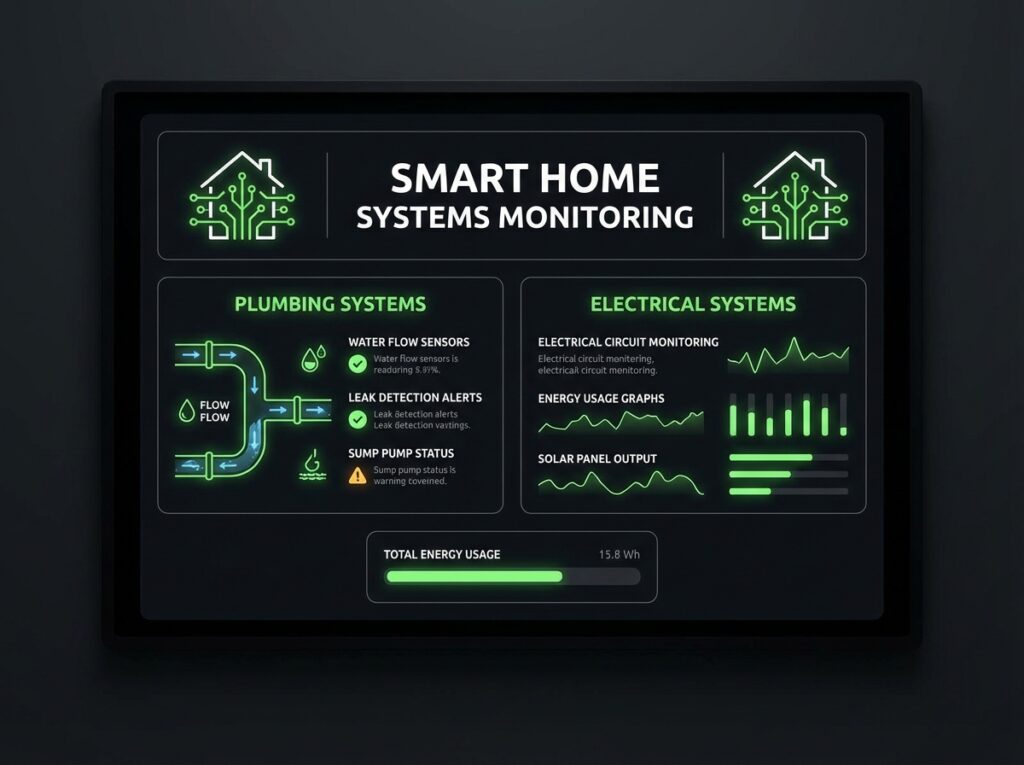
Integrated systems provide comprehensive resource management dashboards that show real-time water and electricity consumption side-by-side. Homeowners gain unprecedented insight into their resource usage patterns, enabling informed decisions about efficiency upgrades and behavior modifications that reduce both environmental impact and utility costs.
Vacation and Travel Peace of Mind
When you leave home for extended periods, integrated smart systems provide comprehensive protection. Set your system to vacation mode, and it will monitor for leaks, unusual electrical activity, temperature extremes, and security issues. Receive instant alerts if anything unusual occurs, and take corrective action remotely from anywhere in the world.
Professional Installation: Why DIY Smart Home Integration Falls Short
While retail smart home products offer basic functionality, professional installation by qualified tradies delivers superior performance, safety compliance, warranty protection, and integration that DIY approaches cannot match.
Australian Standards Compliance
Plumbing and electrical work in NSW must comply with strict Australian Standards and require licensed tradies to perform installations legally. DIY smart device installations may void insurance coverage and create liability issues. Professional installation ensures full compliance with AS/NZS 3000 (electrical) and AS/NZS 3500 (plumbing) standards, protecting your home and maintaining your insurance validity.
System Integration Expertise
Retail smart devices often operate in isolation, unable to communicate with other systems or integrate with professional-grade building automation platforms. Experienced tradies design integrated systems that work together seamlessly, providing unified control, comprehensive monitoring, and coordinated responses that maximize protection and efficiency.
Warranty and Ongoing Support
Professional installation includes manufacturer warranties on equipment and workmanship guarantees from your tradie. When issues arise, you have expert support available. DIY installations typically void equipment warranties and leave you without recourse when problems occur. OnTime Tradie provides warranty on workmanship and ongoing support for all smart home installations across Sydney, Central Coast, and Newcastle.
Smart Home Technology Costs and ROI for Sydney Homeowners
Understanding the investment required for smart home integration helps homeowners make informed decisions about which systems deliver the best value for their specific needs and budget.
Typical Investment Ranges
Smart home integration costs vary based on home size, system complexity, and feature selection. Here are typical investment ranges for Sydney homes in 2026:
- Basic Smart Leak Detection Package: $800-$1,500 (includes 3-5 sensors, shutoff valve, professional installation)
- Comprehensive Smart Plumbing System: $2,500-$5,000 (includes whole-home monitoring, multiple sensors, automated controls)
- Smart Electrical Panel Upgrade: $4,000-$7,000 (includes panel replacement, circuit monitoring, mobile app)
- Full Home Integration System: $8,000-$15,000 (includes plumbing, electrical, HVAC, and security integration)
Return on Investment Timeline
Smart home systems deliver returns through multiple channels: energy savings, water conservation, damage prevention, insurance discounts, and increased property value. Most Sydney homeowners achieve payback within 3-7 years through utility savings alone. Factor in prevented damage (a single avoided leak can pay for the entire system), and ROI becomes even more compelling.
Property Value Enhancement
Australian real estate data shows that homes with professionally installed smart systems command 2-5% price premiums in the Sydney market. Buyers increasingly expect smart home features, particularly in premium suburbs across the Central Coast and Newcastle regions. Smart home integration is transitioning from luxury feature to expected standard in modern homes.
Choosing the Right Smart Home Partner: What Sydney Homeowners Should Look For
Selecting the right tradie for your smart home integration project significantly impacts system performance, reliability, and long-term satisfaction. Here’s what to look for when choosing your smart home installation partner.
Multi-Trade Expertise
Smart home integration spans multiple trades: plumbing, electrical, and increasingly data networking. Choose a service provider with expertise across these disciplines or a coordinated team of licensed specialists. OnTime Tradie offers comprehensive multi-trade services, ensuring seamless integration without coordination headaches between multiple contractors.
Technology Partnership and Training
The smart home industry evolves rapidly. Your tradie should maintain partnerships with leading technology manufacturers and receive regular training on new products and installation techniques. Ask about certifications, manufacturer authorizations, and ongoing professional development.
Local Availability and Emergency Support
Smart home systems require ongoing support and occasional troubleshooting. Choose a local tradie who can respond quickly when you need assistance. OnTime Tradie provides 24/7 emergency support across Sydney, Central Coast, and Newcastle, ensuring help is always available when you need it most.
The Future of Smart Homes: What’s Coming in 2026 and Beyond
Smart home technology continues to evolve rapidly. Understanding emerging trends helps homeowners make future-proof investment decisions that remain relevant and valuable for decades.
AI-Powered Predictive Maintenance
Artificial intelligence is transforming smart home systems from reactive monitors to predictive assistants. Advanced algorithms analyze usage patterns, system performance data, and environmental factors to predict failures before they occur. Your system might alert you that your hot water unit shows signs of impending failure three weeks before it actually breaks down, allowing scheduled replacement instead of emergency repair.
Voice Integration and Natural Language Control
Voice assistants like Alexa, Google Assistant, and Apple’s Siri increasingly integrate with home systems. Homeowners can ask questions like “Is there a water leak in my house?” or command “Turn off the power to the garage” using natural language. This accessibility makes smart home technology usable for all family members, regardless of technical expertise.
Energy Independence and Grid Integration
As solar panels, battery storage, and electric vehicles become standard in Australian homes, smart electrical systems will provide sophisticated energy management that optimizes self-consumption, manages grid connection, and potentially generates income through energy trading. Sydney homeowners are positioning themselves for this energy-independent future through smart electrical panel installations today.
Conclusion: Taking the Smart Home Step in 2026
Smart home integration represents one of the most significant advancements in residential building services in decades. For Sydney, Central Coast, and Newcastle homeowners, the benefits are clear: reduced utility costs, enhanced safety, prevented damage, increased property value, and unprecedented control over your home environment.
The question is no longer whether to integrate smart technology, but rather which systems to prioritize and when to begin. Start with high-impact applications like leak detection and smart electrical panels that deliver immediate value. Expand your system over time as budget allows and new technologies emerge.
Most importantly, partner with experienced professionals who understand both traditional trades and modern technology. OnTime Tradie combines decades of plumbing, electrical, and roofing expertise with cutting-edge smart home knowledge, delivering integrated solutions that work seamlessly and reliably for years to come.
Ready to transform your home with smart integration? Contact OnTime Tradie today for a free consultation and discover how modern technology can protect your investment, reduce your costs, and enhance your lifestyle. Available 24/7 across Sydney, Central Coast, and Newcastle.
