
As Sydney transitions into autumn 2026, homeowners across the city are facing a silent threat that can compromise both property value and family health: mould. With temperatures dropping and humidity levels fluctuating, March through May represents the most critical period for mould prevention Sydney homes require. The shift from hot, humid summer conditions to cooler, damper autumn weather creates the perfect breeding ground for fungal growth, condensation, and moisture-related damage.
Recent data shows Sydney topped Australia mould complaint rankings, with a 12% surge in professional mould removal requests during autumn months. The cost of remediation can range from $500 to $4,000 or more, making prevention not just a health priority but a smart financial decision. At Ontime Tradie, our 24/7 plumbing, electrical, and roofing experts have serviced thousands of Sydney homes, and we have identified that 80% of mould problems stem from preventable causes: plumbing leaks, poor ventilation, roof damage, and inadequate drainage.
This comprehensive guide reveals exactly how to protect your Sydney home from mould this autumn, when to implement DIY strategies, and when professional intervention is essential.
Why Autumn is the Most Critical Season for Mould Prevention in Sydney
Autumn presents a unique convergence of conditions that accelerate mould growth in Sydney homes:
- Temperature fluctuations: Daily temperature swings between 12C nights and 22C days create condensation on cold surfaces – windows, walls, and pipes.
- Increased rainfall: Sydney autumn typically brings 100-130mm of rainfall per month, increasing moisture infiltration through roofs, gutters, and foundations.
- Reduced sunlight: Shorter daylight hours and lower sun angles mean less natural drying and warmth penetrating homes.
- Heating begins: As homeowners start using heaters without adequate ventilation, indoor humidity spikes – mould thrives above 60% relative humidity.
- Summer damage reveal: Hidden water damage from summer storms becomes visible as temperatures drop and moisture cannot evaporate quickly.
According to NSW Health, mould growth can begin within 24-48 hours of moisture exposure, and autumn persistent dampness means what starts as a small issue can become a major infestation requiring professional remediation.
Understanding the Root Causes: Where Mould Really Comes From
Plumbing Leaks: The Silent Culprit
Hidden plumbing leaks are the number one cause of mould in Sydney homes. Water slowly seeping behind walls, under floors, or in ceilings creates perfect conditions for mould colonies:
- Deteriorating pipe seals and joints (common in homes 15+ years old)
- Leaking hot water systems (often undetected until significant damage occurs)
- Faulty shower waterproofing allowing water into wall cavities
- Blocked or damaged stormwater drains causing foundation moisture
- Condensation on cold water pipes in poorly ventilated areas
Professional plumbing inspections can detect leaks before mould develops. Ontime Tradie licensed plumbers use thermal imaging and moisture meters to identify hidden water sources that visual inspections miss.
Roof and Gutter Damage
After Sydney harsh summer storms, roof damage often goes unnoticed until autumn rains penetrate:
- Damaged or missing roof tiles allowing water infiltration
- Blocked gutters causing overflow into walls and eaves
- Deteriorated flashing around chimneys, vents, and valleys
- Clogged downpipes creating water pooling on roofs
- Fascia and soffit damage from water overflow
A comprehensive roof and gutter inspection before winter is essential. Small repairs now prevent thousands in mould remediation and structural damage later.
Poor Ventilation and Air Circulation
Modern Sydney homes are built increasingly airtight for energy efficiency, but this creates humidity traps:
- Inadequate exhaust fan capacity in bathrooms and kitchens
- Lack of passive ventilation in roof spaces and subfloors
- Closed rooms without air circulation
- Windows kept closed to retain heating, trapping moisture
- Clothes drying indoors without ventilation
Installing proper exhaust fans and ensuring adequate ventilation is a relatively inexpensive electrical upgrade that dramatically reduces mould risk.
Condensation: The Autumn Accelerator
When warm, moist indoor air contacts cold surfaces, water droplets form – providing instant moisture for mould spores. Common condensation zones include:
- Single-glazed windows and glass doors
- Cold water pipes in walls and ceilings
- External walls with poor insulation
- Unheated rooms like spare bedrooms and storage areas
- Bathroom tiles and mirrors after showers
Condensation is particularly problematic in older Sydney homes with aluminium windows and minimal wall insulation. Upgrading insulation and installing exhaust fans are proven solutions.
Room-by-Room Mould Prevention Strategies
Bathroom: High-Risk Zone #1
Bathrooms generate the most moisture and are the most common mould locations in Sydney homes:
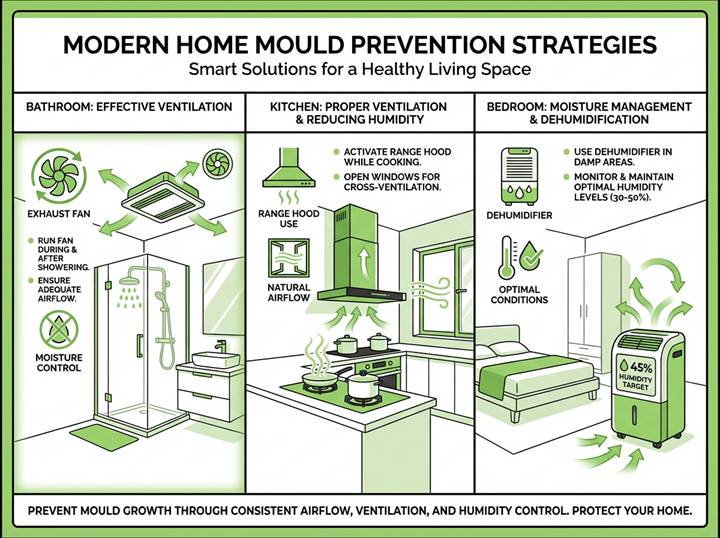
- Run exhaust fans during and for 20-30 minutes after every shower. Upgrade to high-capacity models (minimum 60L/s extraction rate).
- Wipe down surfaces with a squeegee or towel to remove water from tiles, glass screens, and fixtures after each use.
- Fix grout and seals. Cracked grout and perished silicone seals allow water penetration. Re-grout and re-seal annually.
- Keep doors open after showering to allow steam to disperse.
- Check for leaks. Inspect under sinks, around toilets, and behind walls for signs of moisture or musty smells.
- Weekly deep clean using mould-inhibiting cleaners on high-moisture surfaces.
Professional tip: If your bathroom lacks windows, invest in a quality exhaust fan with a timer and humidity sensor. This single upgrade can eliminate 90% of bathroom mould issues.
Kitchen: Moisture and Heat Combined
Cooking generates steam, and kitchens often have plumbing vulnerabilities:
- Use rangehood exhaust during and 15 minutes after cooking. Ensure it vents outside, not just recirculates.
- Ventilate while cooking. Open windows or doors to allow steam to escape.
- Check under-sink plumbing for leaks, condensation on pipes, and water damage to cabinetry.
- Dry counters and sinks after cooking and dishwashing to eliminate standing water.
- Monitor appliances. Check dishwasher seals and connections for leaks. Ensure refrigerator drip trays are emptied.
- Inspect tiled areas. Splashbacks can hide moisture behind them if grout or adhesive fails.
Bedrooms: The Condensation Trap
Bedrooms are often closed overnight with heating on, creating humidity from body moisture and breath:
- Open windows even slightly during the day allows moisture to escape.
- Position furniture away from walls. Allow 5-10cm clearance for air circulation behind wardrobes, beds, and dressers.
- Use dehumidifiers in damp-prone rooms to maintain 50-60% humidity.
- Inspect walls and ceilings for water stains, discoloration, or musty smells indicating hidden leaks.
- Ensure adequate heating. Cold rooms with no heating are condensation magnets. Maintain minimum 18-20C.
Laundry and Utility Areas
Washing machines, dryers, and hot water systems generate significant moisture:
- Vent dryers outside. Never vent dryers into enclosed spaces. Install proper external venting.
- Check washing machine. Inspect hoses for leaks and ensure drainage is functioning correctly.
- Inspect hot water systems. Look for rust, corrosion, or water pooling around the base.
- Ventilate the space. Install exhaust fans or open windows when using appliances.
- Monitor floor drains. Ensure drains are clear and water is not pooling.
Roof Spaces, Subfloors, and Garages
These often-neglected areas are where major mould problems begin:
- Inspect roof spaces for daylight penetration, water stains, and dampness after rainfall.
- Ensure subfloor ventilation. Homes on stumps need adequate airflow beneath. Install additional vents if necessary.
- Check garage leaks. Garage doors, walls, and ceilings can allow water ingress.
- Store items properly. Elevate stored items off floors and away from walls to prevent mould transfer.
Professional Mould Prevention: When to Call Experts
While many prevention measures are DIY-friendly, certain situations demand licensed professionals:
Call a Licensed Plumber When:
- You notice musty smells without visible mould
- Water stains appear on ceilings or walls
- Water pressure drops unexpectedly
- You hear dripping sounds inside walls
- Hot water system is over 10 years old
- Previous plumbing work was done by unlicensed contractors
Ontime Tradie plumbing inspections include thermal imaging leak detection, pipe integrity checks, and drainage assessments – identifying issues before mould develops.
Call a Licensed Electrician When:
- Exhaust fans are inadequate or not functioning
- You need to install additional ventilation systems
- Dehumidifiers are tripping circuits (indicating electrical capacity issues)
- Lighting in damp areas needs upgrading to waterproof fixtures
Proper electrical exhaust fan installation is critical – incorrect installation can create moisture traps. Our electricians ensure fans are correctly sized, vented, and wired.
Call a Licensed Roofer When:
- Gutters overflow during rainfall
- Roof tiles are visibly damaged, cracked, or missing
- Water stains appear on ceilings after rain
- Your roof is over 15 years old and has not been inspected
- You notice sagging or deterioration in rooflines
Roof damage is the leading cause of ceiling mould. Ontime Tradie roofing specialists provide comprehensive inspections and same-day emergency repairs.
The Health Risks of Mould: Why Prevention Matters
Mould is not just unsightly – it is a genuine health hazard, particularly for vulnerable populations:
| Health Impact | Symptoms |
| Respiratory Issues | Asthma attacks, wheezing, chronic cough, sinus infections, difficulty breathing |
| Allergic Reactions | Watery eyes, skin rashes, sneezing, nasal congestion, dermatitis |
| Immune Compromise | Fungal infections (mycoses) in people with weakened immune systems |
| Neurological Effects | Headaches, chronic fatigue, difficulty concentrating, mood swings |
| Children & Elderly | Increased vulnerability to respiratory infections and allergic responses |
| Mycotoxins | Some moulds produce toxins causing severe health effects with prolonged exposure |
NSW Health data confirms that mould-associated dampness increases asthma severity and respiratory infections. For Sydney families, preventing mould is preventing illness – particularly important during autumn when respiratory viruses are also prevalent.
Cost Analysis: Prevention vs. Remediation
Prevention is always more cost-effective than remediation:
| Category | Estimated Cost (Sydney) |
| PREVENTION MEASURES | |
| Plumbing inspection | $150-$300 |
| Exhaust fan installation | $300-$800 |
| Roof & gutter cleaning | $200-$500 |
| Dehumidifier purchase | $200-$600 |
| REMEDIATION COSTS | |
| Minor mould removal (1 room) | $500-$1,000 |
| Moderate mould remediation | $1,500-$3,500 |
| Severe whole-home treatment | $4,000-$10,000+ |
| Structural repairs (if delayed) | $5,000-$25,000+ |
Investing $1,000-$2,000 in preventative maintenance can save $10,000+ in remediation, structural repairs, and health costs. This is not just smart – this is essential.
Your Autumn 2026 Mould Prevention Action Plan
Follow this timeline for comprehensive protection:
March (Early Autumn): Immediate Actions
- Book professional plumbing inspection to detect hidden leaks
- Schedule roof and gutter cleaning and inspection
- Test all exhaust fans for proper operation
- Purchase dehumidifiers for high-risk rooms
- Inspect visible pipes for condensation
- Check window seals and weatherstripping
April (Mid-Autumn): Maintenance Phase
- Monitor humidity levels (aim for 50-60%)
- Run dehumidifiers in damp-prone areas
- Inspect for early mould signs (musty smells, discoloration)
- Increase ventilation before turning on heating
- Clean and replace HVAC filters
- Address any issues identified in March inspections
May (Late Autumn): Winter Preparation
- Final roof inspection before heavy winter rains
- Ensure all repairs are completed
- Test heating systems and ventilation together
- Stock up on mould-prevention cleaning supplies
- Educate household members on daily mould prevention habits
- Schedule winter hot water system service
Frequently Asked Questions: Mould Prevention Sydney Homes
Q: How quickly can mould grow in Sydney homes during autumn?
A: Mould can begin growing within 24-48 hours of moisture exposure. Autumn persistent dampness and temperature fluctuations mean conditions are ideal for rapid growth. This is why immediate leak repairs and proper ventilation are critical.
Q: What humidity level prevents mould growth?
A: Keep indoor humidity between 30-60%, ideally 50%. Above 60% significantly increases mould risk. Use hygrometers to monitor levels and dehumidifiers to control humidity in damp-prone areas.
Q: Can I remove mould myself or should I call professionals?
A: Small surface mould (less than 1 square meter) can be DIY-cleaned with appropriate products and protection. However, if mould is behind walls, extensive, returns after cleaning, or caused by structural issues, professional remediation and source repair by licensed plumbers or roofers is essential.
Q: How much does mould prevention cost compared to removal?
A: Prevention costs $500-$2,000 annually (inspections, maintenance, equipment). Professional mould removal costs $500-$10,000+ depending on severity. Prevention is always more cost-effective.
Q: What are the first signs of hidden mould in Sydney homes?
A: Watch for: musty odours, unexplained water stains, peeling paint or wallpaper, persistent condensation, increased allergy symptoms, and visible discoloration on walls or ceilings. These indicate moisture problems that need immediate professional inspection.
Q: Why is autumn the worst time for mould in Sydney?
A: Autumn combines temperature drops (causing condensation), increased rainfall (roof and drainage stress), less sunlight (slower drying), and heating use (humidity spikes) – all perfect conditions for mould growth.
Q: Do dehumidifiers really prevent mould?
A: Yes, when used correctly. Dehumidifiers maintain optimal humidity levels (50-60%), removing excess moisture from air. They are particularly effective in bedrooms, laundries, and basements. However, they address symptoms – underlying leaks or ventilation issues must also be fixed.
Q: How often should I have professional inspections?
A: Annual plumbing and roofing inspections are recommended, ideally before autumn and winter. Homes over 15 years old or with previous moisture issues should have inspections twice yearly.
Conclusion: Protect Your Sydney Home This Autumn
Mould prevention in Sydney homes is not optional – it is essential for protecting your property value, your family health, and your peace of mind. This autumn 2026, as temperatures drop and moisture levels rise, taking proactive steps now prevents thousands in remediation costs and serious health consequences later.
The key is addressing the root causes: hidden plumbing leaks, roof damage, poor ventilation, and condensation. While DIY measures like using exhaust fans and dehumidifiers help, professional inspections by licensed plumbers, electricians, and roofers are the foundation of effective mould prevention.
Do not wait for mould to appear – prevention is always easier and cheaper than remediation. Ontime Tradie licensed experts provide comprehensive plumbing inspections, electrical upgrades, and roofing services across Sydney, Central Coast, and Newcastle. Our 24/7 emergency service means help is always available when you need it most.
Call Ontime Tradie today for your autumn home inspection and breathe easier this winter.
