
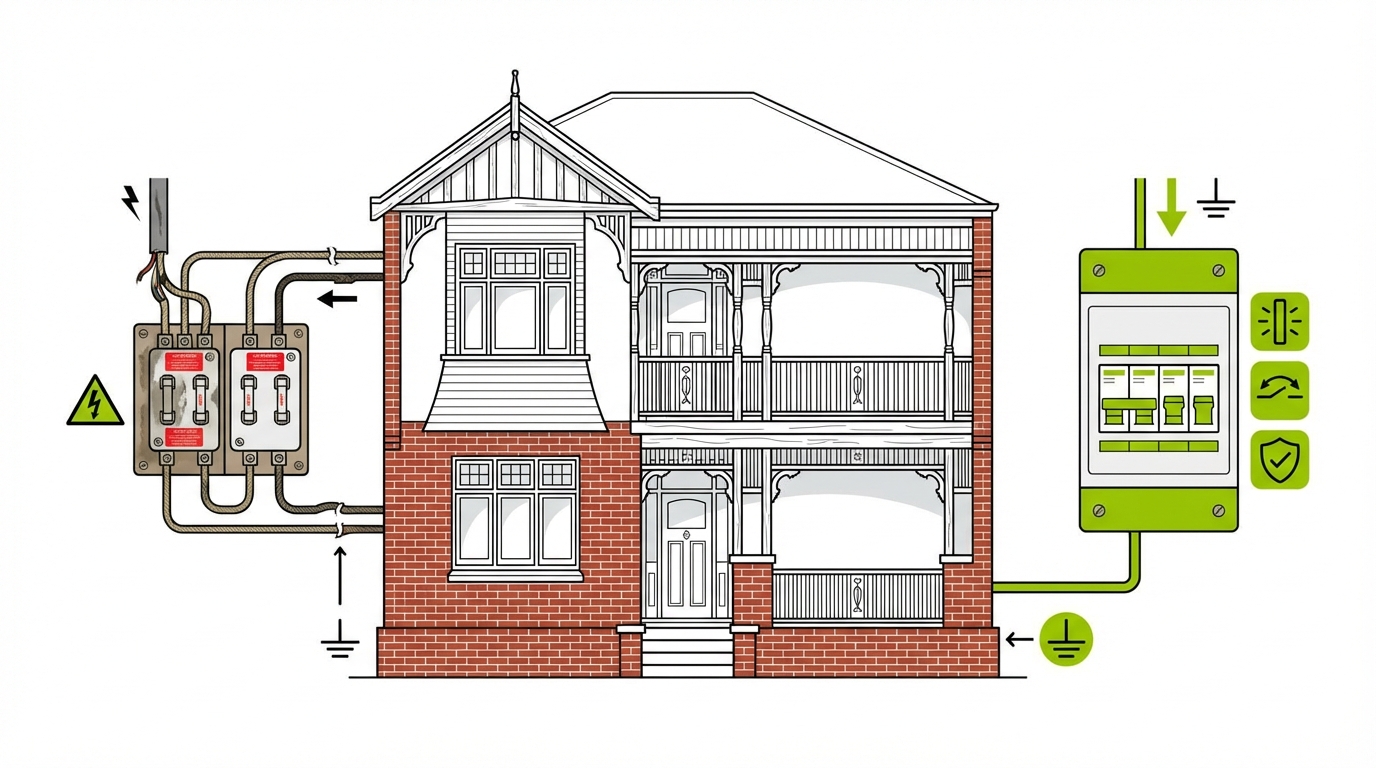
Sydney’s beautiful heritage homes and established neighborhoods are filled with character and charm—but beneath the period features and classic architecture, many older properties harbor a hidden danger: outdated electrical wiring.
If your home was built before 1990, there’s a strong chance your electrical system doesn’t meet current Australian safety standards. From ceramic fuse boxes to aluminium wiring and missing safety switches, older homes present unique electrical hazards that can lead to fires, electrocution, and property damage.
As Sydney homeowners face rising energy costs in 2026, many are discovering that inefficient, outdated wiring isn’t just unsafe—it’s expensive. Modern electrical systems are safer, more efficient, and essential for powering today’s technology-dependent lifestyles.
This comprehensive guide from OnTime Tradie’s licensed electricians covers everything Sydney homeowners need to know about electrical safety in older homes: from identifying warning signs to understanding rewiring costs and ensuring compliance with NSW electrical regulations. Whether you own a heritage terrace in Paddington or a 1970s brick home in the suburbs, this guide will help you protect your family and your investment.
Why Electrical Safety Matters in Older Sydney Homes
Sydney has one of Australia’s oldest housing stocks. Thousands of homes across the Inner West, Eastern Suburbs, and North Shore were built between 1900 and 1980—long before modern electrical safety standards existed.
Electrical wiring has a lifespan of 25-40 years depending on materials and usage. Homes wired in the 1970s or earlier are now operating well beyond their intended service life. The consequences can be catastrophic.
The Real Risks of Outdated Electrical Systems
According to Fire & Rescue NSW, electrical faults cause approximately 40% of residential fires in Australia. In older homes specifically, the risks include:
- Electrical fires from deteriorated insulation and overloaded circuits
- Electrocution from exposed wiring or lack of safety switches (RCDs)
- Property damage from short circuits and power surges
- Insurance complications—many insurers require compliance certificates for older homes
- Failed building inspections when selling your property
- Inability to safely power modern appliances and technology
- Significantly higher electricity bills from inefficient wiring
- Legal liability if electrical faults injure occupants or visitors
Why Act Now: January 2026 Timing
Starting 2026 with an electrical safety audit is strategic timing for several reasons:
Energy Bill Relief Ends: Universal government energy rebates concluded in January 2026, meaning Sydney households will feel the full impact of electricity costs. Efficient, modern wiring can reduce consumption by 10-20%.
Pre-Summer Preparation: Sydney’s peak electricity demand occurs in summer (January-March) when air conditioning usage soars. Upgrading before February prevents overloaded circuits and system failures during heatwaves.
Property Market Advantage: With interest rates potentially declining in 2026, property transactions will increase. Homes with updated electrical systems command premium prices and sell faster.
Insurance Renewal Season: Many policies renew in January-February. Insurers increasingly require electrical safety certificates for homes over 30 years old—or charge higher premiums without them.
New Year Home Improvement Momentum: January represents the perfect time to tackle deferred maintenance while motivation is high.
Common Electrical Hazards in Older Sydney Homes
Understanding what makes older electrical systems dangerous is the first step toward protection. Here are the most common hazards OnTime Tradie’s electricians encounter in Sydney’s older homes:
1. Ceramic Fuse Boxes (Pre-1960s Homes)
If your switchboard contains round ceramic fuses instead of modern circuit breakers, you’re operating with 1950s technology.
Why They’re Dangerous:
- No overload protection—fuses can be replaced with wrong amperage
- No safety switch (RCD) protection against electrocution
- Cannot handle modern electrical loads
- Fuse wire replacements often done incorrectly by homeowners
- Insurance companies may refuse coverage or charge premiums
What You’ll See: Round ceramic holders with removable fuse wire, often in metal boxes with exposed bus bars.
Solution: Complete switchboard upgrade to modern circuit breakers with RCD protection. Cost: $1,500-$3,500 depending on complexity.
2. Aluminium Wiring (1960s-1970s)
Between 1965-1975, many Australian homes were wired with aluminium instead of copper due to copper shortages.
Why It’s Dangerous:
- Aluminum oxidizes, creating resistance and heat at connections
- Expands/contracts more than copper, loosening connections over time
- Significantly higher fire risk at outlets and junction boxes
- Incompatible with many modern devices and fixtures
What You’ll See: Silvery-white wire (vs. copper’s reddish color) visible at outlets or junction boxes. Often stamped “AL” or “Aluminum” on cable sheathing.
Solution: Partial rewiring of aluminium circuits or professional aluminum-compatible connection upgrades. Cost: $3,000-$12,000 depending on extent.
3. Two-Prong Outlets (No Earthing)
Pre-1970s homes often have two-prong power points without earthing (grounding) protection.
Why They’re Dangerous:
- No fault protection if appliances develop electrical faults
- Cannot safely power three-prong appliances (most modern devices)
- Increased electrocution risk during appliance malfunctions
- Doesn’t meet current AS/NZS 3112 standards
What You’ll See: Flat two-pin outlets without the third (earth) pin slot.
Solution: Rewiring with modern earthed outlets and three-phase power distribution. Cost: $150-$300 per outlet including wiring upgrades.
4. Missing Safety Switches (RCDs)
Residual Current Devices (RCDs/safety switches) have been mandatory in NSW since 2000 for new installations, but older homes often lack them entirely.
Why They’re Dangerous:
- No protection against electrocution—RCDs cut power in 0.03 seconds during faults
- Required by law for all circuits in Australian homes
- Particularly dangerous in wet areas (bathrooms, laundry, outdoor areas)
What You’ll See: Switchboard with only circuit breakers, no devices with “Test” buttons.
Solution: Install RCD protection on all circuits. Cost: $150-$400 per RCD, typically need 2-4 devices.
5. Cloth or Rubber Insulation
Pre-1960s homes often have cloth-wrapped or rubber-insulated wiring that has deteriorated over decades.
Why It’s Dangerous:
- Insulation becomes brittle and crumbles, exposing live wires
- Dramatically increases fire risk
- Can cause short circuits when wires touch
- Often degraded by rodents in roof/wall cavities
What You’ll See: During inspections, electricians find crumbling black rubber or frayed cloth around wires in ceiling/wall spaces.
Solution: Complete rewiring—no safe retrofit exists. Cost: $7,000-$22,000+ for full house rewire.
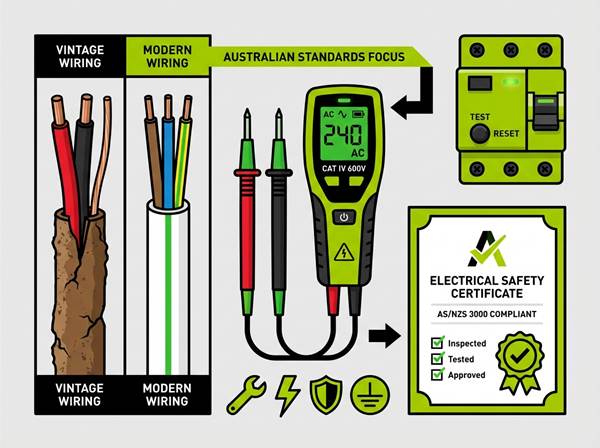
Electrical Safety Inspection Tools & Equipment
Warning Signs Your Sydney Home Needs Rewiring
Don’t wait for catastrophic failure. Licensed electricians recommend immediate professional inspection if you notice any of these warning signs:
• Frequent Circuit Breaker Trips
If breakers trip repeatedly, your electrical system is overloaded or faulty. This indicates wiring cannot handle current demands—a fire risk.
• Flickering or Dimming Lights
Lights that flicker when appliances turn on suggest loose connections, inadequate wiring gauge, or circuit overloading.
• Burning Smell or Scorch Marks
Any burning odor near outlets or switchboards indicates dangerous overheating. Scorch marks on outlets show arcing—turn off power and call emergency electrician immediately.
• Warm Outlets or Switches
Power points should never feel warm. Heat indicates dangerous resistance at connections or internal wiring faults.
• Buzzing Sounds
Electrical buzzing from outlets, switches, or panels suggests loose wiring or arcing—both fire hazards requiring immediate attention.
• Aluminum or Knob-and-Tube Wiring
If inspections reveal these outdated systems, rewiring isn’t optional—it’s essential for safety.
• Discolored Outlets or Switches
Brown or black discoloration indicates heat damage from poor connections or overloading.
• Shock Sensations
Even mild tingling when touching appliances or outlets indicates dangerous electrical leakage. This is a life-threatening hazard.
• Home Over 40 Years Old
Even without obvious symptoms, homes built before 1985 should have professional electrical safety audits every 5-10 years.
Understanding House Rewiring in Sydney
When electrical inspections reveal significant hazards, partial or complete rewiring becomes necessary. Here’s what Sydney homeowners need to know:
What Does House Rewiring Involve?
Professional house rewiring by licensed electricians includes:
Assessment & Planning:
- Comprehensive electrical safety audit using thermal imaging and testing
- Identification of all hazardous wiring and components
- Load calculation for modern electrical demands
- Heritage home considerations (if applicable)
- Council permit applications (required in NSW)
Physical Rewiring Work:
- Installation of new copper wiring to all circuits
- Upgrading switchboard with modern circuit breakers and RCDs
- Replacing all power points with earthed three-pin outlets
- Installing safety switches on all circuits (AS/NZS 3000 compliance)
- Upgrading lighting circuits to handle LED and modern fixtures
- Adding circuits for high-draw appliances (air con, oven, etc.)
- Installing surge protection devices
- Ensuring proper earthing and bonding
Compliance & Documentation:
- Electrical safety certificate (Certificate of Compliance)
- Council final inspection and approval
- Documentation for insurance and future property sales
- Warranty on all electrical work (minimum 6 years in NSW)
House Rewiring Cost Sydney 2026
Rewiring costs vary significantly based on home size, complexity, and accessibility. Here’s OnTime Tradie’s transparent 2026 pricing guide for Sydney properties:
| Property Type | Typical Size | Cost Range 2026 |
| Apartment/Unit | 1-2 bedroom | $3,500 – $7,500 |
| Small House | 2-3 bedroom | $7,000 – $12,000 |
| Medium House | 3-4 bedroom | $12,000 – $18,000 |
| Large House | 4-5 bedroom | $18,000 – $25,000 |
| Heritage Home | Variable | $14,000 – $30,000+ |
| Partial Rewiring | Specific circuits | $2,000 – $8,000 |
Factors Affecting Rewiring Costs:
- Accessibility—easy roof/wall access vs. difficult heritage construction
- Switchboard location and upgrade requirements
- Number of power points and light fixtures
- Need for additional circuits (air conditioning, EV charger, solar)
- Heritage listing restrictions requiring specialized approaches
- Wall/ceiling patching and repainting after wire installation
- Asbestos presence requiring licensed removal (pre-1980s homes)
- Upgrade to three-phase power (commercial or high-demand homes)
How Long Does Rewiring Take?
Typical Rewiring Timelines:
- Small apartment: 3-5 days
- Standard 3-bedroom house: 5-7 days
- Large 4-5 bedroom house: 7-12 days
- Heritage home with complexity: 10-20+ days
Timeline depends on:
- Whether you’re living in the property during work
- Accessibility of existing wiring
- Required plastering/painting after installation
- Council inspection scheduling
- Additional electrical upgrades during rewiring
Special Considerations for Heritage Sydney Homes
Sydney’s heritage-listed terraces, Federation homes, and Victorian-era properties require specialized electrical rewiring approaches that balance safety with conservation requirements.
Many suburbs—including Paddington, Balmain, Glebe, and Hunters Hill—have strict heritage controls that affect electrical work.
Unique Heritage Home Electrical Challenges
- Cannot damage original decorative plasterwork or period features
- Concealed wiring methods limited by solid brick/stone construction
- Heritage approval required before work commences
- Original switchboard locations may need preservation
- External conduit often prohibited by heritage restrictions
- Electricians must have heritage property experience
- Costs 30-50% higher than standard homes due to complexity
Heritage-Appropriate Rewiring Solutions
Approved Methods for Heritage Properties:
- Surface-mount conduit in discreet locations (behind furniture, in closets)
- Fishing wires through existing wall cavities without plaster damage
- Installing modern switchboards in non-heritage areas (garages, laundries)
- Using period-appropriate outlet and switch covers
- Routing cables under suspended timber floors
- Concealed conduit in ceiling spaces and service areas
- Professional heritage consultants to navigate approval process
Working with OnTime Tradie:
Our licensed electricians have extensive experience with Sydney’s heritage homes. We:
- Provide heritage-compliant electrical designs
- Work with heritage consultants and councils
- Use minimally invasive installation techniques
- Restore any unavoidable plasterwork to original condition
- Document all work for heritage compliance records
Choosing a Licensed Electrician in Sydney
Electrical work in NSW is strictly regulated. Only licensed electricians can legally perform wiring, switchboard work, and electrical installations. DIY electrical work is illegal and voids insurance coverage.
Essential Qualifications and Credentials
When selecting an electrician for older home rewiring, verify:
✓ NSW Electrical Contractor License (Level 2 for major work)
✓ Full public liability insurance ($10M+ minimum)
✓ Workers compensation insurance
✓ Good standing with NSW Fair Trading
✓ Specific experience with older homes and rewiring
✓ Familiarity with heritage property requirements (if applicable)
✓ Positive reviews and verifiable references
✓ Upfront written quotes with detailed scope of work
✓ Warranty on workmanship (minimum 6 years)
✓ After-hours and emergency availability
✓ Membership in professional associations (Master Electricians Australia)
Red Flags to Avoid:
✗ Cannot provide license number or credentials
✗ Quotes significantly below market rates
✗ Demands large upfront payments before work begins
✗ Reluctant to provide written quotes or documentation
✗ No insurance verification
✗ Poor communication or unprofessional behavior
Why Sydney Homeowners Choose OnTime Tradie
OnTime Tradie has built a reputation as Sydney, Central Coast, and Newcastle’s most trusted electrical services provider. Here’s why:
Licensed Expertise:
- Fully licensed NSW electrical contractors (Level 2)
- Decades of combined experience with older Sydney homes
- Specialists in heritage property electrical upgrades
- Advanced diagnostic equipment (thermal imaging, voltage testing, CCTV)
Transparent Pricing:
- Upfront quotes with no hidden fees
- Detailed breakdown of all costs before work begins
- Competitive 2026 pricing for all electrical services
Quality & Safety:
- Compliance with all AS/NZS electrical standards
- Electrical safety certificates provided
- Lifetime warranty on workmanship
- Meticulous attention to detail and cleanliness
Customer Service:
- 24/7 emergency electrical services
- Same-day response across Sydney regions
- Professional, punctual, courteous technicians
- Clear communication throughout projects
- Post-work cleanup and site restoration
Frequently Asked Questions: Electrical Safety in Older Homes
Q1: How do I know if my Sydney home needs rewiring?
Homes built before 1990 should have professional electrical inspections. Warning signs include: frequent circuit breaker trips, flickering lights, two-prong outlets, ceramic fuse boxes, burning smells, warm outlets, or visible deteriorated wiring. If your home is over 40 years old or you notice any of these symptoms, schedule an electrical safety audit immediately.
Q2: Can I live in my home during rewiring?
Yes, but it will be inconvenient. Electricians typically work room-by-room, maintaining power to unaffected areas. However, expect temporary power outages, dust from accessing wall/ceiling cavities, and disruption to daily routines. Some homeowners prefer to temporarily relocate during major rewiring projects, especially for 7+ day projects.
Q3: Is rewiring covered by home insurance?
Standard home insurance typically does NOT cover rewiring costs, as it’s considered maintenance rather than sudden damage. However, many insurers offer discounts after electrical upgrades, and some require electrical safety certificates for homes over 30 years old. Always inform your insurer after completing rewiring—it may reduce premiums and ensures coverage validity.
Q4: What’s the difference between partial and complete rewiring?
Partial rewiring addresses specific circuits or hazardous areas (e.g., replacing aluminum wiring in kitchen, upgrading bathroom circuits). Complete rewiring replaces all electrical wiring, outlets, and switchboard throughout the home. Licensed electricians recommend complete rewiring when: home is pre-1970s, multiple hazards exist, or selling the property soon. Partial rewiring suits newer homes (1980s-1990s) with localized issues.
Q5: Do I need council approval for rewiring in Sydney?
Yes. In NSW, electrical work requiring circuit alterations, switchboard upgrades, or new wiring installations needs council notification and electrical compliance certificates. Licensed electricians handle permit applications and council inspections. Heritage-listed properties require additional Heritage NSW approvals before work begins.
Q6: How long does electrical wiring last?
Modern copper wiring lasts 50-70 years with proper installation. However, older materials have shorter lifespans: cloth/rubber insulation (40-50 years), aluminum wiring (25-40 years), and knob-and-tube wiring (60+ years but obsolete). Environmental factors (moisture, heat, rodents) significantly impact lifespan. Regular inspections every 10 years help identify deterioration before it becomes dangerous.
Q7: What are safety switches (RCDs) and do I need them?
Residual Current Devices (RCDs), called safety switches in Australia, detect electrical faults and cut power in 0.03 seconds—preventing electrocution. Since 2000, RCDs are mandatory on all circuits in NSW homes. Older homes often lack them entirely. Installing RCDs is one of the most important safety upgrades for any pre-2000 property. Cost: $150-$400 per device.
Q8: Can I DIY any electrical work in my old house?
Absolutely not. In NSW, all electrical work must be performed by licensed electricians—this includes: installing outlets, replacing light fixtures, switchboard work, running new wiring, and even replacing a light switch. DIY electrical work is illegal, extremely dangerous, voids insurance, and can result in fines up to $55,000. Always hire licensed professionals.
Conclusion: Protect Your Sydney Home with Professional Electrical Upgrades
Electrical safety in older Sydney homes isn’t optional—it’s essential for protecting your family, your property, and your financial investment. As we progress through 2026, outdated electrical systems become increasingly dangerous and costly, particularly with rising energy prices and insurance requirements.
Whether you own a heritage terrace in Paddington, a 1960s brick veneer in Parramatta, or a Federation home in Hunters Hill, the risks of deteriorated wiring, missing safety switches, and obsolete switchboards are real and present.
The warning signs are clear: frequent breaker trips, flickering lights, warm outlets, or simply a home built before 1990. Don’t wait for catastrophic failure—electrical fires and electrocution happen suddenly, without warning.
Take Action Today:
Professional electrical safety inspections identify hazards before they cause harm. Modern rewiring protects your family, reduces energy bills, increases property value, and ensures compliance with NSW regulations.
OnTime Tradie’s licensed electricians bring decades of experience to every older home electrical project. We understand Sydney’s unique housing stock, navigate heritage restrictions with ease, and deliver transparent, upfront pricing with lifetime warranties.
Start 2026 with confidence, knowing your home’s electrical system is safe, efficient, and compliant.
Contact OnTime Tradie now for:
- Free electrical safety consultations
- Comprehensive electrical audits using advanced diagnostic technology
- Competitive pricing for rewiring and upgrades
- 24/7 emergency electrical services across Sydney, Central Coast & Newcastle
- Heritage home electrical specialists
- Licensed, insured, experienced electricians
Don’t wait for warning signs to become emergencies. Protect what matters most—contact OnTime Tradie today for your electrical safety inspection.
