
It’s 2am on a Sunday morning. You wake to the sound of rushing water. You rush downstairs to find water gushing from a burst pipe, flooding your kitchen, and you have absolutely no idea where your main water shut-off valve is located. This nightmare scenario happens to hundreds of Sydney homeowners every year—and the difference between $500 in plumber fees versus $15,000 in water damage restoration comes down to knowing exactly what to do in those critical first minutes.
Emergency plumbing situations don’t announce themselves conveniently during business hours. Burst pipes peak during cold winter nights when water pressure surges. Hot water systems fail on Saturday mornings when your family needs them most. Blocked toilets overflow during dinner parties. When plumbing emergencies strike—and statistics show 67% of Sydney homeowners will experience at least one major plumbing emergency during their ownership—immediate, correct action prevents catastrophic damage while minimizing repair costs.
This comprehensive emergency plumbing handbook provides Sydney, Central Coast, and Newcastle homeowners with the critical knowledge needed BEFORE disasters strike. You’ll learn exactly where to find your shut-off valves, which temporary fixes work (and which cause more damage), when situations genuinely require emergency callouts versus waiting for regular business hours, and how to create an emergency plumbing kit that buys you time until professional help arrives.
Unlike preventive maintenance guides focusing on avoiding problems, this handbook addresses what happens WHEN emergencies occur—because despite best prevention efforts, plumbing systems eventually fail. Preparation transforms panic into calm, competent response that protects your property, reduces costs, and maintains safety until OnTime Tradie’s 24/7 emergency team arrives.
The Most Common Plumbing Emergencies in Sydney Homes
Understanding the most frequent plumbing emergencies helps homeowners prepare targeted responses rather than generic panic. These six scenarios account for 85% of emergency plumbing callouts across Sydney, Central Coast, and Newcastle.
1. Burst Pipes: The Most Destructive Emergency
Burst pipes represent the most financially devastating plumbing emergency. A 15mm copper pipe under 500kPa (typical Sydney mains pressure) discharges approximately 1,500 liters per hour—flooding rooms within minutes and causing thousands in water damage.
Common Causes in Sydney Homes:
- Pressure surges from water main issues (especially overnight when usage drops)
- Corrosion in older copper or galvanized steel pipes (homes built pre-1980)
- Freezing conditions in roof spaces or under-floor areas (rare but possible in Sydney winters)
- Physical damage during renovations or from external impact
- Tree root intrusion causing pipe movement and stress fractures
Immediate Response (First 60 Seconds):
1. Locate and turn OFF main water supply immediately
2. Turn OFF electricity at switchboard if water is near electrical outlets or appliances
3. Open outdoor taps to drain remaining water from pipes
4. Move furniture and belongings away from water
5. Place buckets/towels to contain remaining drips
6. Take photos for insurance claims
Critical Timing: Every minute of delay with a burst pipe flowing at mains pressure causes approximately 25 liters of water damage. The difference between a 2-minute response (50L) and 10-minute response (250L) is measured in thousands of dollars of water damage restoration costs.
Professional emergency plumbers like OnTime Tradie arrive equipped with proper repair materials, whereas temporary DIY fixes on burst pipes rarely hold and can worsen damage. Our 24/7 emergency service across Sydney, Central Coast, and Newcastle ensures rapid response when every minute matters.
2. Hot Water System Failures and Leaks
Hot water system emergencies range from complete failures leaving households without hot water to catastrophic leaks flooding properties. These peak during winter when systems work hardest and small issues become critical failures.
Emergency Scenarios:
- Pressure relief valve continuously discharging (wasting water, indicating dangerous pressure)
- Visible leaks from tank base (indicates internal tank failure requiring replacement)
- Complete loss of hot water with gas/electrical faults
- Strange noises (popping, hissing) indicating sediment buildup or imminent failure
- Rusty brown water indicating internal corrosion
Immediate Actions:
1. Turn OFF power supply (electric systems) or gas supply (gas systems) FIRST
2. Turn OFF water supply to hot water system using isolation valve
3. Open hot water taps to relieve pressure and drain system
4. Place collection containers under leaking areas
5. Do NOT attempt repairs yourself—gas and electrical components require licensed professionals
Safety Warning: Hot water systems store water at 60-75°C under pressure. Tampering with pressure relief valves or attempting DIY repairs risks severe scalding injuries. Always call licensed plumbers for hot water emergencies.
Modern hot water systems include safety mechanisms, but older units (10+ years) lack these protections. If your system is aging and showing signs of rust, strange noises, or decreased performance, schedule professional replacement during business hours rather than waiting for emergency failure.
3. Blocked Drains and Sewage Backups
Severely blocked drains causing sewage backup constitute genuine emergencies due to health hazards and rapid contamination. These differ from slow drains (non-emergency maintenance issues) in severity and urgency.
Emergency Indicators:
- Multiple drains backing up simultaneously (indicates main sewer line blockage)
- Sewage overflowing from toilets, showers, or floor drains
- Sewage odors throughout property
- Gurgling sounds from multiple drain points when water runs
- Outdoor inspection points overflowing with sewage
Immediate Response:
1. STOP using ALL water immediately (every flush/drain worsens backup)
2. Turn OFF washing machines, dishwashers mid-cycle if necessary
3. Warn household members not to use any plumbing fixtures
4. Ventilate affected areas (open windows, run exhaust fans)
5. Keep children and pets away from contaminated areas
6. Call licensed emergency plumbers immediately
Health Hazards: Sewage contains harmful bacteria, viruses, and parasites causing serious illness. Never attempt to clear main sewer blockages yourself—proper protective equipment and professional techniques are essential. DIY attempts often worsen blockages and spread contamination.
OnTime Tradie’s emergency response includes CCTV drain camera inspection identifying exact blockage locations and causes, high-pressure water jetting clearing obstructions thoroughly, and proper sanitization of affected areas. Our lifetime warranty on drain clearing provides peace of mind that blockages stay cleared.
4. Overflowing Toilets
While individual toilet blockages rarely constitute genuine emergencies, toilet overflows causing flooding or occurring with simultaneous multi-drain issues require urgent response.
Emergency vs Non-Emergency:
– EMERGENCY: Toilet overflowing uncontrollably despite shut-off, sewage backing up through multiple fixtures, toilet water level rising without stopping
– Non-Emergency: Single slow-draining toilet, toilet that stops filling, loose handle requiring jiggling
Immediate Response:
1. Locate toilet isolation valve (usually behind/below toilet) and turn OFF
2. Remove toilet cistern lid and manually push flapper valve closed (stops water flow)
3. Use plunger GENTLY if water level allows (aggressive plunging can worsen overflows)
4. Place towels around base to contain overflow
5. Do NOT flush repeatedly trying to clear blockage—this guarantees overflow
Temporary Solutions: If you can stop water flow and contain the situation, most single toilet blockages can wait until business hours, saving 50-100% compared to after-hours callout fees. However, if blockage affects multiple fixtures or sewage backs up, call emergency plumbers immediately regardless of time.
5. Gas Leaks (Plumbing-Related)
Gas leaks from hot water systems, gas cooking appliances, or pipe connections constitute extreme emergencies requiring immediate evacuation and emergency service calls.
Warning Signs:
- Distinct “rotten egg” smell (mercaptan added to natural gas for detection)
- Hissing sound near gas appliances or pipes
- Dead vegetation near outdoor gas lines
- Physical symptoms (headache, nausea, dizziness) in household members
EMERGENCY RESPONSE (CRITICAL):
1. Evacuate everyone immediately—do NOT delay
2. Do NOT turn lights on/off or use electrical switches (spark hazard)
3. Do NOT use phones inside property (spark hazard)
4. Evacuate to safe distance and call emergency services (000) first
5. Call emergency plumber only AFTER emergency services notified
6. Inform gas company of leak
Never Attempt DIY Gas Repairs: Gas work in NSW requires licensed gas fitters with specific gas endorsements. Attempting DIY gas repairs is illegal and extremely dangerous. OnTime Tradie’s licensed gas plumbers hold all required certifications for safe gas emergency response.
6. Complete Loss of Water Supply
Sudden complete loss of water supply to your property, while frustrating, is rarely a true emergency unless caused by internal pipe failures. Determining the cause guides appropriate response.
Diagnosis Steps:
1. Check if neighbours have water (street main issue vs individual property)
2. Check Sydney Water service alerts online for your area
3. Inspect meter box for main valve position (may have been shut off)
4. Look for obvious signs of leaks (wet spots, running water sounds)
When to Call Emergency Plumber:
– Water loss combined with visible internal flooding (burst pipe)
– Water loss affecting critical medical equipment
– Water loss for businesses requiring water (restaurants, medical facilities)
Non-Emergency Responses:
– Street main issues: Contact Sydney Water, wait for restoration
– After-hours loss without other symptoms: Usually can wait until business hours
– Scheduled maintenance: Check Sydney Water notifications
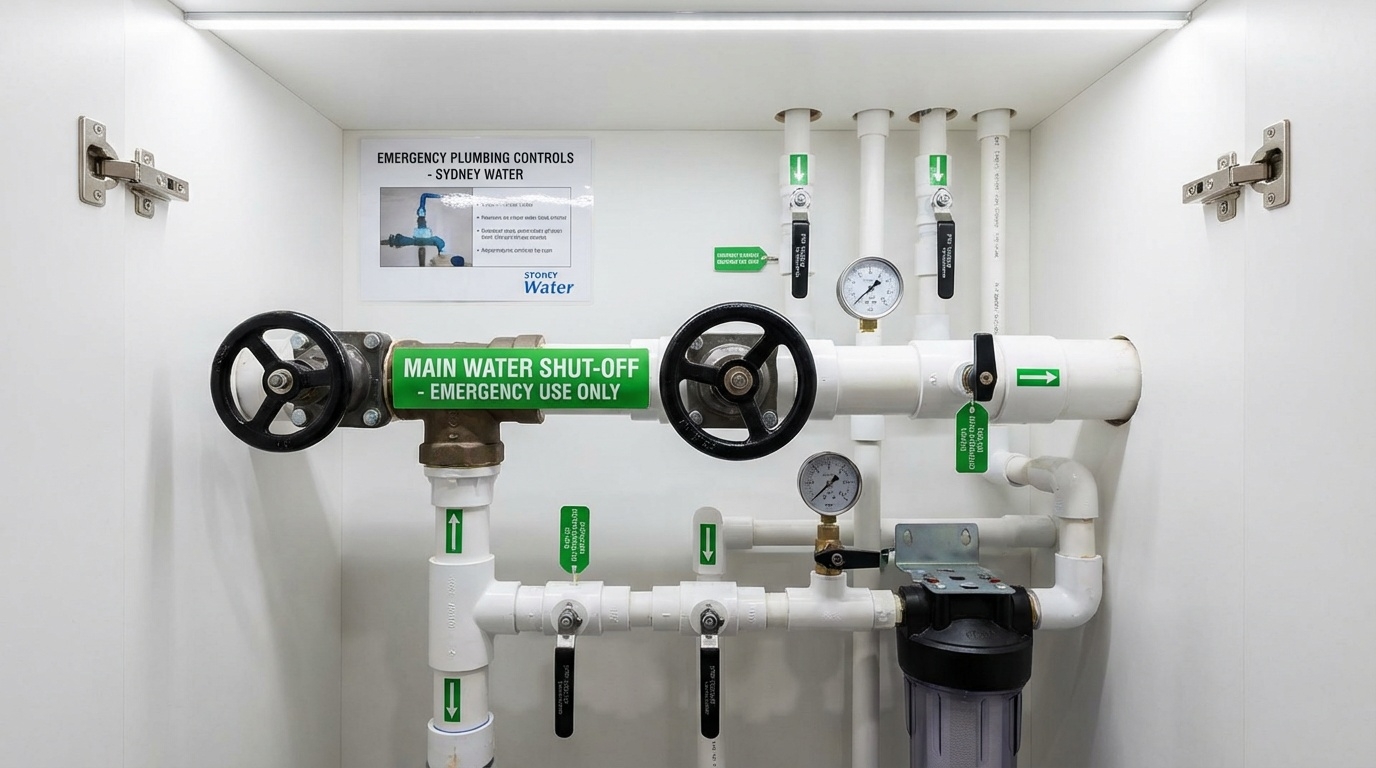
Know Your Shut-Off Valves: The Single Most Important Emergency Skill
The ability to quickly shut off water supply prevents 90% of plumbing emergency damage. Yet surveys show only 32% of Sydney homeowners can locate their main water shut-off valve within 2 minutes—the critical response window for burst pipe emergencies.
Main Water Shut-Off Valve: Primary Emergency Control
Your main water shut-off valve controls water supply to your entire property. Located where the water main enters your property (typically near the front boundary), this valve stops ALL water flow within seconds.
Common Locations in Sydney Homes:
- Most Common: Inside meter box at front boundary (plastic box in ground near street)
- Underground chambers with removable metal or concrete lids
- External wall-mounted boxes (particularly newer homes)
- Inside properties near front wall (older homes)
How to Operate:
- Gate Valves (round handle): Turn clockwise (right) until fully closed—may require multiple turns
- Ball Valves (lever handle): Turn 90 degrees until handle is perpendicular to pipe
- Test Regularly: Turn valve quarterly to ensure it functions and you know the location
Critical Knowledge: Corroded valves from years of disuse may seize or break when operated during emergencies. Annual testing and maintenance prevent these failures. If your valve is difficult to turn or shows corrosion, call licensed plumbers for valve replacement during business hours—don’t wait for emergencies to discover non-functional valves.
Fixture-Specific Isolation Valves
Modern plumbing includes isolation valves at individual fixtures, allowing you to shut off water to specific problem areas while maintaining supply to the rest of your property.
Location Guide:
- Toilets: Behind or below toilet, usually chrome valve on wall/floor
- Sinks/Vanities: Inside cabinets below, attached to supply pipes
- Washing Machines: Behind machine, typically two valves (hot/cold)
- Dishwashers: Inside cabinet, may require pulling appliance forward
- Hot Water Systems: Near unit, controlling cold water inlet
Emergency Use: If a toilet overflows or sink fixture fails, shutting the specific isolation valve stops that fixture while allowing continued water use elsewhere—eliminating need to shut off whole house.
Create a Valve Location Map
Professional emergency preparedness includes creating a simple map showing all valve locations in your home:
Action Steps:
1. Physically locate and test every valve in your property
2. Draw simple floor plan marking each valve location
3. Photograph valves and surrounding areas for easy identification
4. Laminate map and post near main valve and inside laundry/kitchen
5. Ensure all household members know map location
6. Include valve locations in home information folder for emergency services
Share Knowledge: Emergency situations often occur when primary homeowners are away. Ensure household members, property managers, or trusted neighbours know valve locations. Minutes saved through this preparation prevent thousands in damage.
Your Emergency Plumbing Toolkit: Essential Supplies
Professional emergency preparedness includes maintaining basic supplies that buy time until licensed plumbers arrive. These inexpensive items prevent minor issues becoming major disasters.
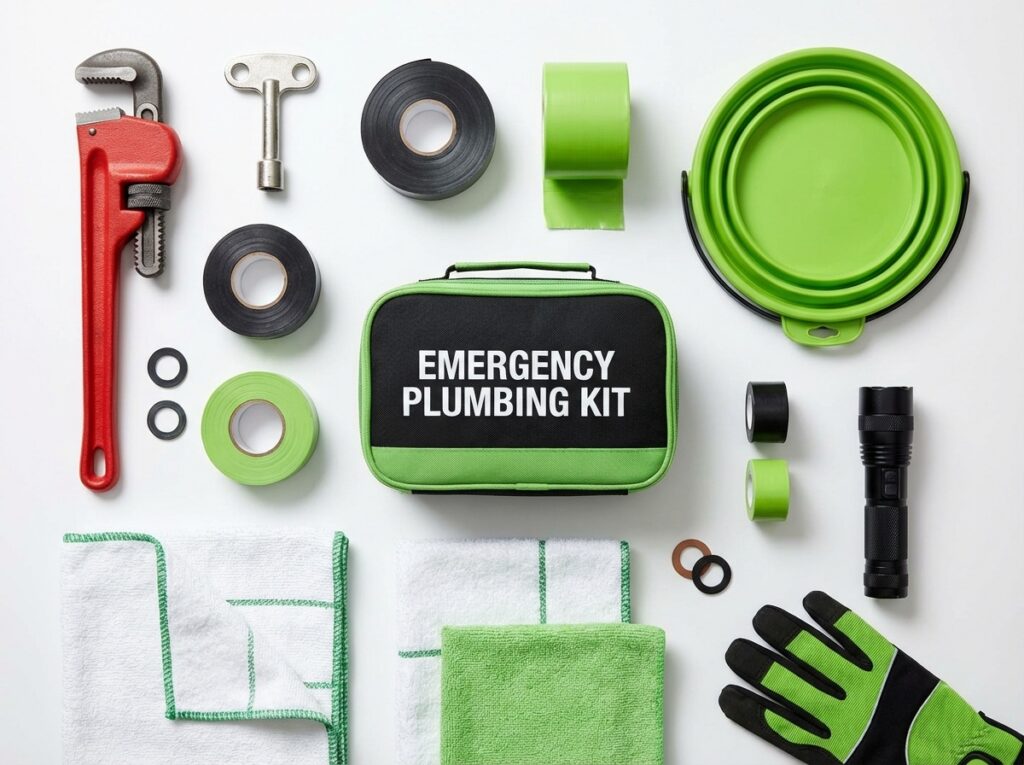
Essential Emergency Supplies (Under $150)
Basic Emergency Kit:
1. Pipe Wrench ($25-40) – Tighten loose connections, operate difficult valves
2. Adjustable Spanner Set ($20-30) – Various fixture repairs and adjustments
3. Plunger – Cup & Flange Types ($15-25) – Different types for sinks vs toilets
4. Bucket (Large, 20L+) ($10-15) – Catch leaks, carry water
5. Emergency Pipe Tape ($15-25) – Temporary leak sealing (NOT permanent fix)
6. Waterproof Torch ($20-30) – Essential for locating issues, power outages
7. Heavy-Duty Towels ($20-30) – Water absorption, containment
8. Disposable Gloves ($10-15) – Protection from contaminated water
9. Pipe Repair Clamps ($25-40) – Temporary burst pipe containment
10. Shut-Off Key/Tool ($15-20) – Operate difficult valves, meter valves
Total Investment: $135-220 for complete emergency preparedness
Storage: Keep kit in accessible location known to all household members—typically laundry, garage, or under kitchen sink. Check expiry dates and condition annually.
Complete Emergency Plumbing Toolkit
Temporary Fixes: What Works Until the Plumber Arrives
Proper temporary fixes contain damage without worsening situations or creating safety hazards. These techniques buy time—typically 2-24 hours—but are NEVER permanent solutions.
Pipe Repair Tape/Wrap: When It Works
Emergency pipe repair tape (silicone self-fusing tape or fiber-reinforced emergency tape) provides temporary sealing for small leaks under low pressure.
Effective Use Cases:
- Pinhole leaks in accessible straight pipe sections
- Hairline cracks in copper pipes (NOT burst pipes)
- Weeping joints (minor leaks around fittings)
- Low-pressure situations after main supply reduced
Application Technique:
1. Turn off water and dry pipe thoroughly (tape won’t adhere to wet surfaces)
2. Wrap tape starting 50mm before leak, overlapping 50% each turn
3. Apply firm pressure while wrapping, stretching tape slightly
4. Continue 50mm past leak point
5. Apply minimum 6-10 layers for adequate pressure resistance
Limitations: Tape is TEMPORARY only—typically lasts 2-48 hours maximum. Schedule licensed plumber repair as soon as possible. Tape fails under high pressure, on damaged joints, or on flexible pipes.
Pipe Clamps: Burst Pipe Containment
Pipe repair clamps provide stronger temporary containment for more serious leaks, including small burst sections on rigid pipes.
Types:
- Rubber Patch Clamps: Rubber pad with metal clamp band—most versatile
- Two-Part Epoxy Clamps: Hardening putty wrapped with fiber tape
- Sleeve Clamps: Metal or plastic sleeves clamping over damaged sections
Best Results: Clean and dry pipe, center rubber pad over damage, tighten clamp evenly (not over-tight, which can crack pipes further). Can last 24-72 hours under moderate pressure but schedule permanent repairs immediately.
What NOT to Do: Dangerous “Fixes”
Never Attempt These Dangerous Actions:
❌ DON’T use standard duct tape, electrical tape, or packaging tape—these aren’t water-resistant under pressure and fail immediately
❌ DON’T attempt to solder or glue pipes while under pressure or with water present—doesn’t work and creates hazards
❌ DON’T over-tighten fittings trying to stop leaks—this cracks pipes and worsens damage
❌ DON’T attempt to repair gas lines yourself—illegal and extremely dangerous
❌ DON’T use chemicals to clear sewage backups during active overflow—creates toxic fumes and worsens contamination
❌ DON’T turn hot water systems back on after emergency shutdowns without professional inspection—pressure issues cause explosions
When to Call Emergency Plumbers vs. Waiting for Business Hours
Understanding genuine emergencies versus situations that can safely wait until regular business hours prevents unnecessary after-hours callout fees (50-100% premiums) while ensuring critical situations receive immediate attention.
Genuine Emergencies Requiring 24/7 Response:
✅ Burst pipes with uncontrollable water flow
– Even after shutting main valve, significant leaking continues
– Water is flooding living areas, causing structural damage
– Unable to locate or operate shut-off valves
✅ Sewage backups with health hazards
– Multiple drains backing up with sewage overflow
– Sewage flooding bathrooms, kitchens, or living areas
– Strong sewage odors indicating gas buildup
✅ Gas leaks from plumbing systems
– Any detectable gas smell near hot water systems or gas pipes
– Immediate evacuation required, call 000 first, plumber second
✅ Complete water supply loss affecting critical needs
– Medical equipment requiring water supply
– Business operations dependent on water (restaurants, healthcare)
– Households with infants or vulnerable people
✅ Hot water system dangerous failures
– Continuously discharging pressure relief valve (explosion risk)
– Visible leaking causing property flooding
– Strange noises indicating imminent catastrophic failure
Situations That Can Safely Wait Until Business Hours:
⏰ Single fixture issues
– One slow-draining sink or shower (not backing up)
– Single toilet not flushing properly (not overflowing)
– Dripping tap (not gushing)
⏰ Minor leaks that are contained
– Small leaks under sinks contained by bucket
– Dripping pipes with temporary tape fix holding
– Leaks caught early with water supply shut to specific fixture
⏰ Hot water loss without leaks
– Hot water system not heating but not leaking
– Pilot light out on gas system (if you know how to relight safely)
⏰ Low water pressure issues
– Gradual pressure decline over days
– One fixture with reduced pressure
Cost Consideration: After-hours emergency callouts typically cost $350-650 just for attendance before any work begins, compared to $180-280 for business hours service calls. If you can safely contain the situation and wait 12-18 hours, savings of $200-400 are common.
However, NEVER delay calling for genuine emergencies trying to save money—$500 in after-hours plumber fees is vastly preferable to $5,000-15,000 in water damage restoration costs.
Working With Emergency Plumbers: What to Expect
When you call OnTime Tradie’s 24/7 emergency service (or any reputable emergency plumber), understanding the process helps ensure smooth, efficient resolution.
The Emergency Callout Process:
1. Initial Phone Assessment (5-10 Minutes)
Emergency operators ask specific questions to:
– Determine genuine emergency severity
– Provide immediate advice to contain damage
– Dispatch appropriate technician and equipment
– Provide estimated arrival time (typically 60-90 minutes for Sydney metro)
2. Pre-Arrival Instructions
Operators guide you through:
– Shutting off water supplies correctly
– Containing leaks and preventing further damage
– Ensuring safe access for technicians
– Preparing any relevant information (system age, recent work, etc.)
3. On-Site Assessment
Licensed plumbers arrive with:
– Professional diagnostic equipment
– Full range of common repair parts
– Proper safety equipment
– Camera documentation for insurance claims
4. Upfront Pricing Discussion
Before any work begins, you receive:
– Clear diagnosis of problem and cause
– Detailed quote for emergency repairs
– Options for temporary vs permanent fixes
– Written authorization for any work performed
5. Emergency Repair Completion
Work typically takes 1-4 hours depending on severity:
– Immediate problem resolution
– Testing to ensure fix holds
– Cleanup of work area
– Advice for ongoing maintenance
6. Follow-Up Recommendations
After emergency stabilization, plumbers advise:
– Permanent solution requirements
– Underlying issues that caused emergency
– Preventive maintenance to avoid recurrence
– Insurance claim documentation provided
Red Flags for Dodgy Emergency Plumbers:
🚩 Refusing to provide upfront pricing estimates
🚩 Pressure tactics to approve expensive work immediately
🚩 Unable to show current NSW plumbing licenses
🚩 Cash-only payment demands
🚩 No insurance or warranty documentation
🚩 Arriving in unmarked, unprofessional vehicles
🚩 Incomplete diagnostic process rushing to “solutions”
OnTime Tradie’s licensed emergency plumbers arrive in professional vehicles, provide transparent upfront pricing, hold all required NSW licenses and insurance, and back all work with comprehensive warranties. Our reputation across Sydney, Central Coast, and Newcastle is built on honest, professional emergency service—not exploiting desperate situations.
Frequently Asked Questions: Emergency Plumbing Sydney
Where is my main water shut-off valve located?
Most Sydney homes have main shut-off valves inside the water meter box at the front boundary (usually near the street). Look for a plastic box in the ground with a removable lid. Inside you’ll find the water meter and typically two valves—the one closest to your house is YOUR shut-off valve (the street-side valve belongs to Sydney Water). Older homes may have shut-off valves inside the property near the front wall. If you can’t locate yours, call OnTime Tradie for a free valve location service—knowing this before emergencies is critical.
How much do emergency plumbing callouts cost in Sydney?
Emergency plumbing callouts in Sydney typically cost $300-650 for after-hours attendance (weeknights, weekends, public holidays) before any work begins. This covers travel and initial assessment. Actual repairs cost additionally depending on the issue: simple repairs $150-400, moderate complexity $400-800, major work $800-2,000+. Business hours service calls are significantly cheaper ($150-250 attendance). OnTime Tradie provides upfront pricing before any work begins, ensuring no surprise bills.
Can I turn off my hot water system myself in an emergency?
Yes, you can and SHOULD turn off hot water systems in emergencies, but follow correct procedures: For ELECTRIC systems, turn off power at the switchboard first (isolate the hot water circuit), then close the cold water isolation valve feeding the unit. For GAS systems, turn off the gas isolation valve first (quarter turn), then close the water valve. Never attempt repairs yourself, but shutting off supply prevents worsening situations until licensed plumbers arrive. OnTime Tradie’s 24/7 team provides phone guidance during these emergencies.
Is a dripping tap considered an emergency?
No, dripping taps are maintenance issues, not emergencies. While frustrating and wasteful (a tap dripping once per second wastes approximately 9,000 liters annually), dripping doesn’t constitute emergency plumbing requiring after-hours callouts. Schedule repair during business hours to avoid unnecessary premium fees. However, if a tap breaks off completely and water is gushing uncontrollably despite shutting the isolation valve, this becomes a genuine emergency requiring immediate professional response.
What should I do if my toilet is overflowing?
Immediately turn off the toilet isolation valve (typically behind/beside toilet at floor level). If you can’t locate it or it’s seized, remove the cistern lid and manually push down the flapper valve inside the cistern to stop water flow. Never repeatedly flush trying to clear blockages—this guarantees overflow and water damage. Place towels around the base to contain overflow. If overflow contains sewage or affects multiple fixtures simultaneously, call emergency plumbers immediately. Single toilet blockages without sewage backup can usually wait until business hours.
Do I need to call emergency plumbers for every water leak?
No—not all leaks constitute genuine emergencies. Small contained leaks (dripping under sink into a bucket, minor tap drips) can safely wait for business hours, saving 50-100% on callout fees. However, call emergency plumbers immediately for: uncontrollable leaks despite shutting valves, leaks flooding living areas, leaks near electrical components, or any leak you cannot locate the source of. OnTime Tradie’s 24/7 operators provide phone assessment helping you determine whether immediate response is necessary.
How quickly can emergency plumbers arrive in Sydney?
OnTime Tradie’s emergency response across Sydney, Central Coast, and Newcastle typically ranges 60-90 minutes for metro areas, with remote locations taking up to 2 hours depending on technician location and traffic. We dispatch the closest available licensed plumber immediately upon emergency call, providing estimated arrival times and tracking updates. During extreme weather events or multiple simultaneous emergencies, response times may extend, but we maintain the largest emergency response team in the region ensuring fastest possible service.
Will my insurance cover emergency plumbing costs?
Home insurance typically covers DAMAGE resulting from plumbing emergencies (water damage to carpets, walls, furniture) but usually does NOT cover the plumbing repairs themselves or gradual damage from lack of maintenance. Emergency burst pipe repairs are generally homeowner responsibility, while subsequent water damage restoration may be covered (minus excess). Always take photos documenting damage before cleanup, obtain licensed plumber reports, and notify insurers within required timeframes (usually 24-48 hours). OnTime Tradie provides detailed documentation supporting insurance claims.
Can I use chemical drain cleaners during emergency blockages?
Never use chemical drain cleaners during active sewage backups or overflows—they create toxic fumes when mixed with sewage, can worsen blockages by hardening debris, and make professional clearing more dangerous for plumbers. Additionally, harsh chemicals damage pipes over time, particularly older metal pipes and PVC joints. For emergency blockages, shut off water supply and call licensed plumbers equipped with proper tools (hydro-jetting, CCTV cameras) that clear blockages safely and permanently. OnTime Tradie’s lifetime warranty on drain clearing demonstrates our confidence in professional methods.
What qualifies a plumber to handle emergency gas leaks?
Emergency gas leak response requires NSW plumbing licenses PLUS specific gas fitting endorsements. All OnTime Tradie plumbers hold current NSW plumbing licenses and gas fitting qualifications, with ongoing training in gas safety protocols. Always verify plumber credentials before allowing gas work—check license numbers with NSW Fair Trading. For gas emergencies: evacuate immediately, call 000, then call emergency plumbers only after emergency services arrive. Gas work is never DIY—illegal gas work voids insurance and creates life-threatening hazards.
Conclusion: Emergency Preparedness Prevents Disasters
Plumbing emergencies strike without warning—burst pipes at 2am, hot water system failures on weekends, sewage backups during holidays. The difference between minor inconvenience and catastrophic damage comes down to preparation: knowing your shut-off valve locations, maintaining basic emergency supplies, understanding which temporary fixes work, and recognizing genuine emergencies versus situations that can wait.
This comprehensive emergency plumbing handbook transforms panic into competent response. By spending 30 minutes today locating valves, creating maps, and assembling a basic emergency kit costing under $150, Sydney homeowners protect themselves from thousands in preventable water damage and inflated emergency fees.
Remember the critical emergency response sequence:
1. Shut off water supply immediately (main valve or fixture-specific)
2. Shut off electricity if water is near electrical components
3. Contain damage with towels, buckets, temporary fixes
4. Document situation with photos for insurance
5. Call licensed emergency plumbers for professional resolution
Prevention remains superior to emergency response—schedule regular plumbing maintenance, replace aging systems proactively, and address minor issues before they become emergencies. However, when prevention fails and emergencies strike, proper preparation and professional emergency response from licensed plumbers like OnTime Tradie protect your property, your safety, and your budget.
Don’t wait for a plumbing emergency to wish you’d prepared. Take action today:
- Locate and test all shut-off valves
- Create valve location maps for your property
- Assemble basic emergency plumbing kit
- Save OnTime Tradie’s 24/7 emergency number: 0488 822 795
- Share this guide with household members
OnTime Tradie’s licensed plumbers provide 24/7 emergency response across Sydney, Central Coast, and Newcastle. Our rapid response times, upfront transparent pricing, professional diagnostic equipment, and comprehensive warranties ensure emergency situations are resolved quickly, correctly, and with minimal stress. We’re available when you need us most—because plumbing emergencies don’t wait for business hours.
Emergency Plumbing Sydney | Call OnTime Tradie 24/7: 0488 822 795
Be prepared. Know your valves. Have our number saved. When emergencies strike, you’ll be ready.